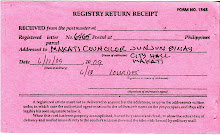
Security lapse on May 5, 2009, at entrance to SM City Manila mall.Because of said lapse, I could have brought dangerous/deadly weapons into said mall. After I entered said mall, I went to the SM Supermarket store at said mall and the guard at entrance to said store didn't inspect my luggage, which was large enough to contain said weapons.
FDA, FTC Warn Public of Fraudulent 2009 H1N1 Influenza Products
http://www.fda.gov/bbs/topics/NEWS/2009/NEW02007.html FOR IMMEDIATE RELEASE
May 1, 2009
Media Inquiries:
Christopher Kelly, 301-796-4676
Consumer Inquiries:
888-INFO-FDA
FDA, FTC Warn Public of Fraudulent 2009 H1N1 Influenza Products
Offending web sites and illegal activity targeted for action
The U.S. Food and Drug Administration and the Federal Trade Commission are alerting the public to be wary of Internet sites and other promotions for products that claim to diagnose, prevent, mitigate, treat or cure the 2009 H1N1 influenza virus. The agencies are also advising operators of offending web sites that they must take prompt action to correct and/or remove promotions of these fraudulent products or face enforcement action.
“Consumers who purchase products to treat the novel 2009 H1N1 virus that are not approved, cleared or authorized by the FDA for the treatment or prevention of influenza risk their health and the health of their families,” said Michael Chappell, acting FDA Associate Commissioner for Regulatory Affairs. “In conjunction with the Federal Trade Commission, the FDA has developed an aggressive strategy to identify, investigate, and take regulatory or criminal action against individuals or businesses that wrongfully promote purported 2009 H1N1 influenza products in an attempt to take advantage of the current flu public health emergency.”
Products that are offered for sale to the public with claims to diagnose, prevent, mitigate, treat, or cure infections caused by the H1N1 influenza virus that have not been proven to be safe and effective for these uses must be carefully evaluated. Many of these deceptive products are being sold over the Internet via illegitimate web sites. The operators of these web sites take advantage of the public’s concerns about H1N1 influenza and their desire to protect themselves and their families. These fraudulent products come in all varieties and could include dietary supplements or other food products, or products purporting to be drugs, devices or vaccines. Such fraudulent products will not prevent the transmission of the virus or offer effective treatments against infections caused by the H1N1 influenza virus.
“The last thing any consumer needs right now is to be conned by someone selling fraudulent flu remedies,” said FTC Chairman Jon Leibowitz. “The FTC will act swiftly against companies that resort to deceptive advertising.”
Consumers are urged to contact their health care providers or legitimate medical supply services if they have questions or concerns about medical products or personal protective equipment. Consumers are also urged to visit the FDA and Centers for Disease Control and Prevention web sites for more information about this emergency, and to determine which products the FDA has approved, cleared or authorized for use to diagnose, treat, prevent, mitigate or cure infections caused by H1N1 influenza virus.
Consumers should also visit FDA's web site for tips about how to protect themselves when buying medicines online: http://www.fda.gov/buyonlineguide/
The two antiviral drugs approved by the FDA for treatment and prophylaxis of the 2009 H1N1 influenza virus are Tamiflu (oseltamivir phosphate) and Relenza (zanamivir). Tamiflu and Relenza, in addition to their approved labeling, have Emergency Use Authorizations that describe specific authorized uses during this public health emergency.
For more information about FDA-approved antiviral drugs for influenza, see http://www.fda.gov/cder/drug/antivirals/influenza/default.htm.
For more information on CDC recommendations regarding use of antiviral drugs against the current novel 2009 H1N1 influenza strain, see http://www.cdc.gov/swineflu/?s_cid=swineFlu_outbreak_001.
For more information about personal protective equipment see http://www.fda.gov/cdrh/ppe/.
At present, there are no licensed vaccines approved for this new H1N1 influenza virus.
DOH UPDATE ON MEXICAN SWINE FLU
DOH UPDATE ON MEXICAN SWINE FLU VIRUSEarly this morning, the World Health Organization (WHO) raised the pandemic alert from Phase 4 to Phase 5 after seven more countries aside from Mexico and the United States confirmed cases of the novel swine influenza A (H1N1) virus bringing the total to 148 cases and 7 deaths. In the Philippines, there has been no documented case or death due to the virus.
Countries as of April 29 Cases Deaths
United States 91 0
Mexico 26 7
Canada 13 0
United Kingdom 5 0
Spain 4 0
New Zealand 3 0
Germany 3 0
Israel 2 0
Australia 1 0
TOTAL 148 7
Source: WHO Swine Influenza Update
Phase 5 means that there is now “human to human transmission of the virus causing sustained community outbreaks in at least two countries in one WHO region”. In this scenario, it is expected that air travel can further spread illness thus increasing the risk of a full-scale pandemic. All countries are now expected to ready the full implementation of their Pandemic Response Plans Thus, today, I have convened a Command Conference with all the Directors of the Centers for Health Development and the DOH-retained Hospitals including all regional epidemiologists to discuss the readiness plans and command and control systems for an imminent pandemic. I am also calling for a meeting with the Chiefs of all private hospitals to coordinate with the DOH on how they can prepare and respond to possible cases of the Mexican Swine Flu which may come to their attention. We will also collaborate with the business sector and members of the pharmaceutical sector on how they can contribute to the National Pandemic Preparedness and Response Plan. This early, we are tapping the local pharmaceutical industry to help us ensure the availability of Oseltamivir when the need arises. We maintain that there are no current travel restrictions to Mexico, United States and other affected countries. Travelers are strongly advised however, to reconsider trips unless extremely necessary. It is also prudent for incoming passengers to monitor their health status especially if they came from an affected country. Note the onset of fever and other flu-like symptoms up to 10 days after arrival and immediately consult a physician. Hospitals and medical personnel should report cases of suspected cases of Mexican swine flu to the DOH Hotline at tel. nos. 711-1001 and 711-1002. We reiterate that pork is safe to eat and that the Mexican Swine Flu is not transmitted via consumption of pork. As a precaution however, the national government through the Department of Agriculture has already issued a “temporary suspension of all hog and pork imports from afflicted zones’ while placing under heightened alert at all airports and seaports to prevent illegal imports. We also recommend the following personal protective measures:
*
Cover your nose and mouth with a tissue when coughing or sneezing.
*
Wash hands regularly with soap and water, especially after you cough or sneeze. Alcohol-based hand cleaners are also effective
*
Avoid close contact with sick people.
http://www.cdc.gov/h1n1flu/
General Info on H1N1 Flu
* H1N1 Flu & You
* Antiviral Drugs
* Taking Care of a Sick Person
* Facemask & Respirator Use
* Images of the Virus
* Audio & Video
What You Can Do to Stay Healthy
* Stay informed. This website will be updated regularly as information becomes available.
* Influenza is thought to spread mainly person-to-person through coughing or sneezing of infected people.
* Take everyday actions to stay healthy.
o Cover your nose and mouth with a tissue when you cough or sneeze. Throw the tissue in the trash after you use it.
o Wash your hands often with soap and water, especially after you cough or sneeze. Alcohol-based hands cleaners are also effective.
o Avoid touching your eyes, nose or mouth. Germs spread that way.
o Stay home if you get sick. CDC recommends that you stay home from work or school and limit contact with others to keep from infecting them.
* Follow public health advice regarding school closures, avoiding crowds and other social distancing measures.
* Develop a family emergency plan as a precaution. This should include storing a supply of food, medicines, facemasks, alcohol-based hand rubs and other essential supplies.
Interim Recommendations for Facemask and Respirator Use in Certain Community Settings Where H1N1 Influenza Virus Transmission Has Been Detected
April 27, 2009 11:00 AM ET
This document provides interim guidance and will be updated as needed.
Detailed background information and recommendations regarding the use of masks and respirators in non-occupational community settings can be found on PandemicFlu.gov in the document Interim Public Health Guidance for the Use of Facemasks and Respirators in Non-Occupational Community Settings during an Influenza PandemicExternal Web Site Policy..
Information on the effectiveness of facemasks1 and respirators2 for the control of influenza in community settings is extremely limited. Thus, it is difficult to assess their potential effectiveness in controlling swine influenza A (H1N1) virus transmission in these settings. In the absence of clear scientific data, the interim recommendations below have been developed on the basis of public health judgment and the historical use of facemasks and respirators in other settings.
In areas with confirmed human cases of swine influenza A (H1N1) virus infection, the risk for infection can be reduced through a combination of actions. No single action will provide complete protection, but an approach combining the following steps can help decrease the likelihood of transmission. These actions include frequent handwashing, covering coughs, and having ill persons stay home, except to seek medical care, and minimize contact with others in the household.Additional measures that can limit transmission of a new influenza strain include voluntary home quarantine of members of households with confirmed or probable swine influenza cases, reduction of unnecessary social contacts, and avoidance whenever possible of crowded settings.
When it is absolutely necessary to enter a crowded setting or to have close contact3 with persons who might be ill, the time spent in that setting should be as short as possible. If used correctly, facemasks and respirators may help reduce the risk of getting influenza, but they should be used along with other preventive measures, such as avoiding close contact and maintaining good hand hygiene. A respirator that fits snugly on your face can filter out small particles that can be inhaled around the edges of a facemask, but compared with a facemask it is harder to breathe through a respirator for long periods of time. For more information on facemasks and respirators, visit the CDC H1N1 Flu website..
When crowded settings or close contact with others cannot be avoided, the use of facemasks1 or respirators2 in areas where transmission of swine influenza A (H1N1) virus has been confirmed should be considered as follows:
1. Whenever possible, rather than relying on the use of facemasks or respirators, close contact with people who might be ill and being in crowded settings should be avoided.
2. Facemasks1 should be considered for use by individuals who enter crowded settings, both to protect their nose and mouth from other people's coughs and to reduce the wearers' likelihood of coughing on others; the time spent in crowded settings should be as short as possible.
3. Respirators2 should be considered for use by individuals for whom close contact with an infectious person is unavoidable. This can include selected individuals who must care for a sick person (e.g., family member with a respiratory infection) at home.
These interim recommendations will be revised as new information about the use of facemasks and respirators in the current setting becomes available.
For more information about human infection with swine influenza virus, visit the CDC H1N1 Flu website.
1 Unless otherwise specified, the term "facemasks" refers to disposable masks cleared by the U.S. Food and Drug Administration (FDA) for use as medical devices. This includes facemasks labeled as surgical, dental, medical procedure, isolation, or laser masks. Such facemasks have several designs. One type is affixed to the head with two ties, conforms to the face with the aid of a flexible adjustment for the nose bridge, and may be flat/pleated or duck-billed in shape. Another type of facemask is pre-molded, adheres to the head with a single elastic band, and has a flexible adjustment for the nose bridge. A third type is flat/pleated and affixes to the head with ear loops. Facemasks cleared by the FDA for use as medical devices have been determined to have specific levels of protection from penetration of blood and body fluids.
2 Unless otherwise specified, "respirator" refers to an N95 or higher filtering facepiece respirator certified by the U.S. National Institute for Occupational Safety and Health (NIOSH).
3 Three feet has often been used by infection control professionals to define close contact and is based on studies of respiratory infections; however, for practical purposes, this distance may range up to 6 feet. The World Health Organization uses "approximately 1 meter"; the U.S. Occupational Safety and Health Administration uses "within 6 feet." For consistency with these estimates, this document defines close contact as a distance of up to 6 feet.
Sleep disorders
http://www.hhs.gov/news/healthbeat/2009/05/20090501a.htmlSleepiness makes the simplest activities difficult and sometimes dangerous. But for some, daytime sleepiness may indicate a sleep disorder.
At the Centers for Disease Control and Prevention, Michael Decker and William Reeves studied survey data from over 7,000 adults. They found that one third had symptoms of a sleep disorder. Surprisingly, very few had ever been diagnosed with one.
Reeves says:
[William Reeves speaks] "If you wake up feeling unrefreshed – ask your bed partner whether you snore or whether you kick during the night. These are all subtle signs of sleep disorders."
The first steps in fighting sleepiness and fatigue are paying attention to your body, maintaining a regular sleep schedule, and seeking medical advice if you think you have a sleep disorder.
The study is in the American Journal of Epidemiology.
Learn more at hhs.gov.
HHS HealthBeat is a production of the U.S. Department of Health and Human Services. I’m Ira Dreyfuss.
Tuesday, May 5, 2009

Sunday, May 3, 2009
Warning and evidence vs. Globe Telecom, etc.
Warning and evidence re Globe Telecom Inc.
On April 24, 2009, I received back a registered letter which I had sent on or about April 7, 2009,via registered mail to what was identified as a branch of said corporation at Robinsons Place Manila.Said letter was designated as registered letter 06252. Said letter contained a request for information regarding the Globe Visibility Modem The envelope containing said letter had the words: "refused to receive".
Warning about Robinsons Place Manila mall. On May 3, 2009, security lapse at entrance to said mall. Because of said lapse, I could have brought dangerous
weapons into said mall. Previously, security lapses occurred at entrances to said mall.
Customer warning and evidence versus Robinsons department store at Robinsons Place Manila. On May 3, 2009, an employee, working at said store, issued to my companion Robinsons Department Store cash receipt No. 576270, for a service that I paid for. Said receipt did not bear a visible signature by the cashier of said store. Said receipt bore the following words: "NOT VALID UNLESS SIGNED BY OUR CASHIER".So, since said receipt was not valid, I couldn't complain if the service I paid for was unsatisfactory. I complained to a person identified as a supervisor of said employee.I asked said supervisor for a complaint form. No one gave me the complaint form I asked for.
Customer advisory re St. Luke's medical center
whose President and CEO was identified as Jose G. Ledesma.
For their own benefit, it will be advantageous for prospective customers of said hospital to obtain, in advance, answers/proofs, from said C.E.O, if any,
as to whether said hospital:
* Is a fire safe hospital.
* Is a secure hospital.
* Is a trauma center.
* Has a centralized system for collecting reports of adverse events o
* Fully distributes adverse event summary reports
* Encourages reporting by a range of hospital staff, and distributes summary reports that are reviewed by senior-staff
* if it issues said summary reports, uses said reports develop event reduction strategies.
* has established supportive environments that allow anonymous reporting.
* adheres to recommended infection control practices including standard, contact, droplet, and airborne precautions
* has in place effective methods to: prevent medication errors
* has in place effective measures to protect their patients from infections.
* has in place effective measures reduce radiation risk from computed tomography for pediatric and small adult patients.
* Does said hospital have a computerized prescription system?
* Does said hospital use patient bar codes to ensure that patients get the correct medication?
* If said hospital does not use said patient bar codes, what kind of safeguards does said hospital have in place to prevent medication errors?
regarding said hospital's ER:
* Does it always have a doctor on site who can open an artery in the heart or brain, or will a patient have to be moved to another hospital if he/she needs that procedure done?
* Is it a three, two, or one level ER?
* Does it offer round-the clock diagnostic tests such as offer round-the-clock diagnostic tests such as ultrasound, CT scans, and MRIs?
* What is it's specialty?
* How fast does the said ER treat heart emergencies?
* What is the said ER's average patient wait? .
* Are all the ER doctors board certified in emergency medicine?
* Is the entire ER staff skilled in pediatrics?
* What, if any, pediatric equipment does the ER have?
* Is there a separate treatment area for children?
* How inclined are the ER docs to call in a plastic surgeon to do some potentially tricky work, versus just doing it themselves?
* What are the busiest hours in said hospital's ER?
* Proof, if any, that patients in sad hospital's ER equiring admission to the ICU were always transferred from the ER to the ICU within 1 hour.
*Proof, if any, that said hospital has in place measures to prevent health care-associated infections.
* Proof, if any, that said hospital has in place measures to prevent food poisoning.
On April 24, 2009, I received back a registered letter which I had sent on or about April 7, 2009,via registered mail to what was identified as a branch of said corporation at Robinsons Place Manila.Said letter was designated as registered letter 06252. Said letter contained a request for information regarding the Globe Visibility Modem The envelope containing said letter had the words: "refused to receive".
Warning about Robinsons Place Manila mall. On May 3, 2009, security lapse at entrance to said mall. Because of said lapse, I could have brought dangerous
weapons into said mall. Previously, security lapses occurred at entrances to said mall.
Customer warning and evidence versus Robinsons department store at Robinsons Place Manila. On May 3, 2009, an employee, working at said store, issued to my companion Robinsons Department Store cash receipt No. 576270, for a service that I paid for. Said receipt did not bear a visible signature by the cashier of said store. Said receipt bore the following words: "NOT VALID UNLESS SIGNED BY OUR CASHIER".So, since said receipt was not valid, I couldn't complain if the service I paid for was unsatisfactory. I complained to a person identified as a supervisor of said employee.I asked said supervisor for a complaint form. No one gave me the complaint form I asked for.
Customer advisory re St. Luke's medical center
whose President and CEO was identified as Jose G. Ledesma.
For their own benefit, it will be advantageous for prospective customers of said hospital to obtain, in advance, answers/proofs, from said C.E.O, if any,
as to whether said hospital:
* Is a fire safe hospital.
* Is a secure hospital.
* Is a trauma center.
* Has a centralized system for collecting reports of adverse events o
* Fully distributes adverse event summary reports
* Encourages reporting by a range of hospital staff, and distributes summary reports that are reviewed by senior-staff
* if it issues said summary reports, uses said reports develop event reduction strategies.
* has established supportive environments that allow anonymous reporting.
* adheres to recommended infection control practices including standard, contact, droplet, and airborne precautions
* has in place effective methods to: prevent medication errors
* has in place effective measures to protect their patients from infections.
* has in place effective measures reduce radiation risk from computed tomography for pediatric and small adult patients.
* Does said hospital have a computerized prescription system?
* Does said hospital use patient bar codes to ensure that patients get the correct medication?
* If said hospital does not use said patient bar codes, what kind of safeguards does said hospital have in place to prevent medication errors?
regarding said hospital's ER:
* Does it always have a doctor on site who can open an artery in the heart or brain, or will a patient have to be moved to another hospital if he/she needs that procedure done?
* Is it a three, two, or one level ER?
* Does it offer round-the clock diagnostic tests such as offer round-the-clock diagnostic tests such as ultrasound, CT scans, and MRIs?
* What is it's specialty?
* How fast does the said ER treat heart emergencies?
* What is the said ER's average patient wait? .
* Are all the ER doctors board certified in emergency medicine?
* Is the entire ER staff skilled in pediatrics?
* What, if any, pediatric equipment does the ER have?
* Is there a separate treatment area for children?
* How inclined are the ER docs to call in a plastic surgeon to do some potentially tricky work, versus just doing it themselves?
* What are the busiest hours in said hospital's ER?
* Proof, if any, that patients in sad hospital's ER equiring admission to the ICU were always transferred from the ER to the ICU within 1 hour.
*Proof, if any, that said hospital has in place measures to prevent health care-associated infections.
* Proof, if any, that said hospital has in place measures to prevent food poisoning.
Thursday, April 30, 2009
security lapse at Robinsons Place, Ermita, on April 30, 2009
Security lapse on April 30, 2009 at entrance to Robinsons Place Ermita. Because of said lapse, I could have brought dangerous weapons/deadly weapons into
said mall. After entering said mall, I entered Robinsons supermarket and National Book store without being inspected. I have receipts issued on said date by said stores.
Customer advisory re Globe Telecom Inc. On or about April 7, 2009, I sent a registered letter of inquiry to said corporation's business center at Robinsons
Place Ermita. Said letter was designated as registered letter No.0652 and contained a request for information regarding the Globe Visibility modem. On April
24, 2009, I received back said letter with the following written on the envelope of said letter: refused to receive".
web sites with useful, free information:
delish com
http://www.delish.com/
gogreentravelgreen com
http://gogreentravelgreen.com/
U.S. National Safety Council
http://www2.nsc.org/library/facts.htm
businessinsider com
http://www.businessinsider.com/alleyinsider
said mall. After entering said mall, I entered Robinsons supermarket and National Book store without being inspected. I have receipts issued on said date by said stores.
Customer advisory re Globe Telecom Inc. On or about April 7, 2009, I sent a registered letter of inquiry to said corporation's business center at Robinsons
Place Ermita. Said letter was designated as registered letter No.0652 and contained a request for information regarding the Globe Visibility modem. On April
24, 2009, I received back said letter with the following written on the envelope of said letter: refused to receive".
web sites with useful, free information:
delish com
http://www.delish.com/
gogreentravelgreen com
http://gogreentravelgreen.com/
U.S. National Safety Council
http://www2.nsc.org/library/facts.htm
businessinsider com
http://www.businessinsider.com/alleyinsider
Tuesday, April 28, 2009
security lapses at Ayala Center Makati and SM City Manila
Security lapses on April 27, 2009, at entrances to the following shopping areas at Ayala Center, Makati: Park
Square 1, SM Makati.
Security lapses on April 28, 2009, at entrance to SM City Manila.
Advisory re Max's restaurant at SM City Manila on April 28, 2009. Eating utensils were out in the open where germs and insects could contaminate them. Said restaurant was identified as operated by Max's SM Sta. Mesa, whose president was identified as
Fuentebella. I have receipt issued by employee at said restaurant.
FDA Okays TNF-Alpha Blocker for Three Indications
http://www.medpagetoday.com/ProductAlert/Prescriptions/13896
FDA Okays TNF-Alpha Blocker for Three Indications
By Kristina Fiore, Staff Writer, MedPage Today
Published: April 24, 2009
WASHINGTON, April 24 -- The FDA has approved the monoclonal antibody golimumab (Simponi) as a once a month treatment for moderate-to-severe rheumatoid arthritis, active psoriatic arthritis, and active ankylosing spondylitis.
The agency said the drug is intended for use in combination with methotrexate in patients with rheumatoid arthritis.
It can be used with or without methotrexate in psoriatic arthritis patients, and as monotherapy in patients with ankylosing spondylitis.
"Today's approval provides another treatment option for patients with these three debilitating disorders," said Bob Rappaport, M.D., director of the Division of Anesthesia, Analgesia, and Rheumatology Products in the FDA's Center for Drug Evaluation and Research.
Noting that there have been some concerns about safety with this class of drugs, Dr. Rappaport said the FDA was taking steps to "minimize the risks so patients will have the same level of safety protection required for other drugs in its class."
The monthly subcutaneous injection will include a boxed warning typical of all tumor necrosis factor-alpha blockers about an associated risk of tuberculosis and invasive fungal infection.
The FDA also required a risk evaluation mitigation strategy (REMS) for golimumab, as it required for other TNF-a blockers. The REMS for Simponi includes a medication guide for patients and a communication plan to help physicians understand the drug's risks.
In clinical trials, the most common adverse reactions to golimumab included upper respiratory tract infection, sore throat and nasal congestion.
Golimumab is marketed by Centocor Ortho Biotech., Malvern, Pa.
The following is for kids:
http://www.epa.gov/kidshometour/questions.htm
Learn about Chemicals Around Your House
10+ Questions About Household Products
1. Are all pesticides dangerous?
2. What should I do if I have an accident or I am exposed to pesticides or some household product?
3. What is exposure?
4. I used a product with all kinds of health warnings on it, but I didn't get sick. Why?
5. My brother breaks out in a rash when he uses furniture polish. I say he is just making it up so he doesn't have to polish the furniture on Saturdays because I've never had any problem. What do you think?
6. Some of the kids in my class says that "huffing" certain products like spray paint or airplane glue will get you high. Are they right?
7. How should household products be stored?
8. Can empty household containers be recycled?
9. What should you do with leftover pesticides and other household products?
10. I've seen a lot of weeds and insects in our garden. Is using a pesticide the best way to get rid of them?
11. Is using a pesticide the best way to get rid of ants and roaches in my house?
12. Is there a booklet or something about pesticides that I can give my parents to use around the house?
13. If I have a question about pesticides, who can I ask?
1. Are all pesticides dangerous?
No, not all pesticides are dangerous or hazardous to humans. For example, a pesticide known as "milky spore", which is actually a bacterium, is not dangerous to humans, animals or beneficial insects. It is a selective insecticide. Selective because it kills only certain types of beetles. These are Japanese beetles, Oriental beetles, Rose chafers and certain May and June beetles.
In general though, because pesticides are suppose to prevent, destroy, or repel pests they can also be dangerous or hazardous to humans, animals or the environment. The signal word on the label(s) will tell you how dangerous a pesticide is to humans. In addition to signal words, how dangerous or hazardous a pesticide can be depends on your exposure to the pesticide. And, it also depends on how the pesticide is used. It is important to use pesticides properly, which means according to the directions on the label. Doing so reduces the chances of causing health problems for you and damage to the environment. Misusing a pesticide can cause problems. Pesticides are misused when you do not follow the label instructions. Some examples of misuse are:
1. using a pesticide for pests not on the label.
2. using more of pesticide or making it stronger than it says on the label.
3. using a pesticide in a location that is not on the label. If the label says "Outdoor use only," do not use it indoors.
2. What should I do if I have an accident or am exposed to pesticides or some household product?
If you, or someone you are with, have an accident or are exposed to a pesticide or household product you should tell your parents or other adult in your home immediately. Tell them what happened. Tell them what pesticide or household product it was. If possible, have the container and label with you. Tell them how much you came in contact with and what part of your body came in contact with it (Was it your eyes or skin or did you swallow some?) If an adult is not close by and you are hurt or starting to feel sick, then do the following:
1. If someone splashes a household chemical in the eyes, rinse out the eyes for 15-20 minutes in the shower or under a faucet. Then call your poison control center at 1-800-222-1222. You can also call 911 or your local emergency ambulance number.
2. If someone splashes a household chemical on the skin, take off the wet clothing and rinse the skin for 15-20 minutes in the shower or under a faucet. Then call your poison control center at 1-800-222-1222. You can also call 911 or your local emergency ambulance number.
3. If someone drinks a household chemical, give them half a glass of water to drink. Then call your poison control center at 1-800-222-1222. You can also call 911 or your local emergency ambulance number.
4. If someone inhaled a poisonous gas, quickly get the person to fresh air. Do not breath the fumes yourself. Open all the doors and windows wide. Call your poison control center at 1-800-222-1222. You can also call 911 or your local emergency ambulance number.
5. If someone is not breathing or won't wake up, call 911 or your local emergency ambulance number.
Be prepared for any emergency in your home. Keep your local emergency number, local ambulance number and the local poison control center telephone numbers on or next to your phone. All poison control centers now have the same telephone number. It is 1-800-222-1222.
If you would like more information on poison prevention or want to know about your local poison control center, you can look them up at the State and Regional Poison Control Centers Website. Exit EPA disclaimer They may also be listed on the inside cover or first few pages of your telephone book.
3. What is exposure?
How harmful a chemical is to you depends on your exposure to it. A simple way to think about exposure is, "how strong" and "how long" did you come in contact with a chemical.
Knowing your exposure is important in trying to find out if a chemical is causing health problems. Figuring out what your exposure was to a chemical can be tricky because sometimes it may be a long time after you come in contact with a chemical before you get sick. Or it can take repeated contact with a chemical before you get sick or have a reaction, like vomitting or developing a rash.
If you have a reaction to any household products that have been used around your home, you will need to know what to tell your parents about your "exposure" to the product. The four (4) descriptions and example questions below will help you to understand exposure.
1. Your exposure is based on how you came in contact with the chemical.
Did some spray from a glass cleaner get on your skin while cleaning the bathroom mirror? Did you accidentally walk into the room where a fogger or insect bomb had just been set off and breathe the fumes? Did you play on the grass after a weed killer was put on your lawn? Were you washing your dog with a flea and tick shampoo?
2. Your exposure is based on how long were you in contact with the chemical.
Were you playing all day on the lawn after a weed killer was used? Did you spend a half hour picking tomatoes after an insect killer was sprayed in your garden? Did you sleep all night in a room that had just been painted?
3. Your exposure is based on how much of the chemical you come in contact with.
How much insect spray got on your arm; a few drops or enough to make a large wet spot? How much of insect powder to kill ants got on your hands; a little on your fingers or was it all over your hands? How much of the container of liquid cleaner spilled on your clothes; a little splash or half the bottle?
4. Your exposure is based on how strong or toxic the chemical is.
Did the spray from a pesticide container brought from the store get on you? Did the liquid from a container of weed killer and water that your Dad mixed together spill on you? What is the signal word on the label of the container - Caution, Warning or Danger?
4. I used a product with all kinds of health warnings on it but I didn't get sick. Why?
Whether you get sick (have a toxic effect) from any chemical substance is dependent on the amount of chemical you are exposed to or more accurately, the dose. Dose is the amount of a chemical that your body absorbs and processes. The effect can vary depending on the age, weight, and overall health of the person. For example, children are often more easily affected by chemicals than adults because they are younger and they usually weigh less than adults.
To get a better understanding of what dose means, think about when you have a bad headache. The label on a children's pain relief medicine may say: "4 tablets for children weighing 60-80 pounds." If your mom only gave you two tablets and you weigh 65 pounds, your headache may not go away. If you were to take 10 tablets, you could get very sick, maybe even die. This is called overdosing, meaning a person took more medicine than it said on the label. More is not better.
5. My brother breaks out in a rash when he uses furniture polish. I say he is just making it up so he doesn't have to polish the furniture on Saturdays because I've never had any problem. What do you think?
Some people may be sensitive (require a lower amount of a substance to cause an effect) to certain chemicals and should avoid any exposure to those substances. You could switch brands of furniture polish to try to find one that doesn't cause a rash or he could always use a pair of rubber gloves while polishing the furniture.
6. Some of the kids in my class says that "huffing" certain products like spray paint or airplane glue will get you high. Are they right?
It is very, very important never to use common products to try to get "high" from them. The "high" feeling that kids may get is actually a toxic effect and an overdosage can be likely and dangerous. Some toxic effects will go away such as a slight headache, dizziness, or nausea, but other effects can be permanent, like brain damage. There have been numerous cases of brain damage in kids who "huff" chemical products. Don't believe the kids that you tell you it is fun and harmless, it is neither. Don't poison your personal environment!
7. How should household products be stored?
Here are several "rules" to follow:
1. Follow the storage instructions on the product label.
2. Store products out of reach of children and pets. Keep all pesticides and harmful household products locked in a cabinet, a utility area with lots of ventilation or air flow or in a garden shed.
3. Store flammable products outside your living area and far away from places where they could catch fire. Keep flammable products away from portable heaters, electric baseboard heaters, around furnaces and outdoor grills.
4. Never store pesticides or other household products in cabinets where food is stored, or near food intended for people or animals. Never store pesticides where you keep medicines.
5. Always store household products in their original containers so that you can read the label for directions.
Remind your parents to never transfer pesticides or other household products to soft drink bottles, milk jugs or other food containers. Children, or even adults, may mistake them for something to eat or drink.
If you see household products in your home not being stored according to the these rules, don't be afraid to let your parents know! Storing chemicals safely is for everyone's protection.
8. Can empty household containers be recycled?
Many household products sold in plastic or glass containers are recyclable. To find out if you can recycle a household product's container read the section on storage and disposal on the label of the container. It will tell you if the container can be recycled. It will also tell you how to make the container ready for recycling. Of course, you must have a recycling program in your town or county. You or your parents can check with the organization responsible for the recycling program in your area. They can provide you with information on the types of household product containers that they will accept for recycling.
Check out how to find your State Contact Information on Household and Other Waste Disposal
9. What should you do with leftover pesticides and other household products?
You can safely store unused pesticides or other household products until you need them again. If you don't want to keep them, however, you need to get rid of or dispose of them properly. Do not pour leftover pesticides or other household products on the ground or in a stream in your backyard or anywhere else. Do not bury them anywhere or burn household product containers. Do not pour leftover pesticides or other household products down the sink, into the toilet or down a sewer or street drain. Many wastewater treatment systems cannot handle that type of pollution. You would be polluting the environment if you dispose of leftover household products in any of those ways. So what do you do?
Many communities have waste collection programs for unwanted household chemicals. Maybe you have seen flyers or adds for a "Hazardous Waste Collection Day" in your community. If you have household products for disposal, make sure your parents read the section on storage and disposal on the label of the container. They will need to follow these directions unless there are state and local laws that are different. Have your parents call your local solid waste management authority, environmental agency or health department to find out how to properly dispose of leftover chemicals. Find out when a "Hazardous Waste Collection Day" is scheduled for your community.
Visit the State Contact Information on Household and Other Waste Disposal Website for additional information.
10. I've seen a lot of weeds and insects in our garden. Is using a pesticide the best way to get rid of them?
There are other things you can do to take care of weeds or insects in your garden besides just using a pesticide.
For weeds: Pulling out weeds by hand, making sure you get the roots, too, is a good way to get rid of garden weeds. Some gardeners also use physical barriers to control weeds in their garden. For example, between their rows of seeds they will put a layer of mulch or a tightly woven mesh material. Water can seep into the soil underneath these barriers but the sun can't get through, so the weeds don't grow.
For insects: Did you know that not all insects in your garden are harmful to the plants? There are some insects that gardeners want in their garden. These are called "beneficial insects". Ladybugs are "beneficial insects." They eat other insects that destroy plants like aphids, mealybugs, whiteflies and mites. Other "beneficial insects" include spiders, centipedes, dragon flies and ground beetles. You can even buy these insects through some gardening catalogs. Along with having "beneficial insects" in your garden other ways to control insect pests are:
1. making sure debris where insects may hide or breed is removed;
2. alternating rows of different kinds of plants. Insects that like carrots, for example, may not spread to all your carrot plants of a row if peas are between them;
3. using plants that repel insects around your garden. For example planting garlic among vegetables helps keep away Japanese beetles, aphids, the vegetable weevil and spider mites. Planting basil near tomatoes repels tomato hornworms;
4. and, hand-picking the bugs off. (Yukky sounding I know.)
Many gardening books, or the pest specialists at your County Cooperative Extension Service or local plant nurseries can give you more information on ways to control weeds and insects in your garden.
11. Is using a pesticide the best way to get rid of ants and roaches in my house?
Like in your garden, there are things you can do besides just using a pesticide to control or get rid of ants or roaches in your house. The main thing is to get rid of their food sources and breeding places or areas where they hide. Keeping your house clean is important in preventing and controlling pests. Many of these tips apply to other insect or rodent pests as well.
Remove water. Have your parents fix leaky plumbing. Don't leave any water in trays under your houseplants, under your refrigerator or in buckets overnight. Standing water, damp areas or water-damaged material will attract insects.
Remove food. Areas where food is stored, prepared or eaten need to be kept clean. Don't leave dirty dishes unwashed. Don't leave food in pet bowls on the counter or floor for long periods to time. Store opened food items in tightly closed plastic or glass containers. That will prevent insects from chewing through boxes or bags to get to the food. Put food scraps, food wrappers and other refuse in tightly covered garbage cans. Empty your garbage frequently.
Remove or block off indoor pest hiding places. Have your parents caulk cracks and crevices to control pest access to your home. Avoid storing newspapers, paper bags, and boxes for long periods of time. Also check for insects in packages or boxes before bringing them into your home. Vacuum regularly, especially under your appliances, so that dust balls don't develop and provide hiding places.
Block pest entryways. Have your parents make sure any passageways through the floor are blocked. Caulk and seal openings in walls. Place weatherstripping on doors and windows. Put screens on all floor drains, windows and doors.
Some other suggestions to control common household pests are:
For flies: Clean up pet droppings from your yard. Make sure all garbage is in tightly closed garbage cans. Fix or replace screens in doors and windows. If you don't have screens in your doors or windows, keep them closed. Use a flyswatter.
For fleas: Bathe your pets regularly. Wash any mats, beds or surfaces that they lay on. Vacuum your house at least weekly.
For mice and rodents: Follow the tips above about removing food and water, blocking off entryways and removing hiding places. Have your parents use mouse or rat traps. Remind them to put the traps in places where the rodents will find them, but away from kids and pets.
12. Is there a booklet or something about pesticides that I can give my parents to use around the house?
Yes there is. The booklet Citizens' Guide to Pest Control and Pesticide Safety (2.5 MB, PDF format) contains lots of information. This booklet explains how to control pests in and around the home, alternatives to chemical pesticides, how to choose pesticides, and how to use, store, and dispose of them safely. It also discusses how to reduce exposure when others use pesticides, how to prevent pesticide poisoning and how to handle an emergency, how to choose a pest control company, and what to do if someone is poisoned by a pesticide. It even has a section that helps you calculate how much pesticide you should use or mix to treat different areas.
Note: The "Citizen's Guide" is a 2.5 MB PDF file. You will need PDF Reader Software to read it. (The reader is free.) You can also get a copy of the "Citizen's Guide" from the National Service Center for Environmental Publications. Call 1-800-490-9198 and ask for the "Citizens' Guide to Pest Control and Pesticide Safety", EPA publication number EPA 730-K-95-001.
Last updated on Wednesday, October 10th, 2007.
My Family Health Portrait
https://familyhistory.hhs.gov/fhh-web/home.action
An online tool from the Surgeon General
Using My Family Health Portrait you can:
* Enter your family health history.
* Create drawings of your family health history to share with family or health care worker.
* Use the health history of your family to create your own.
Talking with your health care worker about your family health history can help you stay healthy!
Learn more about My Family Health Portrait
About My Family Health Portrait
My Family Health Portrait was originally developed in collaboration between the Office of the Surgeon General and the National Human Genome Research Institute, a part of the National Institutes of Health, Department of Health and Human Services. The first version of My Family Health Portrait was released in November 2004 as downloadable computer software. However, it ran only on computers using the Windows operating system, a significant disadvantage to users of Macintosh (Mac) operating systems.
In November 2005, the tool was released in a Web-based version that uses an Internet browser on a user's personal computer. No software is downloaded to the user's personal computer, so the tool now works on a computer using the Macintosh operating system as well as a computer using the Windows operating system. The only requirement is that the user have an up-to-date version of their browser software, which is widely available from multiple sources. The software for My Family Health Portrait was tested in current versions of Internet Explorer for Windows, Firefox for Windows and Mac, Netscape for Windows and Mac and Safari for Mac.
In January 2009, the tool was re-architected and modified in the following ways:
1. Standards-based: Leveraging work done by the American Health Information Community (AHIC), both technical and core data standards have been built into the FHH 2.0 design. This means an increase in interoperability and a diminished learning curve for consumers, practitioners and researchers.
2. Shareable: Information can be electronically shared by the consumer with family members and healthcare providers. This new feature allows consumers to collaborate with family electronically to develop a more robust family health history record.
3. EHR-Ready: Version 2.0 produces xml files that can be easily integrated into existing EHRs with little customization or IT support needed. It's as simple as copying an electronic file from one location into a new system.
4. Customizable: The tool can be downloaded for adoption under an organization's own brand. It is intended to be easily adaptable into patient care portals, thus allowing healthcare organizations to promote family health history taking under their own brand, use it within their own secure environment, and contribute to comprehensive "one-stop-shopping" online patient service portal.
Phishing
http://www.onguardonline.gov/topics/phishing.aspx
Phishing
Quick Facts
Phishing is a scam where Internet fraudsters send spam or pop-up messages to lure personal and financial information from unsuspecting victims. To avoid getting hooked:
* Don't reply to email or pop-up messages that ask for personal or financial information, and don't click on links in the message. Don't cut and paste a link from the message into your Web browser — phishers can make links look like they go one place, but that actually send you to a different site.
* Some scammers send an email that appears to be from a legitimate business and ask you to call a phone number to update your account or access a "refund." Because they use Voice over Internet Protocol technology, the area code you call does not reflect where the scammers really are. If you need to reach an organization you do business with, call the number on your financial statements or on the back of your credit card.
* Use anti-virus and anti-spyware software, as well as a firewall, and update them all regularly.
* Don't email personal or financial information.
* Review credit card and bank account statements as soon as you receive them to check for unauthorized charges.
* Be cautious about opening any attachment or downloading any files from emails you receive, regardless of who sent them.
* Forward phishing emails to spam@uce.gov – and to the company, bank, or organization impersonated in the phishing email. You also may report phishing email to reportphishing@antiphishing.org. The Anti-Phishing Working Group, a consortium of ISPs, security vendors, financial institutions and law enforcement agencies, uses these reports to fight phishing.
* If you've been scammed, visit the Federal Trade Commission's Identity Theft website at ftc.gov/idtheft.
How Not To Get Hooked by a "Phishing" Scam
"We suspect an unauthorized transaction on your account. To ensure that your account is not compromised, please click the link below and confirm your identity."
"During our regular verification of accounts, we couldn't verify your information. Please click here to update and verify your information."
Have you received email with a similar message? It's a scam called "phishing" — and it involves Internet fraudsters who send spam or pop-up messages to lure personal information (credit card numbers, bank account information, Social Security number, passwords, or other sensitive information) from unsuspecting victims.
According to OnGuard Online, phishers send an email or pop-up message that claims to be from a business or organization that you may deal with — for example, an Internet service provider (ISP), bank, online payment service, or even a government agency. The message may ask you to "update," "validate," or "confirm" your account information. Some phishing emails threaten a dire consequence if you don't respond. The messages direct you to a website that looks just like a legitimate organization's site. But it isn't. It's a bogus site whose sole purpose is to trick you into divulging your personal information so the operators can steal your identity and run up bills or commit crimes in your name.
OnGuard Online suggests these tips to help you avoid getting hooked by a phishing scam:
* If you get an email or pop-up message that asks for personal or financial information, do not reply. And don't click on the link in the message, either. Legitimate companies don't ask for this information via email. If you are concerned about your account, contact the organization mentioned in the email using a telephone number you know to be genuine, or open a new Internet browser session and type in the company's correct Web address yourself. In any case, don't cut and paste the link from the message into your Internet browser — phishers can make links look like they go to one place, but that actually send you to a different site.
* Area codes can mislead. Some scammers send emails that appear to be from a legitimate business and ask you to call a phone number to update your account or access a "refund." Because they use Voice over Internet Protocol technology, the area code you call does not reflect where the scammers really are. If you need to reach an organization you do business with, call the number on your financial statements or on the back of your credit card. And delete any emails that ask you to confirm or divulge your financial information.
* Use anti-virus and anti-spyware software, as well as a firewall, and update them all regularly. Some phishing emails contain software that can harm your computer or track your activities on the Internet without your knowledge.
Anti-virus software and a firewall can protect you from inadvertently accepting such unwanted files. Anti-virus software scans incoming communications for troublesome files. Look for anti-virus software that recognizes current viruses as well as older ones; that can effectively reverse the damage; and that updates automatically.
A firewall helps make you invisible on the Internet and blocks all communications from unauthorized sources. It's especially important to run a firewall if you have a broadband connection. Operating systems (like Windows or Linux) or browsers (like Internet Explorer or Netscape) also may offer free software "patches" to close holes in the system that hackers or phishers could exploit.
* Don't email personal or financial information. Email is not a secure method of transmitting personal information. If you initiate a transaction and want to provide your personal or financial information through an organization's website, look for indicators that the site is secure, like a lock icon on the browser's status bar or a URL for a website that begins "https:" (the "s" stands for "secure"). Unfortunately, no indicator is foolproof; some phishers have forged security icons.
* Review credit card and bank account statements as soon as you receive them to check for unauthorized charges. If your statement is late by more than a couple of days, call your credit card company or bank to confirm your billing address and account balances.
* Be cautious about opening any attachment or downloading any files from emails you receive, regardless of who sent them. These files can contain viruses or other software that can weaken your computer's security.
* Forward phishing emails to spam@uce.gov – and to the company, bank, or organization impersonated in the phishing email. Most organizations have information on their websites about where to report problems. You also may report phishing email to reportphishing@antiphishing.org. The Anti-Phishing Working Group, a consortium of ISPs, security vendors, financial institutions and law enforcement agencies, uses these reports to fight phishing.
* If you believe you've been scammed, file your complaint at ftc.gov, and then visit the FTC's Identity Theft website at ftc.gov/idtheft. Victims of phishing can become victims of identity theft. While you can't entirely control whether you will become a victim of identity theft, you can take some steps to minimize your risk. If an identity thief is opening credit accounts in your name, these new accounts are likely to show up on your credit report. You may catch an incident early if you order a free copy of your credit report periodically from any of the three major credit reporting companies. See www.annualcreditreport.com for details on ordering a free annual credit report.
Learn other ways to avoid email scams and deal with deceptive spam at ftc.gov/spam.
prevention com magazine
http://www.prevention.com/cda/homepage.do
Take It Apart website
http://www.takeitapart.net/
Pesticides and Food:
Why Children May be Especially Sensitive to Pesticides
http://www.epa.gov/pesticides/food/pest.htm
Infants and children may be especially sensitive to health risks posed by pesticides for several reasons:
* their internal organs are still developing and maturing,
* in relation to their body weight, infants and children eat and drink more than adults, possibly increasing their exposure to pesticides in food and water.
* certain behaviors--such as playing on floors or lawns or putting objects in their mouths--increase a child's exposure to pesticides used in homes and yards.
Pesticides may harm a developing child by blocking the absorption of important food nutrients necessary for normal healthy growth.
Another way pesticides may cause harm is if a child's excretory system is not fully developed, the body may not fully remove pesticides. Also, there are
"critical periods" in human development when exposure to a toxin can permanently alter the way an individual's biological system operates.
What can you do to protect your children from pesticide exposure? One of the most important things parents can do to protect their children is to read and follow label directions whenever using a pesticide. The interactive label will help consumers understand the label components.
Ten Tips to Protect Children from Pesticide and Lead Poisonings
http://www.epa.gov/pesticides/factsheets/child-ten-tips.htm
These simple steps can help you save children from environmental hazards around the home:
1. Always store pesticides and other household chemicals, including chlorine bleach, out of children's reach -- preferably in a locked cabinet.
2. Read the Label FIRST! Pesticide products, household cleaning products, and pet products can be dangerous or ineffective if too much or too little is used.
3. Before applying pesticides or other household chemicals, remove children and their toys, as well as pets, from the area. Keep children and pets away until the pesticide has dried or as long as is recommended on the label.
4. If your use of a pesticide or other household chemical is interrupted (perhaps by a phone call), properly reclose the container and remove it from children’s reach. Always use household products in child-resistant packaging.
5. Never transfer pesticides to other containers that children may associate with food or drink(like soda bottles), and never place rodent or insect baits where small children can get to them.
6. When applying insect repellents to children, read all directions first; do not apply over cuts, wounds, or irritated skin; do not apply to eyes, mouth, hands, or directly on the face; and use just enough to cover exposed skin or clothing, but do not use under clothing.
7. Many homes built before 1978 have lead-based paint. If you plan to remodel or renovate, get your home tested . Don’t try to remove lead paint yourself.
8. Ask about lead when buying or renting a home. Sellers and landlords must disclose known lead hazards in houses or apartments built before 1978.
9. Get your child tested for lead. There are no visible symptoms of lead poisoning, and children may suffer behavior or learning problems as a result of exposure to lead hazards.
10. Wash children’s hands, toys, and bottles often. Regularly clean floors, window sills, and other surfaces to reduce possible exposure to lead and
pesticide residues.
Last updated on Monday, March 17th, 2008.
Based on information Haier products are distributed in the Philippines by Continental Sales
Toaster Oven/Broilers Recalled by Haier America Due to Burn or Electrical Shock Hazard
http://www.cpsc.gov/cpscpub/prerel/prhtml09/09199.html
NEWS from CPSC
U.S. Consumer Product Safety Commission
Office of Information and Public Affairs Washington, DC 20207
FOR IMMEDIATE RELEASE
April 23, 2009
Release #09-199
Firm's Recall Hotline: (866) 927-4810
CPSC Recall Hotline: (800) 638-2772
CPSC Media Contact: (301) 504-7908
Toaster Oven/Broilers Recalled by Haier America Due to Burn or Electrical Shock Hazard
WASHINGTON, D.C. - The U.S. Consumer Product Safety Commission, in cooperation with the firm named below, today announced a voluntary recall of the following consumer product. Consumers should stop using recalled products immediately unless otherwise instructed.
Name of Product: Toaster Oven/Broilers
Units: About 106,000
Importer: Haier America Trading L.L.C., of New York, N.Y.
Manufacturer: Lun Dar Electric Ind. Ltd., of Taiwan
Hazard: Electrical connections in the toaster oven/broilers can become loose, posing electrical shock and burn hazards.
Incidents/Injuries: Haier America has received two reports of minor burns and one report of a minor electrical shock to consumers, and one report of minor property damage.
Description: This recall involves toaster oven/broilers with model number RTO1400SS. The units are stainless steel and black plastic. “Haier” is printed on the front and the model number is printed on a label on the back of the toaster oven/broilers.
Sold at: Mass merchandisers and specialty retailers nationwide from September 2006 through January 2009 for approximately $20 to $40.
Manufactured in: China
Remedy: Consumers should immediately stop using the recalled toaster oven/broilers and contact Haier America to receive a free replacement toaster oven/broiler.
Consumer Contact: For additional information, contact Haier America at (866) 927-4810 anytime, or visit the firm’s Web site at www.haieramerica.com
National Institute for Health and Clinical Excellence
http://www.nice.org.uk/
housesmarttv com
http://www.housesmartstv.com/#/Manfredini_Minutes/
supermarketguru web site
http://www.supermarketguru.com/
The Humane Society of the United States
http://www.hsus.org/
Square 1, SM Makati.
Security lapses on April 28, 2009, at entrance to SM City Manila.
Advisory re Max's restaurant at SM City Manila on April 28, 2009. Eating utensils were out in the open where germs and insects could contaminate them. Said restaurant was identified as operated by Max's SM Sta. Mesa, whose president was identified as
Fuentebella. I have receipt issued by employee at said restaurant.
FDA Okays TNF-Alpha Blocker for Three Indications
http://www.medpagetoday.com/ProductAlert/Prescriptions/13896
FDA Okays TNF-Alpha Blocker for Three Indications
By Kristina Fiore, Staff Writer, MedPage Today
Published: April 24, 2009
WASHINGTON, April 24 -- The FDA has approved the monoclonal antibody golimumab (Simponi) as a once a month treatment for moderate-to-severe rheumatoid arthritis, active psoriatic arthritis, and active ankylosing spondylitis.
The agency said the drug is intended for use in combination with methotrexate in patients with rheumatoid arthritis.
It can be used with or without methotrexate in psoriatic arthritis patients, and as monotherapy in patients with ankylosing spondylitis.
"Today's approval provides another treatment option for patients with these three debilitating disorders," said Bob Rappaport, M.D., director of the Division of Anesthesia, Analgesia, and Rheumatology Products in the FDA's Center for Drug Evaluation and Research.
Noting that there have been some concerns about safety with this class of drugs, Dr. Rappaport said the FDA was taking steps to "minimize the risks so patients will have the same level of safety protection required for other drugs in its class."
The monthly subcutaneous injection will include a boxed warning typical of all tumor necrosis factor-alpha blockers about an associated risk of tuberculosis and invasive fungal infection.
The FDA also required a risk evaluation mitigation strategy (REMS) for golimumab, as it required for other TNF-a blockers. The REMS for Simponi includes a medication guide for patients and a communication plan to help physicians understand the drug's risks.
In clinical trials, the most common adverse reactions to golimumab included upper respiratory tract infection, sore throat and nasal congestion.
Golimumab is marketed by Centocor Ortho Biotech., Malvern, Pa.
The following is for kids:
http://www.epa.gov/kidshometour/questions.htm
Learn about Chemicals Around Your House
10+ Questions About Household Products
1. Are all pesticides dangerous?
2. What should I do if I have an accident or I am exposed to pesticides or some household product?
3. What is exposure?
4. I used a product with all kinds of health warnings on it, but I didn't get sick. Why?
5. My brother breaks out in a rash when he uses furniture polish. I say he is just making it up so he doesn't have to polish the furniture on Saturdays because I've never had any problem. What do you think?
6. Some of the kids in my class says that "huffing" certain products like spray paint or airplane glue will get you high. Are they right?
7. How should household products be stored?
8. Can empty household containers be recycled?
9. What should you do with leftover pesticides and other household products?
10. I've seen a lot of weeds and insects in our garden. Is using a pesticide the best way to get rid of them?
11. Is using a pesticide the best way to get rid of ants and roaches in my house?
12. Is there a booklet or something about pesticides that I can give my parents to use around the house?
13. If I have a question about pesticides, who can I ask?
1. Are all pesticides dangerous?
No, not all pesticides are dangerous or hazardous to humans. For example, a pesticide known as "milky spore", which is actually a bacterium, is not dangerous to humans, animals or beneficial insects. It is a selective insecticide. Selective because it kills only certain types of beetles. These are Japanese beetles, Oriental beetles, Rose chafers and certain May and June beetles.
In general though, because pesticides are suppose to prevent, destroy, or repel pests they can also be dangerous or hazardous to humans, animals or the environment. The signal word on the label(s) will tell you how dangerous a pesticide is to humans. In addition to signal words, how dangerous or hazardous a pesticide can be depends on your exposure to the pesticide. And, it also depends on how the pesticide is used. It is important to use pesticides properly, which means according to the directions on the label. Doing so reduces the chances of causing health problems for you and damage to the environment. Misusing a pesticide can cause problems. Pesticides are misused when you do not follow the label instructions. Some examples of misuse are:
1. using a pesticide for pests not on the label.
2. using more of pesticide or making it stronger than it says on the label.
3. using a pesticide in a location that is not on the label. If the label says "Outdoor use only," do not use it indoors.
2. What should I do if I have an accident or am exposed to pesticides or some household product?
If you, or someone you are with, have an accident or are exposed to a pesticide or household product you should tell your parents or other adult in your home immediately. Tell them what happened. Tell them what pesticide or household product it was. If possible, have the container and label with you. Tell them how much you came in contact with and what part of your body came in contact with it (Was it your eyes or skin or did you swallow some?) If an adult is not close by and you are hurt or starting to feel sick, then do the following:
1. If someone splashes a household chemical in the eyes, rinse out the eyes for 15-20 minutes in the shower or under a faucet. Then call your poison control center at 1-800-222-1222. You can also call 911 or your local emergency ambulance number.
2. If someone splashes a household chemical on the skin, take off the wet clothing and rinse the skin for 15-20 minutes in the shower or under a faucet. Then call your poison control center at 1-800-222-1222. You can also call 911 or your local emergency ambulance number.
3. If someone drinks a household chemical, give them half a glass of water to drink. Then call your poison control center at 1-800-222-1222. You can also call 911 or your local emergency ambulance number.
4. If someone inhaled a poisonous gas, quickly get the person to fresh air. Do not breath the fumes yourself. Open all the doors and windows wide. Call your poison control center at 1-800-222-1222. You can also call 911 or your local emergency ambulance number.
5. If someone is not breathing or won't wake up, call 911 or your local emergency ambulance number.
Be prepared for any emergency in your home. Keep your local emergency number, local ambulance number and the local poison control center telephone numbers on or next to your phone. All poison control centers now have the same telephone number. It is 1-800-222-1222.
If you would like more information on poison prevention or want to know about your local poison control center, you can look them up at the State and Regional Poison Control Centers Website. Exit EPA disclaimer They may also be listed on the inside cover or first few pages of your telephone book.
3. What is exposure?
How harmful a chemical is to you depends on your exposure to it. A simple way to think about exposure is, "how strong" and "how long" did you come in contact with a chemical.
Knowing your exposure is important in trying to find out if a chemical is causing health problems. Figuring out what your exposure was to a chemical can be tricky because sometimes it may be a long time after you come in contact with a chemical before you get sick. Or it can take repeated contact with a chemical before you get sick or have a reaction, like vomitting or developing a rash.
If you have a reaction to any household products that have been used around your home, you will need to know what to tell your parents about your "exposure" to the product. The four (4) descriptions and example questions below will help you to understand exposure.
1. Your exposure is based on how you came in contact with the chemical.
Did some spray from a glass cleaner get on your skin while cleaning the bathroom mirror? Did you accidentally walk into the room where a fogger or insect bomb had just been set off and breathe the fumes? Did you play on the grass after a weed killer was put on your lawn? Were you washing your dog with a flea and tick shampoo?
2. Your exposure is based on how long were you in contact with the chemical.
Were you playing all day on the lawn after a weed killer was used? Did you spend a half hour picking tomatoes after an insect killer was sprayed in your garden? Did you sleep all night in a room that had just been painted?
3. Your exposure is based on how much of the chemical you come in contact with.
How much insect spray got on your arm; a few drops or enough to make a large wet spot? How much of insect powder to kill ants got on your hands; a little on your fingers or was it all over your hands? How much of the container of liquid cleaner spilled on your clothes; a little splash or half the bottle?
4. Your exposure is based on how strong or toxic the chemical is.
Did the spray from a pesticide container brought from the store get on you? Did the liquid from a container of weed killer and water that your Dad mixed together spill on you? What is the signal word on the label of the container - Caution, Warning or Danger?
4. I used a product with all kinds of health warnings on it but I didn't get sick. Why?
Whether you get sick (have a toxic effect) from any chemical substance is dependent on the amount of chemical you are exposed to or more accurately, the dose. Dose is the amount of a chemical that your body absorbs and processes. The effect can vary depending on the age, weight, and overall health of the person. For example, children are often more easily affected by chemicals than adults because they are younger and they usually weigh less than adults.
To get a better understanding of what dose means, think about when you have a bad headache. The label on a children's pain relief medicine may say: "4 tablets for children weighing 60-80 pounds." If your mom only gave you two tablets and you weigh 65 pounds, your headache may not go away. If you were to take 10 tablets, you could get very sick, maybe even die. This is called overdosing, meaning a person took more medicine than it said on the label. More is not better.
5. My brother breaks out in a rash when he uses furniture polish. I say he is just making it up so he doesn't have to polish the furniture on Saturdays because I've never had any problem. What do you think?
Some people may be sensitive (require a lower amount of a substance to cause an effect) to certain chemicals and should avoid any exposure to those substances. You could switch brands of furniture polish to try to find one that doesn't cause a rash or he could always use a pair of rubber gloves while polishing the furniture.
6. Some of the kids in my class says that "huffing" certain products like spray paint or airplane glue will get you high. Are they right?
It is very, very important never to use common products to try to get "high" from them. The "high" feeling that kids may get is actually a toxic effect and an overdosage can be likely and dangerous. Some toxic effects will go away such as a slight headache, dizziness, or nausea, but other effects can be permanent, like brain damage. There have been numerous cases of brain damage in kids who "huff" chemical products. Don't believe the kids that you tell you it is fun and harmless, it is neither. Don't poison your personal environment!
7. How should household products be stored?
Here are several "rules" to follow:
1. Follow the storage instructions on the product label.
2. Store products out of reach of children and pets. Keep all pesticides and harmful household products locked in a cabinet, a utility area with lots of ventilation or air flow or in a garden shed.
3. Store flammable products outside your living area and far away from places where they could catch fire. Keep flammable products away from portable heaters, electric baseboard heaters, around furnaces and outdoor grills.
4. Never store pesticides or other household products in cabinets where food is stored, or near food intended for people or animals. Never store pesticides where you keep medicines.
5. Always store household products in their original containers so that you can read the label for directions.
Remind your parents to never transfer pesticides or other household products to soft drink bottles, milk jugs or other food containers. Children, or even adults, may mistake them for something to eat or drink.
If you see household products in your home not being stored according to the these rules, don't be afraid to let your parents know! Storing chemicals safely is for everyone's protection.
8. Can empty household containers be recycled?
Many household products sold in plastic or glass containers are recyclable. To find out if you can recycle a household product's container read the section on storage and disposal on the label of the container. It will tell you if the container can be recycled. It will also tell you how to make the container ready for recycling. Of course, you must have a recycling program in your town or county. You or your parents can check with the organization responsible for the recycling program in your area. They can provide you with information on the types of household product containers that they will accept for recycling.
Check out how to find your State Contact Information on Household and Other Waste Disposal
9. What should you do with leftover pesticides and other household products?
You can safely store unused pesticides or other household products until you need them again. If you don't want to keep them, however, you need to get rid of or dispose of them properly. Do not pour leftover pesticides or other household products on the ground or in a stream in your backyard or anywhere else. Do not bury them anywhere or burn household product containers. Do not pour leftover pesticides or other household products down the sink, into the toilet or down a sewer or street drain. Many wastewater treatment systems cannot handle that type of pollution. You would be polluting the environment if you dispose of leftover household products in any of those ways. So what do you do?
Many communities have waste collection programs for unwanted household chemicals. Maybe you have seen flyers or adds for a "Hazardous Waste Collection Day" in your community. If you have household products for disposal, make sure your parents read the section on storage and disposal on the label of the container. They will need to follow these directions unless there are state and local laws that are different. Have your parents call your local solid waste management authority, environmental agency or health department to find out how to properly dispose of leftover chemicals. Find out when a "Hazardous Waste Collection Day" is scheduled for your community.
Visit the State Contact Information on Household and Other Waste Disposal Website for additional information.
10. I've seen a lot of weeds and insects in our garden. Is using a pesticide the best way to get rid of them?
There are other things you can do to take care of weeds or insects in your garden besides just using a pesticide.
For weeds: Pulling out weeds by hand, making sure you get the roots, too, is a good way to get rid of garden weeds. Some gardeners also use physical barriers to control weeds in their garden. For example, between their rows of seeds they will put a layer of mulch or a tightly woven mesh material. Water can seep into the soil underneath these barriers but the sun can't get through, so the weeds don't grow.
For insects: Did you know that not all insects in your garden are harmful to the plants? There are some insects that gardeners want in their garden. These are called "beneficial insects". Ladybugs are "beneficial insects." They eat other insects that destroy plants like aphids, mealybugs, whiteflies and mites. Other "beneficial insects" include spiders, centipedes, dragon flies and ground beetles. You can even buy these insects through some gardening catalogs. Along with having "beneficial insects" in your garden other ways to control insect pests are:
1. making sure debris where insects may hide or breed is removed;
2. alternating rows of different kinds of plants. Insects that like carrots, for example, may not spread to all your carrot plants of a row if peas are between them;
3. using plants that repel insects around your garden. For example planting garlic among vegetables helps keep away Japanese beetles, aphids, the vegetable weevil and spider mites. Planting basil near tomatoes repels tomato hornworms;
4. and, hand-picking the bugs off. (Yukky sounding I know.)
Many gardening books, or the pest specialists at your County Cooperative Extension Service or local plant nurseries can give you more information on ways to control weeds and insects in your garden.
11. Is using a pesticide the best way to get rid of ants and roaches in my house?
Like in your garden, there are things you can do besides just using a pesticide to control or get rid of ants or roaches in your house. The main thing is to get rid of their food sources and breeding places or areas where they hide. Keeping your house clean is important in preventing and controlling pests. Many of these tips apply to other insect or rodent pests as well.
Remove water. Have your parents fix leaky plumbing. Don't leave any water in trays under your houseplants, under your refrigerator or in buckets overnight. Standing water, damp areas or water-damaged material will attract insects.
Remove food. Areas where food is stored, prepared or eaten need to be kept clean. Don't leave dirty dishes unwashed. Don't leave food in pet bowls on the counter or floor for long periods to time. Store opened food items in tightly closed plastic or glass containers. That will prevent insects from chewing through boxes or bags to get to the food. Put food scraps, food wrappers and other refuse in tightly covered garbage cans. Empty your garbage frequently.
Remove or block off indoor pest hiding places. Have your parents caulk cracks and crevices to control pest access to your home. Avoid storing newspapers, paper bags, and boxes for long periods of time. Also check for insects in packages or boxes before bringing them into your home. Vacuum regularly, especially under your appliances, so that dust balls don't develop and provide hiding places.
Block pest entryways. Have your parents make sure any passageways through the floor are blocked. Caulk and seal openings in walls. Place weatherstripping on doors and windows. Put screens on all floor drains, windows and doors.
Some other suggestions to control common household pests are:
For flies: Clean up pet droppings from your yard. Make sure all garbage is in tightly closed garbage cans. Fix or replace screens in doors and windows. If you don't have screens in your doors or windows, keep them closed. Use a flyswatter.
For fleas: Bathe your pets regularly. Wash any mats, beds or surfaces that they lay on. Vacuum your house at least weekly.
For mice and rodents: Follow the tips above about removing food and water, blocking off entryways and removing hiding places. Have your parents use mouse or rat traps. Remind them to put the traps in places where the rodents will find them, but away from kids and pets.
12. Is there a booklet or something about pesticides that I can give my parents to use around the house?
Yes there is. The booklet Citizens' Guide to Pest Control and Pesticide Safety (2.5 MB, PDF format) contains lots of information. This booklet explains how to control pests in and around the home, alternatives to chemical pesticides, how to choose pesticides, and how to use, store, and dispose of them safely. It also discusses how to reduce exposure when others use pesticides, how to prevent pesticide poisoning and how to handle an emergency, how to choose a pest control company, and what to do if someone is poisoned by a pesticide. It even has a section that helps you calculate how much pesticide you should use or mix to treat different areas.
Note: The "Citizen's Guide" is a 2.5 MB PDF file. You will need PDF Reader Software to read it. (The reader is free.) You can also get a copy of the "Citizen's Guide" from the National Service Center for Environmental Publications. Call 1-800-490-9198 and ask for the "Citizens' Guide to Pest Control and Pesticide Safety", EPA publication number EPA 730-K-95-001.
Last updated on Wednesday, October 10th, 2007.
My Family Health Portrait
https://familyhistory.hhs.gov/fhh-web/home.action
An online tool from the Surgeon General
Using My Family Health Portrait you can:
* Enter your family health history.
* Create drawings of your family health history to share with family or health care worker.
* Use the health history of your family to create your own.
Talking with your health care worker about your family health history can help you stay healthy!
Learn more about My Family Health Portrait
About My Family Health Portrait
My Family Health Portrait was originally developed in collaboration between the Office of the Surgeon General and the National Human Genome Research Institute, a part of the National Institutes of Health, Department of Health and Human Services. The first version of My Family Health Portrait was released in November 2004 as downloadable computer software. However, it ran only on computers using the Windows operating system, a significant disadvantage to users of Macintosh (Mac) operating systems.
In November 2005, the tool was released in a Web-based version that uses an Internet browser on a user's personal computer. No software is downloaded to the user's personal computer, so the tool now works on a computer using the Macintosh operating system as well as a computer using the Windows operating system. The only requirement is that the user have an up-to-date version of their browser software, which is widely available from multiple sources. The software for My Family Health Portrait was tested in current versions of Internet Explorer for Windows, Firefox for Windows and Mac, Netscape for Windows and Mac and Safari for Mac.
In January 2009, the tool was re-architected and modified in the following ways:
1. Standards-based: Leveraging work done by the American Health Information Community (AHIC), both technical and core data standards have been built into the FHH 2.0 design. This means an increase in interoperability and a diminished learning curve for consumers, practitioners and researchers.
2. Shareable: Information can be electronically shared by the consumer with family members and healthcare providers. This new feature allows consumers to collaborate with family electronically to develop a more robust family health history record.
3. EHR-Ready: Version 2.0 produces xml files that can be easily integrated into existing EHRs with little customization or IT support needed. It's as simple as copying an electronic file from one location into a new system.
4. Customizable: The tool can be downloaded for adoption under an organization's own brand. It is intended to be easily adaptable into patient care portals, thus allowing healthcare organizations to promote family health history taking under their own brand, use it within their own secure environment, and contribute to comprehensive "one-stop-shopping" online patient service portal.
Phishing
http://www.onguardonline.gov/topics/phishing.aspx
Phishing
Quick Facts
Phishing is a scam where Internet fraudsters send spam or pop-up messages to lure personal and financial information from unsuspecting victims. To avoid getting hooked:
* Don't reply to email or pop-up messages that ask for personal or financial information, and don't click on links in the message. Don't cut and paste a link from the message into your Web browser — phishers can make links look like they go one place, but that actually send you to a different site.
* Some scammers send an email that appears to be from a legitimate business and ask you to call a phone number to update your account or access a "refund." Because they use Voice over Internet Protocol technology, the area code you call does not reflect where the scammers really are. If you need to reach an organization you do business with, call the number on your financial statements or on the back of your credit card.
* Use anti-virus and anti-spyware software, as well as a firewall, and update them all regularly.
* Don't email personal or financial information.
* Review credit card and bank account statements as soon as you receive them to check for unauthorized charges.
* Be cautious about opening any attachment or downloading any files from emails you receive, regardless of who sent them.
* Forward phishing emails to spam@uce.gov – and to the company, bank, or organization impersonated in the phishing email. You also may report phishing email to reportphishing@antiphishing.org. The Anti-Phishing Working Group, a consortium of ISPs, security vendors, financial institutions and law enforcement agencies, uses these reports to fight phishing.
* If you've been scammed, visit the Federal Trade Commission's Identity Theft website at ftc.gov/idtheft.
How Not To Get Hooked by a "Phishing" Scam
"We suspect an unauthorized transaction on your account. To ensure that your account is not compromised, please click the link below and confirm your identity."
"During our regular verification of accounts, we couldn't verify your information. Please click here to update and verify your information."
Have you received email with a similar message? It's a scam called "phishing" — and it involves Internet fraudsters who send spam or pop-up messages to lure personal information (credit card numbers, bank account information, Social Security number, passwords, or other sensitive information) from unsuspecting victims.
According to OnGuard Online, phishers send an email or pop-up message that claims to be from a business or organization that you may deal with — for example, an Internet service provider (ISP), bank, online payment service, or even a government agency. The message may ask you to "update," "validate," or "confirm" your account information. Some phishing emails threaten a dire consequence if you don't respond. The messages direct you to a website that looks just like a legitimate organization's site. But it isn't. It's a bogus site whose sole purpose is to trick you into divulging your personal information so the operators can steal your identity and run up bills or commit crimes in your name.
OnGuard Online suggests these tips to help you avoid getting hooked by a phishing scam:
* If you get an email or pop-up message that asks for personal or financial information, do not reply. And don't click on the link in the message, either. Legitimate companies don't ask for this information via email. If you are concerned about your account, contact the organization mentioned in the email using a telephone number you know to be genuine, or open a new Internet browser session and type in the company's correct Web address yourself. In any case, don't cut and paste the link from the message into your Internet browser — phishers can make links look like they go to one place, but that actually send you to a different site.
* Area codes can mislead. Some scammers send emails that appear to be from a legitimate business and ask you to call a phone number to update your account or access a "refund." Because they use Voice over Internet Protocol technology, the area code you call does not reflect where the scammers really are. If you need to reach an organization you do business with, call the number on your financial statements or on the back of your credit card. And delete any emails that ask you to confirm or divulge your financial information.
* Use anti-virus and anti-spyware software, as well as a firewall, and update them all regularly. Some phishing emails contain software that can harm your computer or track your activities on the Internet without your knowledge.
Anti-virus software and a firewall can protect you from inadvertently accepting such unwanted files. Anti-virus software scans incoming communications for troublesome files. Look for anti-virus software that recognizes current viruses as well as older ones; that can effectively reverse the damage; and that updates automatically.
A firewall helps make you invisible on the Internet and blocks all communications from unauthorized sources. It's especially important to run a firewall if you have a broadband connection. Operating systems (like Windows or Linux) or browsers (like Internet Explorer or Netscape) also may offer free software "patches" to close holes in the system that hackers or phishers could exploit.
* Don't email personal or financial information. Email is not a secure method of transmitting personal information. If you initiate a transaction and want to provide your personal or financial information through an organization's website, look for indicators that the site is secure, like a lock icon on the browser's status bar or a URL for a website that begins "https:" (the "s" stands for "secure"). Unfortunately, no indicator is foolproof; some phishers have forged security icons.
* Review credit card and bank account statements as soon as you receive them to check for unauthorized charges. If your statement is late by more than a couple of days, call your credit card company or bank to confirm your billing address and account balances.
* Be cautious about opening any attachment or downloading any files from emails you receive, regardless of who sent them. These files can contain viruses or other software that can weaken your computer's security.
* Forward phishing emails to spam@uce.gov – and to the company, bank, or organization impersonated in the phishing email. Most organizations have information on their websites about where to report problems. You also may report phishing email to reportphishing@antiphishing.org. The Anti-Phishing Working Group, a consortium of ISPs, security vendors, financial institutions and law enforcement agencies, uses these reports to fight phishing.
* If you believe you've been scammed, file your complaint at ftc.gov, and then visit the FTC's Identity Theft website at ftc.gov/idtheft. Victims of phishing can become victims of identity theft. While you can't entirely control whether you will become a victim of identity theft, you can take some steps to minimize your risk. If an identity thief is opening credit accounts in your name, these new accounts are likely to show up on your credit report. You may catch an incident early if you order a free copy of your credit report periodically from any of the three major credit reporting companies. See www.annualcreditreport.com for details on ordering a free annual credit report.
Learn other ways to avoid email scams and deal with deceptive spam at ftc.gov/spam.
prevention com magazine
http://www.prevention.com/cda/homepage.do
Take It Apart website
http://www.takeitapart.net/
Pesticides and Food:
Why Children May be Especially Sensitive to Pesticides
http://www.epa.gov/pesticides/food/pest.htm
Infants and children may be especially sensitive to health risks posed by pesticides for several reasons:
* their internal organs are still developing and maturing,
* in relation to their body weight, infants and children eat and drink more than adults, possibly increasing their exposure to pesticides in food and water.
* certain behaviors--such as playing on floors or lawns or putting objects in their mouths--increase a child's exposure to pesticides used in homes and yards.
Pesticides may harm a developing child by blocking the absorption of important food nutrients necessary for normal healthy growth.
Another way pesticides may cause harm is if a child's excretory system is not fully developed, the body may not fully remove pesticides. Also, there are
"critical periods" in human development when exposure to a toxin can permanently alter the way an individual's biological system operates.
What can you do to protect your children from pesticide exposure? One of the most important things parents can do to protect their children is to read and follow label directions whenever using a pesticide. The interactive label will help consumers understand the label components.
Ten Tips to Protect Children from Pesticide and Lead Poisonings
http://www.epa.gov/pesticides/factsheets/child-ten-tips.htm
These simple steps can help you save children from environmental hazards around the home:
1. Always store pesticides and other household chemicals, including chlorine bleach, out of children's reach -- preferably in a locked cabinet.
2. Read the Label FIRST! Pesticide products, household cleaning products, and pet products can be dangerous or ineffective if too much or too little is used.
3. Before applying pesticides or other household chemicals, remove children and their toys, as well as pets, from the area. Keep children and pets away until the pesticide has dried or as long as is recommended on the label.
4. If your use of a pesticide or other household chemical is interrupted (perhaps by a phone call), properly reclose the container and remove it from children’s reach. Always use household products in child-resistant packaging.
5. Never transfer pesticides to other containers that children may associate with food or drink(like soda bottles), and never place rodent or insect baits where small children can get to them.
6. When applying insect repellents to children, read all directions first; do not apply over cuts, wounds, or irritated skin; do not apply to eyes, mouth, hands, or directly on the face; and use just enough to cover exposed skin or clothing, but do not use under clothing.
7. Many homes built before 1978 have lead-based paint. If you plan to remodel or renovate, get your home tested . Don’t try to remove lead paint yourself.
8. Ask about lead when buying or renting a home. Sellers and landlords must disclose known lead hazards in houses or apartments built before 1978.
9. Get your child tested for lead. There are no visible symptoms of lead poisoning, and children may suffer behavior or learning problems as a result of exposure to lead hazards.
10. Wash children’s hands, toys, and bottles often. Regularly clean floors, window sills, and other surfaces to reduce possible exposure to lead and
pesticide residues.
Last updated on Monday, March 17th, 2008.
Based on information Haier products are distributed in the Philippines by Continental Sales
Toaster Oven/Broilers Recalled by Haier America Due to Burn or Electrical Shock Hazard
http://www.cpsc.gov/cpscpub/prerel/prhtml09/09199.html
NEWS from CPSC
U.S. Consumer Product Safety Commission
Office of Information and Public Affairs Washington, DC 20207
FOR IMMEDIATE RELEASE
April 23, 2009
Release #09-199
Firm's Recall Hotline: (866) 927-4810
CPSC Recall Hotline: (800) 638-2772
CPSC Media Contact: (301) 504-7908
Toaster Oven/Broilers Recalled by Haier America Due to Burn or Electrical Shock Hazard
WASHINGTON, D.C. - The U.S. Consumer Product Safety Commission, in cooperation with the firm named below, today announced a voluntary recall of the following consumer product. Consumers should stop using recalled products immediately unless otherwise instructed.
Name of Product: Toaster Oven/Broilers
Units: About 106,000
Importer: Haier America Trading L.L.C., of New York, N.Y.
Manufacturer: Lun Dar Electric Ind. Ltd., of Taiwan
Hazard: Electrical connections in the toaster oven/broilers can become loose, posing electrical shock and burn hazards.
Incidents/Injuries: Haier America has received two reports of minor burns and one report of a minor electrical shock to consumers, and one report of minor property damage.
Description: This recall involves toaster oven/broilers with model number RTO1400SS. The units are stainless steel and black plastic. “Haier” is printed on the front and the model number is printed on a label on the back of the toaster oven/broilers.
Sold at: Mass merchandisers and specialty retailers nationwide from September 2006 through January 2009 for approximately $20 to $40.
Manufactured in: China
Remedy: Consumers should immediately stop using the recalled toaster oven/broilers and contact Haier America to receive a free replacement toaster oven/broiler.
Consumer Contact: For additional information, contact Haier America at (866) 927-4810 anytime, or visit the firm’s Web site at www.haieramerica.com
National Institute for Health and Clinical Excellence
http://www.nice.org.uk/
housesmarttv com
http://www.housesmartstv.com/#/Manfredini_Minutes/
supermarketguru web site
http://www.supermarketguru.com/
The Humane Society of the United States
http://www.hsus.org/
Friday, April 24, 2009
Security lapse at Robinsons Place Ermita, on April 23, 2009
Security lapse at entrance to Robinsons Place Ermita on April 23, 2009.Because of said lapse, I could have brought dangerous weapons/deadly weapons into said mall.
open letter
to
Makati Mayor Binay
If you care about the welfare of the people in Makati, I have details of security lapses at entrances to shopping areas in Makati. Because of said lapses, I could have brought dangerous weapons/deadly weapons into said areas.
I have a complaint vs. a person identified as a member of Makati Public Safety Agency, which was identified as being under you/
open letter
to
Manila Mayor Lim
If you care about the welfare of the people in Manila, I have details of security lapses at entrances to shopping areas in Manila. Because of said lapses, I could have brought dangerous weapons/deadly weapons into said areas.
open letter to the President of Concepcion Industries
For the benefit of the customers, please soonest inform whether said corporation allows owners of Carrier brand airconditioners to choose which of the
authorized service providers they will use.
web sites with useful, free information:
http://www.jcsd.org/burglary_prevention.htm
http://www.met.police.uk/crimeprevention/burglary.htmBurglary Prevention
Burglary victims often wonder why the burglar picked on their house. To find out you need to consider:
"How does a burglar's mind work?"
Burglary, on the whole, is an opportunist crime. A burglar will select his target because it offers him the best opportunity to carry out his crime undetected and with the fewest number of obstacles in his way. A building that presents itself as unoccupied and insecure is far more likely to be targeted than one which is properly secured:
* side gates open
* accessible windows open
* ladders left out, allowing access to otherwise inaccessible windows
* garden tools available to force entry
* untrimmed hedges or high fences preventing natural surveillance
Each of these makes access to the building far simpler and is an indication to the prospective burglar that it's worth a second look.
Residents of multi occupancy dwellings or flats should be mindful not to grant entry to people via an entry phone system, if they do not know them, and to be cautious of people seeking to 'tailgate' them into buildings.
The question is, are the occupants in?
* milk bottles or parcels on the doorstep
* newspapers and mail in the letter box
* unlit houses after dark
* all windows shut in very hot weather
These are signs telling the burglar that he is unlikely to be disturbed in the course of his work. Naturally, circumstances may arise when such situations may be unavoidable. If we can take measures that tell the burglar that this building is too difficult or too risky a target, he will hopefully move on.
Are you leaving a thief the key to your house?
* never leave a spare key concealed anywhere near the front door - burglars know all the hiding places
* prevent letterbox burglaries by storing keys away from the front door
* do not label your house keys in case you lose them and they fall into the wrong hands.
Remove temptation
* where possible, try to keep valuables out of sight from windows.
Make it look as though your house is occupied
* install timers which switch lights or radios on and off automatically.
* have a neighbour or friend pop round to clear your letter box or doorstep.
* encourage a neighbour to park on your drive.
* if going out after dark, draw the curtains, leave some lights on and a radio playing.
If you are away for extended periods.
* cancel the delivery of milk and newspapers
* disconnect the telephone answering machine, or re-word your greeting message to give the impression that you are only temporarily unable to answer.
* enlist the help of a neighbour, friend or relative to keep a regular eye on your property and keep the front door clear of deliveries.
* if you are prepared to leave a key with a willing neighbour/relative, ask for curtains to be drawn and lights to be put on at night. If snow is on the ground a few footprints will make the house appear inhabited.
* check your insurance policy. Some insurance policies for contents don't cover you if you are away for more than 30 days.
* set your burglar alarm.
* if you do not have an alarm, consider investing a few pounds in a dummy alarm box. It may well deter the opportunist thief.
Remember: Remove the Opportunity - Prevent the Burglary
http://www.memphispolice.org/
http://www.bayou.com/~captjim/cheklist.html
open letter
to
Makati Mayor Binay
If you care about the welfare of the people in Makati, I have details of security lapses at entrances to shopping areas in Makati. Because of said lapses, I could have brought dangerous weapons/deadly weapons into said areas.
I have a complaint vs. a person identified as a member of Makati Public Safety Agency, which was identified as being under you/
open letter
to
Manila Mayor Lim
If you care about the welfare of the people in Manila, I have details of security lapses at entrances to shopping areas in Manila. Because of said lapses, I could have brought dangerous weapons/deadly weapons into said areas.
open letter to the President of Concepcion Industries
For the benefit of the customers, please soonest inform whether said corporation allows owners of Carrier brand airconditioners to choose which of the
authorized service providers they will use.
web sites with useful, free information:
http://www.jcsd.org/burglary_prevention.htm
http://www.met.police.uk/crimeprevention/burglary.htmBurglary Prevention
Burglary victims often wonder why the burglar picked on their house. To find out you need to consider:
"How does a burglar's mind work?"
Burglary, on the whole, is an opportunist crime. A burglar will select his target because it offers him the best opportunity to carry out his crime undetected and with the fewest number of obstacles in his way. A building that presents itself as unoccupied and insecure is far more likely to be targeted than one which is properly secured:
* side gates open
* accessible windows open
* ladders left out, allowing access to otherwise inaccessible windows
* garden tools available to force entry
* untrimmed hedges or high fences preventing natural surveillance
Each of these makes access to the building far simpler and is an indication to the prospective burglar that it's worth a second look.
Residents of multi occupancy dwellings or flats should be mindful not to grant entry to people via an entry phone system, if they do not know them, and to be cautious of people seeking to 'tailgate' them into buildings.
The question is, are the occupants in?
* milk bottles or parcels on the doorstep
* newspapers and mail in the letter box
* unlit houses after dark
* all windows shut in very hot weather
These are signs telling the burglar that he is unlikely to be disturbed in the course of his work. Naturally, circumstances may arise when such situations may be unavoidable. If we can take measures that tell the burglar that this building is too difficult or too risky a target, he will hopefully move on.
Are you leaving a thief the key to your house?
* never leave a spare key concealed anywhere near the front door - burglars know all the hiding places
* prevent letterbox burglaries by storing keys away from the front door
* do not label your house keys in case you lose them and they fall into the wrong hands.
Remove temptation
* where possible, try to keep valuables out of sight from windows.
Make it look as though your house is occupied
* install timers which switch lights or radios on and off automatically.
* have a neighbour or friend pop round to clear your letter box or doorstep.
* encourage a neighbour to park on your drive.
* if going out after dark, draw the curtains, leave some lights on and a radio playing.
If you are away for extended periods.
* cancel the delivery of milk and newspapers
* disconnect the telephone answering machine, or re-word your greeting message to give the impression that you are only temporarily unable to answer.
* enlist the help of a neighbour, friend or relative to keep a regular eye on your property and keep the front door clear of deliveries.
* if you are prepared to leave a key with a willing neighbour/relative, ask for curtains to be drawn and lights to be put on at night. If snow is on the ground a few footprints will make the house appear inhabited.
* check your insurance policy. Some insurance policies for contents don't cover you if you are away for more than 30 days.
* set your burglar alarm.
* if you do not have an alarm, consider investing a few pounds in a dummy alarm box. It may well deter the opportunist thief.
Remember: Remove the Opportunity - Prevent the Burglary
http://www.memphispolice.org/
http://www.bayou.com/~captjim/cheklist.html
Wednesday, April 22, 2009
Advisories vs. eateries: Jollibee, ChowKing, McDonald's, Wendys, Tokyo Tokyo, Red Ribbon, Italianni, Pancake House, Tang City, Bacolod Inasal, Karate Kid,
Bacolod Inasal, Kenny Rogers, KFC, Burger King, Aristocrat
Advisories re hospitals & Clinics: St. Luke's Medical Center, Makati Medical, Manila Doctors Hospital, Manila Medical Center, etc.
Advisories vs: Smart Communications, Sun Cellular, Globe
Advisories vs. grocery stores: SM Supermarket, Robinsons Supermarket, Rustan's supermarkets, Shop Wise.
Advisories vs. and security lapses at following department stores: SM department stores, Robinsons department store, Rustan's.
Security lapses at following malls: Mall of Asia, SM Megamall, SM Makati, The Landmark, Power Plant, Harrison Plaza, Robinsons Place Ermita, SM North EDSA,
Trinoma, Market! Market
Advisories re appliance stores: Abenson, SM Appliance, etc.
Advisories vs. miscellaneous companies: Concepcion Industries, National Book Stores,Octagon computer store, Compex, Complink, Villman Computer Systems Inc., Electroword, Asus, HP, Acer, NT Computer, Canon Marketing, Handyman, Electronics Boutique, Hairway; Bruno's Barbers, Electronics Boutique
Advisories against and security lapses at following hardware stores: Handyman, Ace Hardware, True Value
Advisories regarding products: Creative Zen; Asus Eee PC,
Advisories re government officials: The Ombudsman, Department of Trade and Industry officials, The Commissioner - Civil Service Commission,
The Secretary - Department of Interior and Local Government, Mandaluyong Mayor and Vice Mayor, Makati Mayor and Vice Mayor, Manila Mayor and Vice Mayor, Quezon City Mayor and Vice Mayor, Pasay City Mayor and Vice Mayor, Taguig Mayor, Health Secretary, DENR Secretary Atienza, Bureau of Food and Drug Director, Postmaster General etc.
____________________________________________________________________________________________________________________________________________________________
Open letter to Department of Trade and Industry undersecretary Zenaida Maglaya:
Regarding the price tags of products, should they be checked to confirm whether or not the prices reflected there are already inclusive of taxes, discounts
or hidden charges? What do you recommend buyers should do if they determine that the price reflected in the price tag of a product is not inclusive of
tax, discount, or hidden charges? Regarding house brands, please soonest provide me with a complete list, if any, of the house brands that went through the the same DTI inspection and registration process that branded products went through.
For the benefit of customers of Philippine Postal Corporation who have complaints about the Postmaster General and poor service of said corporation,
which government agency accepts complaints vs. said corporation?
____________________________________________________________________________________________________________________________________________________________
For persons who are thinking of buying any Canon brand camera distributed locally by Canon Marketing, to find out what, if any, support or assistance, said company will provide you once you have bought said product, ask said corporation for a complete
list of firmware uogrades, etc. regarding said cameras.
open letter to Canon Marketing:
I use a Canon G10 camera. Please soonest inform me if there is a firmware update for said camera. You may send said information to: consumerstipsphils@yahoo.com
_____________________________________________________________________________________________________________________________________________________________
open letter to the Commissioner - Civil Service Commission:
I have complaints vs. Manila: Mayor Lim and the Manila Vice Mayor, etc. I believe they violated R.A. 6713. I don't trust the Ombudsman. Please soonest inform
me which government agency accepts complaints vs. said persons. You may send your reply, if any, to: consumerstipsphils@yahoo.com
______________________________________________________________________________________________________________________________________________________________
Bacolod Inasal, Kenny Rogers, KFC, Burger King, Aristocrat
Advisories re hospitals & Clinics: St. Luke's Medical Center, Makati Medical, Manila Doctors Hospital, Manila Medical Center, etc.
Advisories vs: Smart Communications, Sun Cellular, Globe
Advisories vs. grocery stores: SM Supermarket, Robinsons Supermarket, Rustan's supermarkets, Shop Wise.
Advisories vs. and security lapses at following department stores: SM department stores, Robinsons department store, Rustan's.
Security lapses at following malls: Mall of Asia, SM Megamall, SM Makati, The Landmark, Power Plant, Harrison Plaza, Robinsons Place Ermita, SM North EDSA,
Trinoma, Market! Market
Advisories re appliance stores: Abenson, SM Appliance, etc.
Advisories vs. miscellaneous companies: Concepcion Industries, National Book Stores,Octagon computer store, Compex, Complink, Villman Computer Systems Inc., Electroword, Asus, HP, Acer, NT Computer, Canon Marketing, Handyman, Electronics Boutique, Hairway; Bruno's Barbers, Electronics Boutique
Advisories against and security lapses at following hardware stores: Handyman, Ace Hardware, True Value
Advisories regarding products: Creative Zen; Asus Eee PC,
Advisories re government officials: The Ombudsman, Department of Trade and Industry officials, The Commissioner - Civil Service Commission,
The Secretary - Department of Interior and Local Government, Mandaluyong Mayor and Vice Mayor, Makati Mayor and Vice Mayor, Manila Mayor and Vice Mayor, Quezon City Mayor and Vice Mayor, Pasay City Mayor and Vice Mayor, Taguig Mayor, Health Secretary, DENR Secretary Atienza, Bureau of Food and Drug Director, Postmaster General etc.
____________________________________________________________________________________________________________________________________________________________
Open letter to Department of Trade and Industry undersecretary Zenaida Maglaya:
Regarding the price tags of products, should they be checked to confirm whether or not the prices reflected there are already inclusive of taxes, discounts
or hidden charges? What do you recommend buyers should do if they determine that the price reflected in the price tag of a product is not inclusive of
tax, discount, or hidden charges? Regarding house brands, please soonest provide me with a complete list, if any, of the house brands that went through the the same DTI inspection and registration process that branded products went through.
For the benefit of customers of Philippine Postal Corporation who have complaints about the Postmaster General and poor service of said corporation,
which government agency accepts complaints vs. said corporation?
____________________________________________________________________________________________________________________________________________________________
For persons who are thinking of buying any Canon brand camera distributed locally by Canon Marketing, to find out what, if any, support or assistance, said company will provide you once you have bought said product, ask said corporation for a complete
list of firmware uogrades, etc. regarding said cameras.
open letter to Canon Marketing:
I use a Canon G10 camera. Please soonest inform me if there is a firmware update for said camera. You may send said information to: consumerstipsphils@yahoo.com
_____________________________________________________________________________________________________________________________________________________________
open letter to the Commissioner - Civil Service Commission:
I have complaints vs. Manila: Mayor Lim and the Manila Vice Mayor, etc. I believe they violated R.A. 6713. I don't trust the Ombudsman. Please soonest inform
me which government agency accepts complaints vs. said persons. You may send your reply, if any, to: consumerstipsphils@yahoo.com
______________________________________________________________________________________________________________________________________________________________
Tuesday, April 21, 2009
Security lapse on April 21, 2009,at entrance to Robinsons Place, Manila
Security lapse on April 21, 2009 at entrance to Robinsons Place Ermita, Manila.
Customer advisory re Slimmers World which has branches in different areas in Metro Manila.
Customer advisory re Caesars coffeeshop at Makati Palace hotel, P. Burgos St., Makati City.
security lapse at Aristocrat restaurant
On April 9, 2009, lax security at entrance to Aristocrat restaurant at Roxas Boulevard, Manila. The operator of said restaurant was identified as Roxas Food Ventures, Inc. and the president of said corporation was identified as Victor Reyes. Because of said lax security by guard, identified as "Voltaire Manalo", I could have brought dangerous weapons/deadly weapons into said eatery. While there, I submitted a written complaint to a person identified as "Edmund Briones". While there, I also paid for an order of bangus belly. The receipt issued at said restaurant for said food bore the words: "152 CONSTANTINO, E. TBL 8/1 CHK 1047 . . . APR09' 10:07 AM "
customer advisory re Airborne Access Corporation prepaid internet access cards
For their own protection, it will benefit buyers of said cards to, before buying said cards, require said corporation to (1) provide them with a complete updated list of the alleged wi-fi hotspots from where customers can access the internet; (2) the speed of the signals available at said hotspots; (3) provide them with information as to whether said said corporation will compensate them if no access to the internet is available at any of said wi-fi hotspots. The address of said corporation was identified as:
3rd Floor, Topy's Place, Calle Industria cor. Economia St.Bgy. Bagumbayan, Libis Quezon City, PHILIPPINES 1110
customer advisory vs. Burger King restaurant
at SM City Manila mall. On April 6, 2009, I saw twice live moving fly insect at dining area of said restaurant. While I was at said restaurant, I received Burger King restaurant official receipt Number 6973. I also saw what were named as toys being offered for sale. I didn't see any visible indication that said toys were certified, by either the Department of Trade or the Bureau of Food and Drug, as safe for children
customer advisory re Cafe la Carmela, 38 Jupiter St., Makati City
advisory vs. local importer(s) of Apple brand computers, etc.
Up to April 21, 2009, I have not seen in any local newspaper any announcement regarding Apple Computer Inc. announcement regarding recall of batteries. Undersigned saw said information on the website of what was identified as the U.S. Consumer Product Safety Commission Office of Information and Public Affairs:
public service advisory regarding Novartis products and Ching Alano
It will benefit potential buyers of Novartis products to withhold belief about therapeutic claims about said products unless said claims have been approved by the Philippine Bureau of Food and Drug. Said claims were published in the November 7, 2008 issue of the Philippine Star newspaper in a column identified as written by Ching Alano. The Novartis products mentioned in said newspaper were: GenTeal, Vitalux, Vitalux Plus.
Warning vs. Shopwise supermarket, Handyman, Robinson supermarket.Evidence available.
web site with useful, free information:
American Psychological Association Help Center
http://apahelpcenter.org/
lens reviews com web site
http://lens-reviews.com/
Customer advisory re Slimmers World which has branches in different areas in Metro Manila.
Customer advisory re Caesars coffeeshop at Makati Palace hotel, P. Burgos St., Makati City.
security lapse at Aristocrat restaurant
On April 9, 2009, lax security at entrance to Aristocrat restaurant at Roxas Boulevard, Manila. The operator of said restaurant was identified as Roxas Food Ventures, Inc. and the president of said corporation was identified as Victor Reyes. Because of said lax security by guard, identified as "Voltaire Manalo", I could have brought dangerous weapons/deadly weapons into said eatery. While there, I submitted a written complaint to a person identified as "Edmund Briones". While there, I also paid for an order of bangus belly. The receipt issued at said restaurant for said food bore the words: "152 CONSTANTINO, E. TBL 8/1 CHK 1047 . . . APR09' 10:07 AM "
customer advisory re Airborne Access Corporation prepaid internet access cards
For their own protection, it will benefit buyers of said cards to, before buying said cards, require said corporation to (1) provide them with a complete updated list of the alleged wi-fi hotspots from where customers can access the internet; (2) the speed of the signals available at said hotspots; (3) provide them with information as to whether said said corporation will compensate them if no access to the internet is available at any of said wi-fi hotspots. The address of said corporation was identified as:
3rd Floor, Topy's Place, Calle Industria cor. Economia St.Bgy. Bagumbayan, Libis Quezon City, PHILIPPINES 1110
customer advisory vs. Burger King restaurant
at SM City Manila mall. On April 6, 2009, I saw twice live moving fly insect at dining area of said restaurant. While I was at said restaurant, I received Burger King restaurant official receipt Number 6973. I also saw what were named as toys being offered for sale. I didn't see any visible indication that said toys were certified, by either the Department of Trade or the Bureau of Food and Drug, as safe for children
customer advisory re Cafe la Carmela, 38 Jupiter St., Makati City
advisory vs. local importer(s) of Apple brand computers, etc.
Up to April 21, 2009, I have not seen in any local newspaper any announcement regarding Apple Computer Inc. announcement regarding recall of batteries. Undersigned saw said information on the website of what was identified as the U.S. Consumer Product Safety Commission Office of Information and Public Affairs:
public service advisory regarding Novartis products and Ching Alano
It will benefit potential buyers of Novartis products to withhold belief about therapeutic claims about said products unless said claims have been approved by the Philippine Bureau of Food and Drug. Said claims were published in the November 7, 2008 issue of the Philippine Star newspaper in a column identified as written by Ching Alano. The Novartis products mentioned in said newspaper were: GenTeal, Vitalux, Vitalux Plus.
Warning vs. Shopwise supermarket, Handyman, Robinson supermarket.Evidence available.
web site with useful, free information:
American Psychological Association Help Center
http://apahelpcenter.org/
lens reviews com web site
http://lens-reviews.com/
Subscribe to:
Comments (Atom)
image of registry return receipt of letter addressed to Makati councilor J. J. Binay