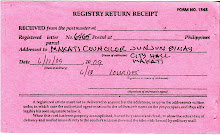
Security lapse occurred on June 12, 2008, at street entrance to National Book store at Robinsons Ermita. The person at said entrance didn't inspect two compartments of my waist bag. Said compartments were large enough to contain deadly weapons. The exit of said store leads to said mall. From said store, I was able to proceed to other parts of said mall. Nobody in said mall inspected said bag.
customer advisory re Philippine Star newspaper and magazine
For their own benefit, it will be advantageous for customers to not follow recommendations for products or services wherein the complete name of the source(s) and complete address(s) of the source(s) of said recommendation(s) is not
clearly visible in the same location wherin said recoomendation is published. An e-mail address is not acceptable. If customers follow recommendations in said publications for products, services, and persons who render said services and the said recommended products and services are unsatisfactory, said customers will not know whom to hold responsible. Similarly, it is not wise for customers to believe statements/claims about the alleged benefits of products, services, persons who perform services unless the complete name of the source(s) and complete address(s) of the source(s) of said statements/claims is visible in the same location where said statements/claims were published. Based on information from said newspaper, all contents in said newspaper and magazine is copyrighted. So, apparently, customer victims who believed recommendations for products, services, persons who perform services cannot use as evidence, portions of said newspaper wherein said recommendations were published. Similarly, apparently, customers who believed alleged benefits of products, services, persons who render services, which were published in said newspaper or magazine, cannot use as evidence, the portion(s) of the newspaper or magazine wherein said recommendations were published.
warning to people who use Norton Internet Security Suite 2008 computer program. I saw a warning, for said users,at the website of Symantec.
Falls and Older Adults
http://nihseniorhealth.gov/falls/toc.html
About Falls
Many people have a friend or relative who has fallen. The person may have slipped while walking or felt dizzy and fallen when standing up from a chair. Maybe you've fallen yourself.
If you or an older person you know has fallen, you're not alone. The risk of falling -- and fall-related problems -- rises with age.
Among older adults(in America), falls are the number one cause of fractures, hospital admissions for trauma, loss of independence, and injury deaths.
Fractures caused by falls can lead to hospital stays and disability. Most often, fall-related fractures are in the person's hip, pelvis, spine, arm, hand, or ankle.
Hip fractures are one of the most serious types of fall injury. They are a leading cause of medical problems and death among older adults (in America). (In America) only half of older adults hospitalized for a broken hip can return home or live on their own after the injury. Osteoporosis, a disease that involves loss of bone mass, increases the chance of hip and other fractures if a person falls.
Many older adults are afraid of falling. This fear becomes more common as people age, even among those who haven't fallen. It may lead older people to avoid activities such as walking, shopping, or taking part in social activities.
If you're worried about falling, talk with your doctor or another health care provider. Your doctor might refer you to a physical therapist, or PT. A PT can help you improve your balance and walking and help build your walking confidence.
Getting rid of your fear of falling can help you to stay active, maintain your physical health, and prevent future falls.
If you fall, be sure to discuss the fall with your doctor, even if you aren't hurt. Many underlying causes of falls can be treated or corrected. For example, falls can be a sign of a problem with your medicines that can be corrected. They can also be a sign of a manageable disease or other problem, such as diabetes or low blood pressure when you stand.
After a fall, your doctor may suggest physical therapy, use of a walking aid, or other steps to help prevent future falls.
These steps can also make you more confident in your abilities.
Exercise to improve your balance and strengthen your muscles helps to prevent falls. Changing your medicines or your eyewear prescription can help, too. You can also make your home safer to avoid falling.
Falls are not an inevitable part of life, even as a person gets older. You can take action to prevent falls. Your doctor or other health care providers can help you decide what changes will help.
Causes and Risk Factors
Falls don't "just happen," and people don't fall because they get older. Often, more than one underlying cause or risk factor is involved in a fall. A risk factor is something that increases a person's risk or susceptibility to a medical problem or disease.
As the number of risk factors rises, so does the risk of falling. Many falls are linked to a person's physical condition or a medical problem, such as a chronic disease. Other causes could be safety hazards in the person's home or community
environment.
Scientists have linked a number of personal risk factors to falling. Muscle weakness, especially in the legs, is one of the most important risk factors. Older people with weak muscles are more likely to fall than are those who maintain their muscle
strength, as well as their flexibility and endurance.
Older Adults and Balance Problems
Your balance and your gait -- how you walk -- are other key factors. Older adults who have poor balance or difficulty walking are more likely than others to fall. These problems may be linked to a lack of exercise or to a neurological cause,
arthritis, or another condition that might be treated or managed.
Blood pressure that drops too much when you get up from lying down or sitting can increase your chance of falling. This condition -- called postural hypotension -- might result from a drop in blood volume, dehydration, or certain medications.
It might also be linked to diabetes, Parkinson's disease, or an infection.
Some people with postural hypotension feel dizzy when their blood pressure drops. Other people don't feel dizzy, even if their blood pressure drops a lot when they get up.
Your reflexes may also be slower than when you were younger. The increased amount of time it takes you to react may make it harder to catch your balance if you start to fall.
Foot problems that cause painful feet, and wearing unsafe footwear can increase your chance of falling. Backless shoes and slippers, high-heeled shoes, and shoes with smooth leather soles are examples of unsafe footwear that could cause a fall.
Sensory problems can cause falls, too. If your senses don't work well, you might be less aware of your environment. For instance, having numb feet may mean you don't sense where you are stepping.
Not seeing well can also result in falls. One reason is that it may take a while for your eyes to adjust to see clearly when you move between darkness and light.
Other vision problems include poor depth perception, cataracts, and glaucoma. Wearing multi-focal glasses while walking or having poor lighting around your home can also lead to falls.
Confusion, even for a short while, can sometimes lead to falls. For example, if you wake up in an unfamiliar environment, you might feel unsure of where you are. If you feel confused, wait for your mind to clear or until someone comes before trying to get up and walk around.
Medication use can increase a person's risk of falling, too. Sometimes the increased risk is because of the health problems for which the person takes the medications. In other cases, medications cause side effects like dizziness or confusion. Drug interactions can also lead to falls.
The more medications you take the more likely you are to fall. People who take four or more prescription drugs have a greater risk of falling than do people who take fewer drugs.
Never add or stop taking medications without talking with your doctor first. Also, ask your doctor if changes in your medications could lower your risk of falls. Your doctor can tell you which drugs, including over-the-counter medicines, might cause problems.
Be sure to talk with your doctor if you fall, as well. A fall could be a sign of a medical problem such as an infection or a cardiovascular disorder. It could also suggest that a chronic ailment, such as Parkinson's disease or dementia, is
progressing.
Although falls can happen anywhere, well over half of all falls (in America) happen at home. Falls at home (in America) often happen while a person is doing normal daily activities. Some of these falls are caused by factors in the person's living environment. For instance, a slick floor or a poorly lit stairway may lead to a fall.
Other factors that can lead to falls at home include loose rugs, clutter on the floor or stairs, and carrying heavy or bulky things up or down stairs. Not having stair railings and not having grab bars in the bathroom can also result in falls.
Simple changes can help make your home safer. The section called Preventing Falls and Fractures -- Home Safety offers some tips for preventing falls at home.
Falls can happen anywhere, but more than half of all falls happen at home. They often happen while a person is doing normal daily activities.
Some factors in people's living environments that can lead to falls are slick floors, poorly lit stairways, loose rugs, and clutter on floors or stairs. Not having stair railings and not having grab bars in the bathroom can also result in falls.
Simple changes can make your home safer.
Preventing Falls and Fractures
Falls and fractures are not an inevitable part of growing older. Many can be prevented. To reduce your risk of falls and
fractures, you can
* make personal changes that involve your lifestyle or physical well-being
* make changes in your home
* consider using walking aids or other assistive devices
* take steps to maintain or improve your bone health.
Talk with your doctor or another health care professional about how to prevent falls at home and elsewhere.
Preventing Falls and Fractures - Personal Changes
Many falls result from personal or lifestyle factors that can be changed. Your doctor or other health care provider can assess your risk of falling and suggest ways to prevent falls.
At your next check-up, talk with your health care provider about your risk of falling and changes you might make. You might be referred to another health care provider who can help. Also, let your doctor know if you've fallen or almost fallen.
Here are some changes you might make.
* Be physically active.
* Have your medicines reviewed.
* Have your blood pressure checked when lying and standing.
* Get a vision check-up.
* Choose safe footwear.
Why Older Adults Should Exercise
Be Physically Active
Regular physical activity is a first line of defense against falls and fractures. Physical activity strengthens muscles and increases flexibility and endurance. In turn, your balance and the way you walk may change, decreasing the chances of a
fall.
It's important to keep muscles strong. Strengthening muscles in the lower body can improve balance. Work with your doctor or a physical therapist to plan a physical activity program that is right for you.
A supervised group program can help with balance and gait training. Strength and balance exercises done at home can also reduce your risk of falls. Whether done with a group or on your own, be sure your program becomes more challenging over
time. This will help improve your balance and strength.
Tai Chi is one type of exercise that may help prevent falls by improving balance and control. This exercise uses slow, flowing movements to help people relax and coordinate the mind and body. It can also boost your self-confidence. Dancing
and other rhythmic movements can help as well.
Doing Strength Exercises
Mild weight-bearing exercise -- such as walking or climbing stairs -- may help slow bone loss from osteoporosis. Having strong bones can prevent fractures if you do fall.
Your doctor or a physical therapist can check your walking and balance. They might do a "Get-Up and Go" test. This simple test shows how steady you are when you get up from a chair. The test also is used to check your walking ability.
Have Your Medicines Reviewed
Find out about the possible side effects of medicines you take. Some medications might affect your coordination or balance, or cause dizziness, confusion, or sleepiness. Some medications don't work well together, adding to your risk of falls.
Bring your prescribed and over-the-counter medicines with you when you visit the doctor. Also bring any vitamins, minerals, and herbal products you are taking.
Ask if any of your medicines or over-the counter products could increase your risk of falling. Also ask if you no longer need to take any of your medications or if the doses might be decreased. Never stop taking your medications unless you talk
with your doctor first.
Also, limit the amount of alcohol you drink. Even a small amount can affect your balance and reflexes.
Have Your Blood Pressure Checked When Lying and Standing
Some older people have normal or increased blood pressure while seated, but their blood pressure drops too much on standing. There is no way to know unless you check. Most often, though, your blood pressure is checked when you are
sitting.
Your health care provider should check your blood pressure and pulse after you have been lying down for at least 5 minutes and again after you get up. If it drops too much when you get up, ask if any of your medications may be decreased or if you
should make other changes. Drinking more water, getting up more slowly, pumping your feet or hands before getting up, or wearing special stockings can help, too.
Get a Vision Check-Up
Have your vision tested regularly or if you think it has changed. Even small changes in sight can make you less stable.
Wear your eyeglasses so you can see your surroundings clearly. Keep them clean and check to see that the frames are straight.When you get new glasses, be extra cautious while you are getting used to them. If you use reading glasses or multi-focal
lenses, take them off when you're walking.
Choose Safe Footwear
The soles of our feet have nerves that help us judge the position of our bodies. To work correctly, our feet need to be in touch with the ground and our shoes need to stay securely with the foot as we take each step. Otherwise, falls may occur.
Characteristics of a good shoe.
It's important to select your footwear carefully to help prevent falls. Wear sensible, low-heeled shoes that fit well and support your feet. There should be no marks on your feet when you take off your shoes and socks.Your shoes should completely surround your feet. Wearing only socks or wearing floppy, backless slippers or shoes without backs can be unsafe. Also, choose shoes with non-slip soles. Smooth soles can cause you to slip on waxed or polished floors.
Preventing Falls and Fractures - Home Safety
(In America) six out of every 10 falls happen at home, where we spend much of our time and tend to move around without thinking about our safety. Many falls could be prevented by making simple changes in your living areas, as well as personal
and lifestyle changes.
Take steps to "fall proof" your home, both inside and outdoors. To make your home safer, you can
* remove or avoid safety hazards
* improve lighting
* install handrails and grab bars
* move items to make them easier to reach.
An important step toward preventing falls at home is to remove anything that could cause you to trip or slip while walking. Tripping on clutter, small furniture, pet bowls, electrical or phone cords, or other things can cause you to fall. Slipping
on rugs or slick floors can also cause falls.Arrange furniture to give you plenty of room to walk freely. Also remove items from stairs, hallways, and pathways.Be sure that carpets are secured to the floor and stairs. Remove throw rugs, use non-slip rugs, or attach rugs to the floor with double-sided tape.Put non-slip strips on floors and steps. Put non-slip strips or a rubber mat on the floor of your bathtub or shower, as well. You can buy these items at a home center or hardware store.
At home and elsewhere, try to avoid wet floors and clean up spills right away. Use only non-skid wax on waxed floors at home. Be careful when walking outdoors, and avoid going out on ice or snow. A simple slip on a slick sidewalk, a curb, or icy
stairs could result in a serious injury.
A cane or walker might make you more stable in bad weather. During the winter, ask someone to spread sand or salt on icy surfaces. Be sure to wear boots with good traction if you must go out when it snows. Better yet, don't take chances walking
on icy or slippery surfaces.
Poor lighting -- inside and outdoors -- can increase your risk of falls. Make sure you have enough lighting in each room, at entrances, and on outdoor walkways. Use light bulbs that have the highest wattage recommended for the fixture. Good lighting on stairways is especially important. Light switches at both the top and bottom of stairs can help.Place a lamp within easy reach of your bed. Put night lights in the bathroom, hallways, bedroom, and kitchen. Also keep a flashlight by your bed in case the power is out and you need to get up.
Have handrails installed on both sides of stairs and walkways. If you must carry something while walking up or down stairs, hold the item in one hand and use the handrail with the other. When you're carrying something, be sure you can see where
your feet are stepping.Properly placed grab bars in your tub and shower, and next to the toilet, can help you avoid falls, too. Have grab bars installed, and use them every time you get in and out of the tub or shower. Be sure the grab bars are securely attached to the wall.
You might find it helpful to rearrange often-used items in your home to make them more accessible. Store food boxes, cans, dishes, clothing, and other everyday items within easy reach. This simple change could prevent a fall that might come from
standing on a stool to get to an item.
If you have fallen, your doctor might suggest that an occupational therapist, physical therapist, or nurse visit your home. These health care providers can assess your home's safety and advise you about making changes to prevent falls.
Preventing Falls and Fractures - Helpful Devices
Use of assistive devices can prevent harmful falls. These devices include canes, walkers, and reachers. A physical or occupational therapist can help you decide which devices might be helpful and how to use them safely. Talk with your doctor about having a physical therapist assess your device needs.
A cane or walker can help you feel more stable when you walk. Walking aids are especially helpful when you're in places you don't know or where walkways are uneven.
Different types of canes are available. Some have grips made of foam or that fit the shape of your hand. Many canes can be adjusted, but some cannot.
A physical therapist can advise you about which cane to choose. Be sure the length fits you well. Your elbow should be at a comfortable angle. A cane that's too short may make you unsteady. A cane that's too long is harder to use. If you use a
cane, be sure to learn how to walk with it the right way. A physical therapist can help.
If you're at risk of falling, your doctor or physical therapist might suggest using a walker. A walker will help you stay balanced by giving you a wide base of support. Be sure to choose a walker that fits you and gives a level of stability that is best for you.
Different types of walkers are available. Some walkers have two wheels so the walker shouldn't roll away from you. These walkers work well if you need to put weight on the walker when you move. Other walkers have four wheels and brakes for going down inclines.
You can add a basket, tray, or pouch to some walkers to carry items. These ccessories will make it more convenient to use the walker.
If you use a walker, be sure it's the right type for you. Also, use it when needed and use it properly. A health care professional can help you select the right walker and show you how to use it.
A reacher, or grabber, can also help prevent falls. This simple tool lets you take lightweight items from high shelves and other places. Use a reacher rather than standing on a stool to get something from above.
Another helpful device is a portable telephone. Carry the phone with you from room to room. When it rings, you won't have to rush to answer it. Not rushing could avert a harmful fall.
Preventing Falls and Fractures - Bone Health
Falls are a common reason for trips to the emergency room and for hospital stays among older adults. Many of these hospital visits are for fall-related fractures. You can help prevent fractures by maintaining the strength of your bones.
Having healthy bones won't prevent a fall. If you fall, though, having healthy bones can prevent hip or other fractures that may lead to a hospital or nursing home stay, disability, or even death.
Osteoporosis makes bones thin and more likely to break. It is a major reason for fractures in women past menopause. It also affects older men. If bones are fragile, even a minor fall can cause fractures.
At any age, you can take steps to keep your bones strong. Be sure to consume adequate amounts of calcium and vitamin D. People over age 50 should consume 1,200 mg of calcium daily by eating calcium-rich foods and taking calcium supplements.
Good dietary sources of calcium include
* dairy products such as low-fat milk, yogurt, and cheese
* orange juice, cereals, and other foods fortified with calcium
* dark green, leafy vegetables such as broccoli, collard greens, and bok choy
* sardines, salmon with bones, soybeans, tofu, and nuts such as almonds.
Vitamin D helps your body absorb calcium. Exposure to sunlight causes your body to make vitamin D. Many older people don't get enough vitamin D this way, though. Eating foods with vitamin D and taking supplements can help. As you grow older, your need for vitamin D increases. People ages 51 to 70 should consume at least 400
international units (IU) of vitamin D daily. People over age 70 should consume at least 600 IU daily.
Herring, sardines, salmon, tuna, liver, eggs, and fortified milk and foods are good sources of vitamin D. Vitamin D supplements may also be needed. Talk with your doctor about how much vitamin D you need. Taking too much may be harmful.
Physical activity is another way to keep your bones strong. Try to get a total of at least 30 minutes of physical activity a day. Find time for activities like walking, dancing, stair climbing, gardening, and weight-lifting.
Talk with your doctor about having a bone density test. This safe, painless test assesses your bone health and risk of future fractures. (In America) Medicare and many private insurers cover this test for eligible people. Women over age 65
and all men over 70 should have a bone density test.
Your doctor can also advise you about whether you should consider taking prescription medications to improve bone health. These medications can slow bone loss, improve bone density, and lessen the risk of fractures.
Other ways to maintain bone health include quitting smoking and limiting alcohol use. Smoking and heavy alcohol use can decrease bone mass and increase the chance of fractures. Also, maintain a healthy weight. Being underweight increases the
risk of bone loss and broken bones.
You're never too old to improve your bone health. A diet that includes enough calcium and vitamin D, and physical activity can help prevent bone loss and fractures. You can also have your bone density tested and ask your doctor about supplements or other medicines to strengthen your bones if needed.
If You Fall
Whether you're at home or somewhere else, a sudden fall can be startling and upsetting. If you do fall, stay as calm as possible. Take several deep breaths to try to relax.
Remain still on the floor or ground for a few moments. This will help you get over the shock of falling. It will also give you time to decide if you're hurt before getting up. Getting up too quickly or in the wrong way could make an injury worse.
If you think you can get up safely without help, roll over onto your side. Push yourself up into a seated position. Rest again while your body and blood pressure adjust. Slowly get up on your hands and knees, and crawl to a sturdy chair.Put your hands on the chair seat and slide one foot forward so that it is flat on the floor. Keep the other leg bent so the knee is on the floor. From this kneeling position, slowly rise and turn your body to sit in the chair.If you're hurt or can't get up on your own, ask someone for help or call (the emergency number). If you're alone, try to get into a comfortable position and wait for help to arrive.
If you have problems with balance or dizziness and are often alone, consider getting a personal emergency response system. This service, which works through your telephone line, provides a button or bracelet to wear at all times in your home.
If you fall or need emergency assistance for any reason, a push of the button will alert the service. Emergency medical services will be called. There is a fee for medical monitoring services, but your personal safety may be worth the cost.
Carrying a portable phone with you as you move about your house could make it easier to call someone if you need assistance. You might also put a telephone in a place that you can reach from the floor in case you fall and need help.
Be sure to discuss any fall with your doctor. Write down when, where, and how you fell so you can discuss the details with your doctor. The doctor can assess whether a medical issue or other cause of the fall needs to be addressed. Knowing the
cause can help you plan to prevent future falls.
Many older people who have fallen are afraid of falling again. Even if a fall doesn't cause injury, the fear of falling again might prevent you from doing activities you enjoy or need to do. Fear of falling also might cause you to stay at home away from your friends, family, and others.
Your muscles and bones can weaken over time without the physical activity that comes with doing daily tasks or exercise. As a result, you could become more -- not less -- likely to fall.
After a fall, your doctor might refer you to other health care providers who can help prevent future falls. A physical therapist can help with gait, balance, strength training, and walking aids. An occupational therapist can suggest changes in your home that may lower your risk of falls.
If you're at high risk for falls and hip fractures, your doctor might suggest that you wear a padded "hip protector." A hip protector is worn over the hips under clothing. It absorbs some of the force of a fall and lessens the impact of the fall
on the bones.
Frequently Asked Questions
1. How common are falls among older people?
(In America) more than one in three people age 65 years or older fall each year. The risk of falling -- and the risk of disability and other life-changing problems caused by falls -- increase with age. Falls are not an inevitable part of getting older, though. Many falls can be prevented.
2. Why do people fall?
People fall for many reasons. Often, more than one risk factor is involved in a fall. As the number of risk factors rises, so does the risk of falling.
Many falls are linked to personal factors -- a person's physical condition or medical problems. Falls may also be linked to safety hazards in the person's home or community environment.
3. What personal factors can lead to falls?
Older Adults and Balance ProblemsSome personal factors that can lead to falls are
* muscle weakness, especially in the legs
* poor balance or difficulty walking -- factors that could be related to a
neurological cause, arthritis, or another condition that might be treated.
* blood pressure that drops too much on standing
* vision problems
* taking medications that cause side effects like dizziness and confusion, or
that interact with one another.
Impaired mental abilities and urinary incontinence may also contribute to falls.
4. What environmental factors can lead to falls?
Some environmental factors that can lead to falls are
* clutter and other tripping hazards
* slick floors, loose rugs, and slippery walkways
* poor lighting, either inside or outdoors
* not having handrails along stairs and grab bars in the bathroom.
5. How do falls affect people?
Falls most often result in bruises or minor cuts, but they sometimes affect a erson's physical or mental well-being. At least one-tenth of falls result in serious injury to soft tissues or bones. A fall can cause a fracture, head injury, or other problem that can change a person's life.
Fractures caused by falls can lead to hospital stays and disability. They can also prevent a person from getting around, doing daily tasks, or socializing. Most often, fall-related fractures are in the person's hip, pelvis, spine, arm, hand, or
ankle.
Fear of falling again can cause problems. A person who has fallen may avoid doing daily tasks or enjoyable activities. This fear can also cause the person to spend more time at home, away from other people.
6. How common are hip fractures, and what problems do they cause?
(In America) hip fractures are a common and very serious type of fall-related injury among older adults. These fractures are a leading cause of medical problems, loss of independence, and death. Only half of older adults hospitalized for a broken hip will be able to get around as they did before the hip fracture. Many will need long-term care.
7. What is osteoporosis and who gets it?
Oteoporosis is a disease that involves loss of bone mass. Over time, this disease thins and weakens bones to the point where they break easily, especially in the hip, spine, and wrist. Low bone mass increases the chance of hip fractures and
other fractures if you fall. If bones are fragile, even a minor fall can cause fractures.
More than two-thirds of people with osteoporosis are women, but men can also have it. Small, thin-boned women and women who are Caucasian or Asian are at greatest risk.
8. How do I know if I have osteoporosis?
Osteoporosis has no symptoms. Many people don't know they have it until a bone breaks. A bone density test can tell you if you are at risk. This safe, painless test uses X-rays or sound waves to measure the strength of your bones. Women over age
65 and men over 70 should have a bone density test.
9. How can I improve my bone health?
Getting enough calcium and vitamin D, and staying physically active can help keep bones healthy and prevent bone loss. Not smoking and limiting the amount of alcohol you drink can help, too. Your doctor might also recommend taking medicines to slow bone loss or help rebuild bone if you are at risk of osteoporosis.
10. How much calcium and vitamin D do I need to keep my bones strong?
Vitamin D chart.People over age 50 should consume 1,200 mg of calcium daily by eating calcium-rich foods and taking calcium supplements. People ages 51 to 70 should consume at least 400 international units (IU) of vitamin D daily. People over age
70 should consume at least 600 IU daily.
11. Can medications increase my risk of falling?
People who take at least four prescription drugs have a greater risk of falling than do people who take fewer drugs. Sometimes the increased risk comes from the health problems for which the person takes the medications. In other cases, the effects of the medications themselves increase a person's risk of falls.
Certain medications cause side effects like dizziness, confusion, and sleepiness that increase a person's risk of falling. Some medications don't work well together and may cause problems that lead to falls.
If you think your medicines are causing problems, don't stop taking them unless you talk with your doctor first. Also, be sure to talk with your doctor about your risk of falls from medications.
12. Should I talk with my doctor about changing my medications to help prevent falls?
It is important to talk with your doctor about your medications. Bring your prescribed medicines with you when you visit the doctor. Also bring any over-the-counter products, vitamins, minerals, and herbal products you are taking.
Ask if any of the medications or other products might increase your risk of falling. Also ask if you no longer need to take any of the medicines or if the doses might be decreased.
13. Does physical activity increase my risk of falls?
Why Older Adults Should Exercise
You might think that moving about will increase the chance of falling. However, physical activity actually helps lower older adults' risk of falls.
Why Exercise
Without the physical activity that comes with doing daily tasks or exercise, your muscles and bones can weaken over time. As a result, you could become more -- not less -- likely to fall. Talk with your doctor about what kinds of physical activity you should do.
14. How does exercise help prevent falls?
Getting regular exercise is one way to prevent falls and fractures that result from falls. Exercise keeps muscles strong and improves balance. It also helps keep joints, tendons, and ligaments flexible. In turn, your balance and the way you walk may improve, lowering your risk of falling.
Your doctor or a physical therapist can help you plan an exercise program that is right for you. A supervised group program can improve your balance and gait. Doing strength and balance exercises at home can also reduce your risk of falls.
15. Does physical activity help prevent fractures?
Regular physical activity helps slow bone loss and builds strong bones. Having strong bones can prevent fractures if you do fall. Walking, dancing, climbing stairs, gardening, and doing other physical activities at least 30 minutes a day can help
keep bones healthy.
16. What is Tai Chi and how can it help prevent falls?
Tai Chi is an ancient Chinese method of using slow, flowing movements to coordinate the mind and body. This gentle, relaxing activity can improve strength, balance, postural alignment, and concentration.
Some studies have found that Tai Chi helps prevent falls among older people because it improves balance and control. It may also boost self-confidence and reduce the fear of falling.
17. Where can I learn more about exercise and older adults?
NIHSeniorHealth.gov includes a section about exercise and older adults.
The National Institute on Aging also offers Exercise: A Guide from the National Institute on Aging and a companion video, available in both English and Spanish.
18. Can vision problems lead to falls?
Vision problems can contribute to falls among older people. Problems that can lead to falls include
* lack of depth perception or visual sharpness
* not being able to see contrasting objects
* cataracts
* glaucoma.
19. What can I do to prevent vision-related falls?
Photo of a woman and her eye doctor.Have your vision tested regularly or if you think it has changed. Even a small change in vision can increase your risk of falling.
To prevent falls, wear your eyeglasses if you need them. Keep the lenses clean and be sure the frames are straight. If you get new glasses, be extra cautious as you get used to them. If you wear reading glasses or multi-focal lenses, take them
off when you're walking to avoid missteps.
20. What kind of footwear should I wear to help prevent falls?
Sensible footwear can help prevent falls. Choose shoes that
* have low heels and non-slip soles
* fit well -- there should be no marks on your feet when you take off your
shoes and socks
* completely surround the foot -- no backless shoes
* support your feet.
Characteristics of a good shoe.Avoid wearing only socks or floppy, backless slippers. Also, be sure to wear boots with good traction if you go outside in the snow.
21. Where do most falls happen?
Falls can happen anywhere, but more than half of all falls happen at home. Many of these falls could be prevented by making simple changes in the home.
22. What can I do to prevent falls at home?
One simple way to prevent falls at home is to remove objects from stairs, hallways, and other places where you walk. Tripping on clutter, shoes, small furniture, pet bowls, electrical or phone cords, or other things can cause a fall. Be sure to arrange furniture so you have plenty of room to walk freely, too.
Secure carpets to the floor and stairs. Remove throw rugs, use non-slip rugs, or attach rugs to the floor with double-sided tape. Put non-slip strips on floors and steps. Put non-slip strips or a rubber mat on the floor of your bathtub or shower.
Have handrails installed along stairs. Have grab bars installed in the tub and shower and next to the toilet. Be sure the handrails and grab bars are firmly attached to the wall.
Re-arranging items in your home can also help prevent falls. Place often-used items within easy reach so you don't need to stand on a stool to get them.
23. Can better lighting help prevent falls?
Good lighting can help prevent falls. Make sure you have adequate lighting in each room, at entrances to your home, and on stairways in your home. Light switches at both the top and bottom of stairs can help. Throughout your home, use light bulbs
that have the highest wattage recommended for the fixture.
Place night lights in the bathroom, hallways, and other areas to guide you when you get up at night. You might also put a lamp within reach of your bed. Keeping a flashlight near your bed can help if the power is out and you need to get up.
24. What can I do to prevent falls outdoors?
Be careful when walking outdoors. Slipping on a slick sidewalk, a curb, or icy stairs could result in a disabling fracture or other injury.
To help prevent falls outdoors at home, you should
* have handrails installed on both sides of outdoor stairs and walkways
* use a cane or walker to increase your stability and walking confidence in bad
weather
* light stairs and walkways
* ask someone to spread sand or salt on icy surfaces
* wear shoes or snow boots with traction when walking on slippery surfaces.
25. Should I use a cane to avoid falls?
Talk with your doctor or a physical therapist to find out if a walking aid will help you avoid falls. A cane or walker could make you more stable when you walk. This walking aid might be especially helpful when you're in unfamiliar places or
where walkways are uneven.
26. If I need a cane, what size should I have?
Be sure that your cane fits you well and that you learn to use it safely. The height of a cane should allow your elbow to be at a comfortable angle. A physical therapist can help you choose the right size and type of cane and can show you how to use it properly.
27. Should I use a walker to prevent falls?
Ask your doctor if a walker would help you prevent falls. A walker could help you stay balanced by giving you a wide base of support. Take time to learn how to use a walker properly. Also, be sure to use the walker when needed.
28. How can I choose the right kind of walker if I need one?
If you need to use a walker, it is important to choose the right kind for you. It's also important to develop a habit of using any walking aid correctly. A physical therapist can help you choose a walker that meets your needs and fits you well.
Two-wheeled walkers won't roll away when you put weight on the walker. Four-wheeled walkers can be used if you don't need to put your weight on the walker for balance.
When using a walker, your elbows should be at a comfortable angle of about 30 degrees. Also, when your arms are relaxed at your sides, the inside of your wrist should be at the top of the walker grip.
29. What should I do if I fall?
A sudden fall can be startling and frightening. If you fall, try to stay calm. Take a few deep breaths to help you relax.Stay still on the floor or ground for a few moments to help you get over the shock of falling. It will also give you time
to decide if you're hurt before getting up. Getting up too quickly or in the wrong way could make an injury worse.
How to get up from a fall.If you think you can get up safely without help, you should follow these steps.
* Roll over onto your side and push yourself up into a seated position.
* Rest while your body and blood pressure adjust.
* Slowly get up on your hands and knees, and crawl to a sturdy chair.
* Put your hands on the chair seat and slide one foot forward so that it is
flat on the floor. Keep the other leg bent
so the knee is on the floor.
* From this kneeling position, slowly rise and turn your body to sit in the
chair.
If you're hurt or can't get up, ask someone for help or call 911. If you're alone, try to get into a comfortable position and wait for help to arrive.
30. Should I tell my doctor if I fall?
Yes. Be sure to tell your doctor if you fall or almost fall, even if you aren't hurt. The fall might be a sign of an underlying problem that can be treated or corrected.
Write down when, where, and how you fell so you can discuss the details with your doctor. The doctor can assess whether a medical issue, such as low blood pressure or diabetes, or another cause of the fall should be addressed.
Knowing the cause of a fall can help you and your doctor find ways to prevent future falls. For instance, your doctor might suggest changing your medication doses or eyewear prescription.
31. How can I cope with my fear of falling?
Many older adults are afraid of falling. This fear becomes more common as people age, even among those who haven't fallen. Getting rid of your fear of falling can help you to stay active, maintain your physical health, and prevent future falls.
Fear of falling might cause you to avoid doing activities you enjoy or need to do. It might also cause you to stay at home, away from your friends, family, and others. In turn, you may become lonely and inactive.
If you're worried about falling, talk with your doctor. He or she may be able to help you cope with this concern by referring you to a physical therapist. A physical therapist can help you improve your balance and help build your walking
confidence.
32. Why do I sometimes feel dizzy when I stand up?
Dizziness might be caused by postural hypotension -- a drop in blood pressure when you stand up. This condition might result from a drop in blood volume, dehydration, or certain medications. It might also be linked to diabetes, Parkinson's disease, or an infection.
Why Am I Dizzy?Talk with your doctor if you sometimes feel dizzy when you stand up. The doctor or a nurse can check your blood pressure to find out if you have postural hypotension. Some people with postural hypotension do not feel dizzy so it is important to ask your doctor or nurse to check your blood pressure while you are lying and standing. They can also suggest ways to avoid the dizziness that could result in a fall. For instance, the doctor may suggest drinking more water
or changing some of your medicine doses. There may also be other reasons for your dizziness which your doctor can help you identify.
Also, always stand up slowly after eating, lying down, or resting. Getting up too quickly can cause your blood pressure to drop.
33. Should I get a personal emergency response system?
If you have problems with balance or dizziness or live alone, you might want to get a personal emergency response system. This service provides a button or bracelet to wear at all times in your home.
If you fall or need emergency medical assistance for any reason, a push of the button will alert the service through the phone system. Emergency medical services will be called. There is a fee for medical monitoring services, but it may be worth the cost.
34. Where can I learn more about preventing falls?
MedlinePlus, a service of the National Library of Medicine, provides more resources about falls and fall prevention.
http://www.nlm.nih.gov/medlineplus/falls.html
Topic last reviewed: 16 October 2006
Topic first published: 16 October 2006
web sites with free useful information:
cookinglight web site
http://www.cookinglight.com/cooking/0,14319,,00.html
Thursday, June 12, 2008

Tuesday, June 10, 2008
security lapses at entrances, on June 10, 2008, to following areas at Ayala Center,
Makati: Park Square 1, Glorietta 1, SM, National Book Store. Deadly weapons could have been brought into said areas. I have receipts of purchases I made on said date at said areas.
customer fire safety advisory re Glorietta at Ayala Center, Makati
I asked two guards at fourth level of Glorietta, at Ayala Center, Makati, to show me where the fire exit was. If there was a fire exit at said level, none of said guards showed me where said fire exit was. I didn't see any fire exit sign at said level. I have a receipt issued by a store at the Food Choices area on said level. I went to what was identified as a concierge near what was identified as the Oakwood. I asked a person at said concierge where the fire exit on the third level was. Said person, apparently a woman, said she didn't know. I went to another concierge, this time near what was identified as Glorietta 1. The person there gave me what was identified as a map of Glorietta. The part of said map showing the level where the Food Choices area was at said mall didn't bear any visible (to unaided eye) indication of any fire exit at said level. The names of said guards available. I am willing to submit a sworn affidavit regarding said incident.
Security lapse at rear entrance to SM Department Store at SM Manila on June 8, 2008. A person, identified as a security guard at said entrance, didn't inspect two compartments of my waist bag. Said compartments were large enough to contain
deadly weapons. From said store, I went to other parts of the SM Manila mall. No one inspected said compartments. Nobody at entrances to the following stores in said mall inspected said compartments: Sun store, Red Ribbon, Ace Hardware, Karate Kid, Watsons, Buy the Book, SM Appliance Center, BSD Intl., Sports Center, Wellcom 3, Electroworld, SM Supermarket. I have receipts of purchases I made at several stores at said mall.
customer advisory regarding "Rissa M. Manaquil"
There is evidence that the following claims were identified as coming from said Manaquil. Said claims were published on page E-3 of the Wednesay, April 16, 2008 issue of the Philippine Star newspaper. It will benefit customers to beware of believing said Manaquil since only her alleged email address was provided on said page.
1. Neutrogena's new line of Ultra Sheer Sunblock with Helioplex Technology".
Does said Manaquil have personal knowledge that such technology actually
exists?
2."When it comes to UVA rays, most sunscreens break down." I challenge said
Manaquil to provide me with certification from an unbiased, independent,
reliable entity that she personally tested all existing sunscreens and
that most of said sunscreens broke down.
3. "Neutrogena Ultra-Sheer Dry Touch Sunblock SP50+ with Helioplex . . .
is equipped with quick-dry properties and is . . .oil free and waterproof
. . .it also boasts grease-absorbing and mattifying properties . . .it's
good even for sensitive skin . . ." If said product is not as described,
will said Manaquil help customers obtain a refund for the money they paid
for said product?
4. "Neutrogena Fresh Cooling Sunblock GelSPF30 with Helioplex . . . also
gives a refreshing feeling to . . . skin and cools the skin on contact.
If said product is not as described, will said Manaquil help customers
obtain a refund for the money they paid for said product?
5. "For the beach, Neutrogena Ultra Sheer Body Mist Sunblock with SPF 30 with
Helioplex is your best bet. And even if you go for a swim, the sunblock
is waterproof." If said product is not as described, will said Manaquil
help customers obtain a refund for the money they paid for said product?
Makati: Park Square 1, Glorietta 1, SM, National Book Store. Deadly weapons could have been brought into said areas. I have receipts of purchases I made on said date at said areas.
customer fire safety advisory re Glorietta at Ayala Center, Makati
I asked two guards at fourth level of Glorietta, at Ayala Center, Makati, to show me where the fire exit was. If there was a fire exit at said level, none of said guards showed me where said fire exit was. I didn't see any fire exit sign at said level. I have a receipt issued by a store at the Food Choices area on said level. I went to what was identified as a concierge near what was identified as the Oakwood. I asked a person at said concierge where the fire exit on the third level was. Said person, apparently a woman, said she didn't know. I went to another concierge, this time near what was identified as Glorietta 1. The person there gave me what was identified as a map of Glorietta. The part of said map showing the level where the Food Choices area was at said mall didn't bear any visible (to unaided eye) indication of any fire exit at said level. The names of said guards available. I am willing to submit a sworn affidavit regarding said incident.
Security lapse at rear entrance to SM Department Store at SM Manila on June 8, 2008. A person, identified as a security guard at said entrance, didn't inspect two compartments of my waist bag. Said compartments were large enough to contain
deadly weapons. From said store, I went to other parts of the SM Manila mall. No one inspected said compartments. Nobody at entrances to the following stores in said mall inspected said compartments: Sun store, Red Ribbon, Ace Hardware, Karate Kid, Watsons, Buy the Book, SM Appliance Center, BSD Intl., Sports Center, Wellcom 3, Electroworld, SM Supermarket. I have receipts of purchases I made at several stores at said mall.
customer advisory regarding "Rissa M. Manaquil"
There is evidence that the following claims were identified as coming from said Manaquil. Said claims were published on page E-3 of the Wednesay, April 16, 2008 issue of the Philippine Star newspaper. It will benefit customers to beware of believing said Manaquil since only her alleged email address was provided on said page.
1. Neutrogena's new line of Ultra Sheer Sunblock with Helioplex Technology".
Does said Manaquil have personal knowledge that such technology actually
exists?
2."When it comes to UVA rays, most sunscreens break down." I challenge said
Manaquil to provide me with certification from an unbiased, independent,
reliable entity that she personally tested all existing sunscreens and
that most of said sunscreens broke down.
3. "Neutrogena Ultra-Sheer Dry Touch Sunblock SP50+ with Helioplex . . .
is equipped with quick-dry properties and is . . .oil free and waterproof
. . .it also boasts grease-absorbing and mattifying properties . . .it's
good even for sensitive skin . . ." If said product is not as described,
will said Manaquil help customers obtain a refund for the money they paid
for said product?
4. "Neutrogena Fresh Cooling Sunblock GelSPF30 with Helioplex . . . also
gives a refreshing feeling to . . . skin and cools the skin on contact.
If said product is not as described, will said Manaquil help customers
obtain a refund for the money they paid for said product?
5. "For the beach, Neutrogena Ultra Sheer Body Mist Sunblock with SPF 30 with
Helioplex is your best bet. And even if you go for a swim, the sunblock
is waterproof." If said product is not as described, will said Manaquil
help customers obtain a refund for the money they paid for said product?
Sunday, June 8, 2008
Senate OKs Pre-need code; Stay Active Safe at any age; Etc
Senate OKS Pre-need Code; provisions cited
Pre-need planholders will have more protection with the proposed Pre-Need Code that was approved by the Senate on second reading last week, Sen. Mar Roxas said yesterday.
Published on Sunday June 8, 2008
http://www.cpsc.gov/cpscpub/pubs/grand/aging/703.html
Stay Active Safe at any age
Staying active as you age helps you remain healthy, live longer and feel better.
More older people than ever before are involved in exercise and sports. They've learned that being physically fit doesn't have to mean aching muscles from workouts and hard-to-maintain exercise schedules. Many people are getting their exercise in active pastimes such as biking, skiing and tennis. Others prefer less active recreation such as walking, gardening or golf.
All are finding relaxation and fun while they secure a healthy future. Exercise helps you feel better because it improves your health. Orthopaedic surgeons say that by spending a little time each day in some type of physical activity, you can enjoy these significant benefits:
* longer, healthier life
* stronger bones
* reduced joint and muscle pain
* improved mobility and balance
* lower risk of falls and serious injuries like hip fractures
* slower loss of muscle mass
People are living longer these days and their quality of life depends on being healthy and remaining independent. Staying active can lower your risk for many common diseases, relieve the pain of arthritis and help you to recover faster when you do get sick.
Stay active and safe
While it's important to stay active, it's also important to play it safe. As more older people engage in physical activities, sports-related injuries are increasing. This is especially true for those who ride bicycles, ski, lift weights and use exercise machines.
According to a recent study by the U.S. Consumer Product Safety Commission (CPSC), an estimated 53,000 people ages 65 and older were treated in U.S. hospital emergency rooms for sports-related injuries in 1996. That's a 54 percent increase in these injuries from 1990. Additional injuries were treated in physicians' offices.
Graphic of statistics pertaining to the estimated injuries to people 65 and over
The increase in injuries is probably due to more older people engaging in active sports. Fortunately, most of these injuries were not severe and could be prevented.
For example, in the CPSC study, very few of the older bikers treated in emergency rooms for head injuries were wearing bike helmets. However, wearing a bike helmet can reduce the risk of serious head injury by up to 85 percent. That's a small precaution for a big payoff.
By getting regular exercise-and doing it safely-you can enjoy a healthier life.
Your activity log
A balanced program of moderate physical activity for 30 minutes a day is beneficial even for people with chronic conditions of bones and joints. The 30 minutes can be broken up into shorter periods such as 15 minutes of gardening in the morning and 15 minutes of brisk walking in the afternoon. Here's a sample activity log that you can use to keep track of the minutes you spend on physical activity.
Seven tips to prevent injury
When you exercise, orthopaedic surgeons and CPSC recommend that you follow these tips:
* Always wear appropriate safety gear. If YOU bike, always wear a bike helmet. Wear the appropriate shoes for each sport.
* Warm-up before you exercise. That could be a moderate activity such as walking at your normal pace, while emphasizing your arm movements.
* Exercise for at least 30 minutes a day. You can break this into shorter periods of 10 or 15 minutes during the day.
* Follow the 10 percent rule. Never increase your program (i.e., walking or running distance or amount of weight lifted) more than 10 percent a week.
* Try not to do the exact same routine two days in a row. Walk, swim, play tennis or lift weights. This works different muscles and keeps exercise more interesting.
* When working out with exercise equipment, read instructions carefully and, if needed, ask someone qualified to help you. Check treadmills or other exercise equipment to be sure they are in good working order. If You are new to weight training, make sure you get proper information before you begin.
* Stop exercising if you experience severe pain or swelling. Discomfort that persists should always be evaluated.
There are lots of ways to enhance your life as you age-and staying fit is one of the most important.
This brochure has been prepared by the American Academy of Orthopaedic Surgeons and the U.S. Consumer Product Safety Commission.
U.S. Consumer Product Safety Commission
Washington, D.C. 20207
1-800-638-2772
The American Academy of Orthopedic Surgeons
American Academy of Orthopaedic Surgeons
6300 North River Road
Rosemont, Illinois 60018
UK Food Standards agency
http://www.food.gov.uk/
About Aspartme
Aspartame (or APM) (pronounced /'æsp?te?m/ or /?'sp?rte?m/) is the name for an artificial, non-saccharide sweetener, aspartyl-phenylalanine-1-methyl ester; i.e., a methyl ester of the dipeptide of the amino acids aspartic acid and phenylalanine.
This sweetener is marketed under a number of trademark names, including Tropicana Slim, Equal, NutraSweet, and Canderel, and is an ingredient of approximately 6,000 consumer foods and beverages sold worldwide. It is commonly used in diet soft drinks, and is often provided as a table condiment. It is also used in some brands of chewable vitamin supplements and common in many sugar-free chewing gums. However, aspartame is not always suitable for baking because it often breaks down when heated and loses much of its sweetness. In the European Union, it is also known under the E number (additive code) E951. Aspartame is also one of the sugar substitutes used by people with diabetes.
Aspartame is a subject of a public controversy due to possible health risks, and has consequently lost market share in recent years to sucralose (Splenda).[2] See Aspartame controversy.
Contents
* 1 Chemistry
* 2 Properties and use
* 3 Discovery and approval
* 4 Metabolism
* 5 Health concerns
* 6 References
Chemistry
Aspartame is the methyl ester of the dipeptide of the natural amino acids L-aspartic acid and L-phenylalanine. Under strongly acidic or alkaline conditions, aspartame may generate methanol by hydrolysis. Under more severe conditions, the peptide bonds are also hydrolyzed, resulting in the free amino acids.[3]
Properties and use
Aspartame is an artificial sweetener. It is 180 times as sweet as sugar in typical concentrations, without the high energy value of sugar. While aspartame, like other peptides, has a caloric value of 4 kilocalories (17 kilojoules) per gram, the quantity of aspartame needed to produce a sweet taste is so small that its caloric contribution is negligible, which makes it a popular sweetener for those trying to avoid calories from sugar. The taste of aspartame is not identical to that of sugar: the sweetness of aspartame has a slower onset and longer duration than that of sugar, and some consumers find it unappealing. Blends of aspartame with acesulfame potassium—usually listed in ingredients as acesulfame K—are alleged to taste more like sugar, and to be sweeter than either substitute used alone.
Like many other peptides, aspartame may hydrolyze (break down) into its constituent amino acids under conditions of elevated temperature or high pH. This makes aspartame undesirable as a baking sweetener, and prone to degradation in products hosting a high-pH, as required for a long shelf life. The stability of aspartame under heating can be improved to some extent by encasing it in fats or in maltodextrin. The stability when dissolved in water depends markedly on pH. At room temperature, it is most stable at pH 4.3, where its half-life is nearly 300 days. At pH 7, however, its half-life is only a few days. Most soft-drinks have a pH between 3 and 5, where aspartame is reasonably stable. In products that may require a longer shelf life, such as syrups for fountain beverages, aspartame is sometimes blended with a more stable sweetener, such as saccharin.[4]
In products such as powdered beverages, the amine in aspartame can undergo a Maillard reaction with the aldehyde groups present in certain aroma compounds. The ensuing loss of both flavor and sweetness can be prevented by protecting the aldehyde as an acetal.
Discovery and approval
Aspartame was discovered in 1965 by James M. Schlatter, a chemist working for G.D. Searle & Company. Schlatter had synthesized aspartame in the course of producing an anti-ulcer drug candidate. He discovered its sweet taste serendipitously when he licked his finger, which had accidentally become contaminated with aspartame.[5]
Following initial safety testing, there was debate as to whether these tests had indicated that aspartame may cause cancer in rats; as a result, the U.S. Food and Drug Administration (FDA) did not approve its use as a food additive in the United States for many years[6]. In 1980, the FDA convened a Public Board of Inquiry (PBOI) consisting of independent advisors charged with examining the purported relationship between aspartame and brain cancer[citation needed]. The PBOI concluded that aspartame does not cause brain damage, but it recommended against approving aspartame at that time, citing unanswered questions about cancer in laboratory rats[citation needed]. The Bressler Report[7] compared all the available raw data and summary data against the manufacturer's FDA submission and found missing raw data, errors and discrepancies in available data, but FDA chose to ignore Bressler's report. At that point in time, there was no requirement in place in FDA regulations to include brain research in the approval process, only cancer research. Searle's Chief Operating Officer, Donald Rumsfeld, reapplied for FDA certification immediately after U.S. President Ronald Reagan took office.[8] In 1981, Reagan appointed Arthur Hull Hayes as FDA commissioner. Citing data from a Japanese study that had not been available to the members of the PBOI[citation needed], Hayes approved aspartame for use in dry goods.[9] In 1983 FDA further approved aspartame for use in carbonated beverages, and for use in other beverages, baked goods, and confections in 1993. In 1996, the FDA removed all restrictions from aspartame allowing it to be used in all foods.
In 1985, Monsanto bought G.D. Searle—and the aspartame business became a separate Monsanto subsidiary, the NutraSweet Company. On May 25, 2000 Monsanto sold it to J.W. Childs Equity Partners II L.P.[10] The U.S. patent on aspartame expired in 1992. Since then the company has faced hot competition in market for aspartame from other manufacturers, including Ajinomoto, Merisant and the Holland Sweetener Company, which stopped making the chemical in late 2006 because "global aspartame markets are facing structural oversupply, which has caused worldwide strong price erosion over the last 5 years" making the business "persistently unprofitable”.[11]
Several European Union countries approved aspartame in the 1980s, with EU-wide approval in 1994. The European Commission Scientific Committee on Food reviewed subsequent safety studies and reaffirmed the approval in 2002. The European Food Safety Authority reported in 2006 that the previously established Adequate Daily Intake was appropriate, after reviewing yet another set of studies.[12]
It has also been investigated and approved by the Joint Expert Committee on Food Additives of the United Nations Food and Agricultural Organization and World Health Organization.[13]
Metabolism
Upon ingestion, aspartame breaks down into several residual chemicals, including aspartic acid, phenylalanine, methanol, and further breakdown products including formaldehyde,[14] formic acid, and a diketopiperazine. There is some controversy surrounding the rate of breakdown into these various products and the effects that they have on those that consume aspartame-sweetened foods. (See Aspartame controversy)
The naturally-occurring essential amino acid phenylalanine is a health hazard to those born with phenylketonuria (PKU), a rare inherited disease that prevents phenylalanine from being properly metabolized. Since individuals with PKU must consider aspartame as an additional source of phenylalanine, foods containing aspartame sold in the United States must state "Phenylketonurics: Contains Phenylalanine" on their product labels.
In the UK, foods that contain aspartame must list the chemical among the product's ingredients and carry the warning "Contains a source of phenylalanine" – this is usually at the foot of the list of ingredients. Manufacturers should print '"with sweetener(s)" on the label close to the main product name' on foods that contain "sweeteners such as aspartame" or "with sugar and sweetener(s)" on "foods that contain both sugar and sweetener". "This labelling is a legal requirement", says the country's Food Standards Agency.[15]
Health concerns
Main article: Aspartame controversy
Aspartame has been the subject of controversy regarding its safety and the circumstances of its approval by the American FDA and European FSA. Aspartic acid, into which aspartame is metabolized, is a known NMDA receptor antagonist. Aspartame itself has been shown to have antinociceptive properties through effecting NMDA receptors in mice. Some studies have also recommended further investigation into possible connections between aspartame and negative effects such as headaches, brain tumors, brain lesions, and lymphoma.[16][17][18] These findings, combined with possible conflicts of interest involving CEO Donald Rumsfeld in the approval process, have engendered vocal activism regarding the possible risks of aspartame.[19][20]
References
1. ^ Merck Index, 11th Edition, 861.
2. ^ John Schmeltzer. "Equal fights to get even as Splenda looks sweet]" (subscription required), Chicago Tribune, 2 December 2004. Retrieved on 2007-07-04.
3. ^ David J. Ager, David P. Pantaleone, Scott A. Henderson, Alan R. Katritzky, Indra Prakash, D. Eric Walters (1998). "Commercial, Synthetic Nonnutritive Sweeteners". Angewandte Chemie International Edition 37 (13-24): 1802-1817. doi:10.1002/(SICI)1521-3773(19980803)37:13/14%3C1802::AID-ANIE1802%3E3.0.CO;2-9.
4. ^ Fountain Beverages in the US. The Coca-Cola Company (May 2007).
5. ^ How Products Are Made: Aspartame
6. ^ Andrew Cockburn, Rumsfeld: His Rise, Fall, and Catastrophic Legacy, Simon and Schuster 2007, pp. 63-64
7. ^ The Bressler Report. Retrieved on 2008-03-11.
8. ^ Mieszkowski, Katharine (2007-10-08). Life will kill you: Can diet soda, cellphones and makeup give you cancer? The author of "The Secret History of the War on Cancer" discusses the health risks of, well, living.. Salon.
9. ^ http://archive.gao.gov/d28t5/133460.pdf
10. ^ http://www.findarticles.com/p/articles/mi_m0EUY/is_22_6/ai_62920821
11. ^ http://www.marketwire.com/mw/release html b1?release id=115447
12. ^ EFSA ::. Opinion of the Scientific Panel on food additives, flavourings, processing aids and materials in contact with food (AFC) related to a new long-term carcinogenicity study on aspartame
13. ^ Debunking the "Official Aspartame Myth
14. ^ C. Trocho, R. Pardo, I. Rafecas, J. Virgili, X. Remesar, J. A. Fernandez-Lopez and M. Alemany (1998). "Formaldehyde derived from dietary aspartame binds to tissue components in vivo". Life Sciences 63 (5): 337-349. doi:10.1016/S0024-3205(98)00282-3.
15. ^ Aspartame - Labelling, UK Food Standards Agency, 18 July 2006.Retrieved on 2007-07-22.
16. ^ Olney, J.W., N.B. Farber, E. Spitznagel, L.N. Robins, 1996. "Increasing Brain Tumor Rates: Is There a Link to Aspartame?" Journal of Neuropathology and Experimental Neurology, Volume 55, pages 1115-1123.
17. ^ Morando Soffritti, Fiorella Belpoggi, Davide Degli Esposti, Luca Lambertini, Eva Tibaldi, and Anna Rigano (2006). "First Experimental Demonstration of the Multipotential Carcinogenic Effects of Aspartame Administered in the Feed to Sprague-Dawley Rats" (reprint). Environmental Health Perspectives 114 (3): 379-385. doi:10.1289/ehp.8711.
18. ^ Roberts, H.J., "Does Aspartame Cause Human Brain Cancer," Journal of Advancement in Medicine, Volume 4(4):231-241, 1991.
19. ^ GAO 1986. "Six Former HHS Employees' Involvement in Aspartame's Approval," United States General Accounting Office, GAO/HRD-86-109BR, July 1986. http://archive.gao.gov/d4t4/130780.pdf
20. ^ Gordon, Gregory, United Press International Investigation, "NutraSweet: Questions Swirl," 1987. http://www.dorway.com/upipaper.txt
http://dorway.com/dorwblog/
http://www.holisticmed.com/aspartame/
Aspartame and Nutrasweet Toxicity Info Center
Detailed scientific and general documentation regarding the toxicity of nutrasweet, Equal, diet coke, diet pepsi, and other aspartame containing items. Web page includes real life reports of acute and chronic toxicity due to long-term ingestion.
Case Histories | Science | General Resources | Video / Audio | Books | Important Links
Aspartame Toxicity Reaction Case Reports
* Nutrasweet Toxicity Reaction Samples - Internet (Updated 03/11/2008)
* Nutrasweet Toxicity Reaction Samples - Postal Mail
* Personal Testimonies of Aspartame Victims (Offsite)
* Case Histories? Questions?
Aspartame Scientific Documents (100's of referenced pages suitable for laypersons, physicians and researchers.)
* Recent Independent Aspartame Research Results (1998-2008)
* Formaldehyde Toxicity & Accumulation from Aspartame
* Frequently Asked Questions (FAQs) with Referenced Answers
* Aspartame: Abuse of the Scientific Method (Detailed & Referenced Articles)
* Independent Researchers: Publications & Statements on Aspartame
* Survey of Aspartame Studies, Correlation of Outcome & Funding Sources
* Vision Damage From Aspartame
* Aspartame/NutraSweet Review Draft (1995)
General Resources Section
* Healthier Sweetener Resource Center
* Aspartame Detoxficiation
* Nutrasweet Is Bad For Everyone (Long-Term Use)
* Sucralose / Splenda Toxicity Information Center
* Short Aspartame Article - Updated 4/1/95 (ASCII/Plain Text)
* 5 Simple Steps to Help Yourself & Others Avoid Chronic Aspartame Poisoning
* Advanced Steps to Help Stop Chronic Poisoning
* Aspartame Dangers in Pregnancy
* Short Adverse Reaction Questionnarie
Video / Audio
* Neuroscientist Russell Blaylock on Aspartame
* Fox 5 News Report on Aspartame
* Donald Rumsfeld Involvement in Aspartame
* “Sweet Misery, A Poisoned World” Documentary | (Order)
* “Sweet Remedy: The World Reacts” Documentary Trailer | (Sweet Remedy Movie Web Site) | (Order)
* Aspartame & Cancer Risk
* Aspartame - 60 Minutes News Report
* Aspartame - Sweet Sickness - WTVJ (NBC) News Report: Part 1 | Part 2
* Dr. Woodrow Monte Radio Interviews
* Excitotoxin (Aspartame, MSG) presentation by Neuroscientist Russell Blaylock
* Interview with Aspartame Expert Corrine Gouget in French: Part 1 | Part 2 | Part 3 | Part 4 | Part 5
Books
* Aspartame (NutraSweet): Is It Safe? by H.J. Roberts, MD
* Aspartame Disease: An Ignored Epidemic by H.J. Roberts, MD ( Direct Amazon.com link).
* Sweet Deception by Dr. Joseph Mercola ( Direct Amazon.com link).
* Sweet Poison by Janet Starr Hull ( Direct Amazon.com link).
* Excitotoxins: The Taste That Kills by Russell Blaylock, MD
* additifs alimentaires: Le guide indispensable pour ne plus vous empoisonner (French) by Corinne Gouget
Important Links Section
* Food Science Professor Woodrow Monte Scientific Articles & Resources on Aspartame
* Dorway to Discovery: Aspartame Megasite
* Mission Possible International: Worldwide Network & News on Aspartame
* WNHO Aspartame Support/Discussion Group
* Aspartame Email Support Group
* Aspartame Victims Support Group
* Aspartame Dangers Revealed and Aspartame Detox Program
* Rich Murray's Extensive & Ongoing Scientific Blog Related to Aspartame Toxicity (Also available: here.
* AspartameKills -- Articles & Video/Radio Broadcasts
* Aspartame Consumer Safety Network (ACSN)
* Aspartame News (Latest)
* Dr. Russell Blaylock, MD: World Expert on Aspartame and Excitotoxins
* Ban Aspartame Web Page (Greece) from Dr Costas Giannakenas MD
* Sweet Poison (NutraSweet) and NutraPoison and Ant Poison by Alex Constantine
* Aspartame Controversy: Wikipedia
Back to Health Page
Toxicity Effects of Aspartame Use
Selection of adverse effects from short-term and/or long-Term use
Note: It often takes at least sixty days without *any* aspartame or nutrasweet to see a significant improvement. Improvement in health is also often accompanied by weight loss. Check all labels very carefully (including vitamins and pharmaceuticals). Look for the word "aspartame" on the label and avoid it. (Also, it is a good idea to avoid "acesulfame-k" or "sunette.") Finally, avoid getting nutrition information from junk food industry PR organizations such as IFIC or organizations that accept large sums of money from the junk and chemical food industry such as the American Dietetic Association.
* seizures and convulsions
* dizziness
* tremors
* migraines and severe headaches (Trigger or Cause From Chronic Intake)
* memory loss (common toxicity effects)
* slurring of speech
* confusion
* numbness or tingling of extremities
* chronic fatigue
* depression
* insomnia
* irritability
* panic attacks (common aspartame toxicity reaction)
* marked personality changes
* phobias
* rapid heart beat, tachycardia (another frequent reaction)
* asthma
* chest pains
* hypertension (high blood pressure)
* nausea or vomitting
* diarrhea
* abdominal pain
* swallowing pain
* itching
* hives / urticaria
* other allergic reactions
* blood sugar control problems (e.g., hypoglycemia or hyperglycemia)
* menstrual cramps and other menstraul problems or changes
* impotency and sexual problems
* food cravings
* weight gain
* hair loss / baldness or thinning of hair
* burning urination & other urination problems
* excessive thirst or excessive hunger
* bloating, edema (fluid retention)
* infection susceptibility
* joint pain
* brain cancer (Pre-approval studies in animals)
* death
Aspartame Disease Mimmicks Symptoms or Worsens the Following Diseases
* fibromyalgia
* arthritis
* multiple sclerosis (MS)
* parkinson's disease
* lupus
* multiple chemical sensitivities (MCS)
* diabetes and diabetic Complications
* epilepsy
* alzheimer's disease
* birth defects
* chronic fatigue syndrome
* lymphoma
* lyme disease
* attention deficit disorder (ADD and ADHD)
* panic disorder
* depression and other psychological disorders
http://www.aspartame.org/
http://www.snopes.com/medical/toxins/aspartame.asp
http://www.snopes.com/medical/toxins/aspartame.asp
http://www.aspartamekills.com/
http://www.mercola.com/article/aspartame/dangers.htm
http://www.aspartame.net/
http://www.321recipes.com/aspartame.html
http://www.rense.com/general69/assp.htm
http://www.naturalnews.com/011804.html
www.foodnavigator-usa.com/news/ng.asp?id=75956-fda-ramazzini-aspartame
www.sitnews.us/RobHolston/111207_fitness.html -
http://www.wnho.net/fda_study_asp_brain_tumors.htm
http://www.freenewmexican.com/news/35357.html
http://www.fda.gov/oc/po/firmrecalls/abbott05_08.html
Recall -- Firm Press Release
FDA posts press releases and other notices of recalls and market withdrawals from the firms involved as a service to consumers, the media, and other interested parties. FDA does not endorse either the product or the company.
Abbott Announces Voluntary Worldwide Recall of Two Lots of Calcilo XD Low-Calcium/Vitamin D-Free Infant Formula with Iron Powder in 14.1-Ounce (400g) Cans
Contact:
Consumer Hotline
(800) 638-6493
FOR IMMEDIATE RELEASE -- May 30, 2008 -- Abbott today announced a voluntary worldwide recall of two lots of Calcilo XD® Low-Calcium/Vitamin D-Free Infant Formula with Iron powder in 14.1-ounce cans (400g). Only 14.1-ounce (400g) cans are involved in this action. Calcilo XD® is a low-calcium and vitamin D-free infant formula that is specifically designed for the nutrition support of infants and children with hypercalcemia (high calcium in blood). It is only available by special order.
Abbott is voluntarily recalling two lots of product because small amounts of air may have entered the can, resulting in product oxidation. A common sign of oxidation is an off aroma. The problem is isolated to these two lots of Calcilo XD Powder in 14.1-ounce (400g) cans.
Consumption of highly oxidized foods can cause gastrointestinal (GI) symptoms such as nausea, vomiting and diarrhea. If parents have questions or concerns they should contact a health care professional.
The recall is limited to Calcilo XD in 14.1-ounce (400g) cans, with stock code number 00378 and with lot numbers 39973RB or 47239RB6 printed on the bottom of the cans. No other Calcilo XD powdered infant formulas are affected.
The two lots were distributed in the United States, Canada, Malaysia, Korea and Bahrain, between 06/06/06 and 04/17/08. Consumers who purchased Calcilo XD® Low-Calcium/Vitamin D-Free Infant Formula with Iron powder from either of the two lots mentioned above should contact Abbott Nutrition at 1-800-638-6493.
Abbott is working with its distribution partners and the U.S. Food and Drug Administration to execute this recall.
http://www.cpsc.gov/library/data.html
U.S. Consumer Product Safety Commission Consumer Product Related Statistics
Children’s Products
Update of Incident Reports Involving Yo-yo Balls (released November 2006)
Toy-Related Deaths and Injuries for 2006 (issued 12/07); Also: 2005, 2004, 2003, 2002, 2001, 2000, 1999 and 1998 reports
Nursery Product-Related Injuries and Deaths among Children under Age Five for FY2006 (issued 02/08); Also: 2005, 2004, 2003, 2001, 2000, 1999 and 1998 reports
Deaths Associated With Playpens (released 7/01)
Asbestos Fibers in Children's Crayons (issued 8/00)
SIDS Awareness Survey (issued 7/00)
Youth Bed Rail Entrapments and Hangings (released 6/00) (note: the appendices for this document are available here, starting on page 23)
Hazards Associated With Children Placed in Adult Beds (issued 1999)
Child Poisonings
Pediatric Poisoning Fatalities from 1972 through 2005 (released March 2008)
Poison Prevention Packaging Act (PPPA) Report (released 10/99)
CO (Carbon Monoxide) Poisonings
Incidents, Deaths, and In-Depth Investigations Associated with Non-Fire Carbon Monoxide from Engine-Driven Generators and Other Engine-Driven Tools, 1999-2006 (released October 10, 2007)
Non-Fire Carbon Monoxide Deaths Associated with the Use of Consumer Products: 2003 and 2004 Annual Estimates (released August 2007); Also: prior reports
Carbon Monoxide Fatalities Associated with Engine-Driven Generators and Other Engine-Driven Tools in 2002 through 2005 (released August 16, 2006)
Technical Feasibility of a CO Shutdown System for Tank-Top Heaters (released January 27, 2006)
Non-Fire Carbon Monoxide Fatalities Associated with Engine-Driven Generators and Other Engine-Driven Tools in 2004 and 2005 (released January 13, 2006)
Incidents, Deaths, and In-Depth Investigations Associated with Carbon Monoxide from Engine-Driven Generators and Other Engine-Driven Tools, 1990-2004 (released December 1, 2005); Also: 1990-2003 report
Portable Generators: CPSC Staff Report (released May 2004)
Estimating Non-Fatal Carbon Monoxide Poisonings Injuries (released November 27, 2002)
Electrocutions
2003 Electrocutions Associated With Consumer Products (released 12/06); Also: prior reports
Fires
National Burn Center Reporting System, Report of Incidents from June 2004 through December 2005 (released 01/07)
Estimates of Fire Injuries Treated in Hospital Emergency Departments: July 2002 – June 2003 (released 06/05)
2002 – 2004 Residential Fire Loss Estimates (released 7/07) Also: prior reports
Upholstered Furniture Addressable Fire Loss Estimates for 1999-2002 (released 11/05)
Mattress and Bedding Fire Caualty Prevention Estimates - Updated using 2003-2004 NFIRS Data (released 3/08)
Mattress and Bedding Fire Loss Estimates for 1999-2000 (released 11/05)
Electric & Gas Clothes Dryers-Staff Evaluation (released 02/00)
Data Summary on Halogen Torchiere-Style Floor Lamps (released 05/98)
Hazard Report for Candle-Related Incidents (released 04/98)
Fireworks
2006 Fireworks Annual Report - Released 06/07; Also: prior reports
Hazard Screening
CPSC Hazard Screening Reports
Sports and Recreation
Amusement Ride Related Injuries and Deaths in the United States: 2006 Update (released 07/07); Prior updates: 2005, 2004, 2003, 2002, 2001, 2000
Special Study: Injuries and deaths associated with children's playground equipment (released 4/01)
Trampoline Related Injuries (released 9/00)
2006 Annual Report of All-Terrain Vehicle (ATV)-Related Deaths and Injuries; Prior Reports: 2005, 2004, 2003, 2002, 2001, 1999
Baby Boomer Sports Injuries (released 4/00)
National Bike Helmet Use Survey (released 4/99)
Skiing Helmets - An Evaluation of the Potential to Reduce Head Injury (released 1/99)
Go-Cart/Fun-Kart Related Injuries and Deaths, 1985-1996 (released 2/24/98)
Sports-related injuries to persons 65 years of age and older
Submersion
1999-2007 Reported Circulation/Suction Entrapments Associated with Pools, Hot Tubs, Spas, and Whirlpools (March 2008)
2008 Pool and Spa Submersion Memorandum (released 5/2008); Prior Reports: 2007 Memorandum (released 6/2007), 2006 Memorandum (released 5/2006)
2007 Non-Pool Submersion Memorandum (released 8/2007)
Study on Pool Alarm Reliability (released 5/2000)
Other Products
Incident Reports Involving Free Standing Kitchen Range Tipovers (released 4/2007)
Hazardous Products in Thrift Stores Study (released 11/1999)
Shopping Cart Injuries (1985-1996)
web sites with free useful information:
asiaone web site
http://www.asiaone.com/A1Home/A1Home.html
Pre-need planholders will have more protection with the proposed Pre-Need Code that was approved by the Senate on second reading last week, Sen. Mar Roxas said yesterday.
Published on Sunday June 8, 2008
http://www.cpsc.gov/cpscpub/pubs/grand/aging/703.html
Stay Active Safe at any age
Staying active as you age helps you remain healthy, live longer and feel better.
More older people than ever before are involved in exercise and sports. They've learned that being physically fit doesn't have to mean aching muscles from workouts and hard-to-maintain exercise schedules. Many people are getting their exercise in active pastimes such as biking, skiing and tennis. Others prefer less active recreation such as walking, gardening or golf.
All are finding relaxation and fun while they secure a healthy future. Exercise helps you feel better because it improves your health. Orthopaedic surgeons say that by spending a little time each day in some type of physical activity, you can enjoy these significant benefits:
* longer, healthier life
* stronger bones
* reduced joint and muscle pain
* improved mobility and balance
* lower risk of falls and serious injuries like hip fractures
* slower loss of muscle mass
People are living longer these days and their quality of life depends on being healthy and remaining independent. Staying active can lower your risk for many common diseases, relieve the pain of arthritis and help you to recover faster when you do get sick.
Stay active and safe
While it's important to stay active, it's also important to play it safe. As more older people engage in physical activities, sports-related injuries are increasing. This is especially true for those who ride bicycles, ski, lift weights and use exercise machines.
According to a recent study by the U.S. Consumer Product Safety Commission (CPSC), an estimated 53,000 people ages 65 and older were treated in U.S. hospital emergency rooms for sports-related injuries in 1996. That's a 54 percent increase in these injuries from 1990. Additional injuries were treated in physicians' offices.
Graphic of statistics pertaining to the estimated injuries to people 65 and over
The increase in injuries is probably due to more older people engaging in active sports. Fortunately, most of these injuries were not severe and could be prevented.
For example, in the CPSC study, very few of the older bikers treated in emergency rooms for head injuries were wearing bike helmets. However, wearing a bike helmet can reduce the risk of serious head injury by up to 85 percent. That's a small precaution for a big payoff.
By getting regular exercise-and doing it safely-you can enjoy a healthier life.
Your activity log
A balanced program of moderate physical activity for 30 minutes a day is beneficial even for people with chronic conditions of bones and joints. The 30 minutes can be broken up into shorter periods such as 15 minutes of gardening in the morning and 15 minutes of brisk walking in the afternoon. Here's a sample activity log that you can use to keep track of the minutes you spend on physical activity.
Seven tips to prevent injury
When you exercise, orthopaedic surgeons and CPSC recommend that you follow these tips:
* Always wear appropriate safety gear. If YOU bike, always wear a bike helmet. Wear the appropriate shoes for each sport.
* Warm-up before you exercise. That could be a moderate activity such as walking at your normal pace, while emphasizing your arm movements.
* Exercise for at least 30 minutes a day. You can break this into shorter periods of 10 or 15 minutes during the day.
* Follow the 10 percent rule. Never increase your program (i.e., walking or running distance or amount of weight lifted) more than 10 percent a week.
* Try not to do the exact same routine two days in a row. Walk, swim, play tennis or lift weights. This works different muscles and keeps exercise more interesting.
* When working out with exercise equipment, read instructions carefully and, if needed, ask someone qualified to help you. Check treadmills or other exercise equipment to be sure they are in good working order. If You are new to weight training, make sure you get proper information before you begin.
* Stop exercising if you experience severe pain or swelling. Discomfort that persists should always be evaluated.
There are lots of ways to enhance your life as you age-and staying fit is one of the most important.
This brochure has been prepared by the American Academy of Orthopaedic Surgeons and the U.S. Consumer Product Safety Commission.
U.S. Consumer Product Safety Commission
Washington, D.C. 20207
1-800-638-2772
The American Academy of Orthopedic Surgeons
American Academy of Orthopaedic Surgeons
6300 North River Road
Rosemont, Illinois 60018
UK Food Standards agency
http://www.food.gov.uk/
About Aspartme
Aspartame (or APM) (pronounced /'æsp?te?m/ or /?'sp?rte?m/) is the name for an artificial, non-saccharide sweetener, aspartyl-phenylalanine-1-methyl ester; i.e., a methyl ester of the dipeptide of the amino acids aspartic acid and phenylalanine.
This sweetener is marketed under a number of trademark names, including Tropicana Slim, Equal, NutraSweet, and Canderel, and is an ingredient of approximately 6,000 consumer foods and beverages sold worldwide. It is commonly used in diet soft drinks, and is often provided as a table condiment. It is also used in some brands of chewable vitamin supplements and common in many sugar-free chewing gums. However, aspartame is not always suitable for baking because it often breaks down when heated and loses much of its sweetness. In the European Union, it is also known under the E number (additive code) E951. Aspartame is also one of the sugar substitutes used by people with diabetes.
Aspartame is a subject of a public controversy due to possible health risks, and has consequently lost market share in recent years to sucralose (Splenda).[2] See Aspartame controversy.
Contents
* 1 Chemistry
* 2 Properties and use
* 3 Discovery and approval
* 4 Metabolism
* 5 Health concerns
* 6 References
Chemistry
Aspartame is the methyl ester of the dipeptide of the natural amino acids L-aspartic acid and L-phenylalanine. Under strongly acidic or alkaline conditions, aspartame may generate methanol by hydrolysis. Under more severe conditions, the peptide bonds are also hydrolyzed, resulting in the free amino acids.[3]
Properties and use
Aspartame is an artificial sweetener. It is 180 times as sweet as sugar in typical concentrations, without the high energy value of sugar. While aspartame, like other peptides, has a caloric value of 4 kilocalories (17 kilojoules) per gram, the quantity of aspartame needed to produce a sweet taste is so small that its caloric contribution is negligible, which makes it a popular sweetener for those trying to avoid calories from sugar. The taste of aspartame is not identical to that of sugar: the sweetness of aspartame has a slower onset and longer duration than that of sugar, and some consumers find it unappealing. Blends of aspartame with acesulfame potassium—usually listed in ingredients as acesulfame K—are alleged to taste more like sugar, and to be sweeter than either substitute used alone.
Like many other peptides, aspartame may hydrolyze (break down) into its constituent amino acids under conditions of elevated temperature or high pH. This makes aspartame undesirable as a baking sweetener, and prone to degradation in products hosting a high-pH, as required for a long shelf life. The stability of aspartame under heating can be improved to some extent by encasing it in fats or in maltodextrin. The stability when dissolved in water depends markedly on pH. At room temperature, it is most stable at pH 4.3, where its half-life is nearly 300 days. At pH 7, however, its half-life is only a few days. Most soft-drinks have a pH between 3 and 5, where aspartame is reasonably stable. In products that may require a longer shelf life, such as syrups for fountain beverages, aspartame is sometimes blended with a more stable sweetener, such as saccharin.[4]
In products such as powdered beverages, the amine in aspartame can undergo a Maillard reaction with the aldehyde groups present in certain aroma compounds. The ensuing loss of both flavor and sweetness can be prevented by protecting the aldehyde as an acetal.
Discovery and approval
Aspartame was discovered in 1965 by James M. Schlatter, a chemist working for G.D. Searle & Company. Schlatter had synthesized aspartame in the course of producing an anti-ulcer drug candidate. He discovered its sweet taste serendipitously when he licked his finger, which had accidentally become contaminated with aspartame.[5]
Following initial safety testing, there was debate as to whether these tests had indicated that aspartame may cause cancer in rats; as a result, the U.S. Food and Drug Administration (FDA) did not approve its use as a food additive in the United States for many years[6]. In 1980, the FDA convened a Public Board of Inquiry (PBOI) consisting of independent advisors charged with examining the purported relationship between aspartame and brain cancer[citation needed]. The PBOI concluded that aspartame does not cause brain damage, but it recommended against approving aspartame at that time, citing unanswered questions about cancer in laboratory rats[citation needed]. The Bressler Report[7] compared all the available raw data and summary data against the manufacturer's FDA submission and found missing raw data, errors and discrepancies in available data, but FDA chose to ignore Bressler's report. At that point in time, there was no requirement in place in FDA regulations to include brain research in the approval process, only cancer research. Searle's Chief Operating Officer, Donald Rumsfeld, reapplied for FDA certification immediately after U.S. President Ronald Reagan took office.[8] In 1981, Reagan appointed Arthur Hull Hayes as FDA commissioner. Citing data from a Japanese study that had not been available to the members of the PBOI[citation needed], Hayes approved aspartame for use in dry goods.[9] In 1983 FDA further approved aspartame for use in carbonated beverages, and for use in other beverages, baked goods, and confections in 1993. In 1996, the FDA removed all restrictions from aspartame allowing it to be used in all foods.
In 1985, Monsanto bought G.D. Searle—and the aspartame business became a separate Monsanto subsidiary, the NutraSweet Company. On May 25, 2000 Monsanto sold it to J.W. Childs Equity Partners II L.P.[10] The U.S. patent on aspartame expired in 1992. Since then the company has faced hot competition in market for aspartame from other manufacturers, including Ajinomoto, Merisant and the Holland Sweetener Company, which stopped making the chemical in late 2006 because "global aspartame markets are facing structural oversupply, which has caused worldwide strong price erosion over the last 5 years" making the business "persistently unprofitable”.[11]
Several European Union countries approved aspartame in the 1980s, with EU-wide approval in 1994. The European Commission Scientific Committee on Food reviewed subsequent safety studies and reaffirmed the approval in 2002. The European Food Safety Authority reported in 2006 that the previously established Adequate Daily Intake was appropriate, after reviewing yet another set of studies.[12]
It has also been investigated and approved by the Joint Expert Committee on Food Additives of the United Nations Food and Agricultural Organization and World Health Organization.[13]
Metabolism
Upon ingestion, aspartame breaks down into several residual chemicals, including aspartic acid, phenylalanine, methanol, and further breakdown products including formaldehyde,[14] formic acid, and a diketopiperazine. There is some controversy surrounding the rate of breakdown into these various products and the effects that they have on those that consume aspartame-sweetened foods. (See Aspartame controversy)
The naturally-occurring essential amino acid phenylalanine is a health hazard to those born with phenylketonuria (PKU), a rare inherited disease that prevents phenylalanine from being properly metabolized. Since individuals with PKU must consider aspartame as an additional source of phenylalanine, foods containing aspartame sold in the United States must state "Phenylketonurics: Contains Phenylalanine" on their product labels.
In the UK, foods that contain aspartame must list the chemical among the product's ingredients and carry the warning "Contains a source of phenylalanine" – this is usually at the foot of the list of ingredients. Manufacturers should print '"with sweetener(s)" on the label close to the main product name' on foods that contain "sweeteners such as aspartame" or "with sugar and sweetener(s)" on "foods that contain both sugar and sweetener". "This labelling is a legal requirement", says the country's Food Standards Agency.[15]
Health concerns
Main article: Aspartame controversy
Aspartame has been the subject of controversy regarding its safety and the circumstances of its approval by the American FDA and European FSA. Aspartic acid, into which aspartame is metabolized, is a known NMDA receptor antagonist. Aspartame itself has been shown to have antinociceptive properties through effecting NMDA receptors in mice. Some studies have also recommended further investigation into possible connections between aspartame and negative effects such as headaches, brain tumors, brain lesions, and lymphoma.[16][17][18] These findings, combined with possible conflicts of interest involving CEO Donald Rumsfeld in the approval process, have engendered vocal activism regarding the possible risks of aspartame.[19][20]
References
1. ^ Merck Index, 11th Edition, 861.
2. ^ John Schmeltzer. "Equal fights to get even as Splenda looks sweet]" (subscription required), Chicago Tribune, 2 December 2004. Retrieved on 2007-07-04.
3. ^ David J. Ager, David P. Pantaleone, Scott A. Henderson, Alan R. Katritzky, Indra Prakash, D. Eric Walters (1998). "Commercial, Synthetic Nonnutritive Sweeteners". Angewandte Chemie International Edition 37 (13-24): 1802-1817. doi:10.1002/(SICI)1521-3773(19980803)37:13/14%3C1802::AID-ANIE1802%3E3.0.CO;2-9.
4. ^ Fountain Beverages in the US. The Coca-Cola Company (May 2007).
5. ^ How Products Are Made: Aspartame
6. ^ Andrew Cockburn, Rumsfeld: His Rise, Fall, and Catastrophic Legacy, Simon and Schuster 2007, pp. 63-64
7. ^ The Bressler Report. Retrieved on 2008-03-11.
8. ^ Mieszkowski, Katharine (2007-10-08). Life will kill you: Can diet soda, cellphones and makeup give you cancer? The author of "The Secret History of the War on Cancer" discusses the health risks of, well, living.. Salon.
9. ^ http://archive.gao.gov/d28t5/133460.pdf
10. ^ http://www.findarticles.com/p/articles/mi_m0EUY/is_22_6/ai_62920821
11. ^ http://www.marketwire.com/mw/release html b1?release id=115447
12. ^ EFSA ::. Opinion of the Scientific Panel on food additives, flavourings, processing aids and materials in contact with food (AFC) related to a new long-term carcinogenicity study on aspartame
13. ^ Debunking the "Official Aspartame Myth
14. ^ C. Trocho, R. Pardo, I. Rafecas, J. Virgili, X. Remesar, J. A. Fernandez-Lopez and M. Alemany (1998). "Formaldehyde derived from dietary aspartame binds to tissue components in vivo". Life Sciences 63 (5): 337-349. doi:10.1016/S0024-3205(98)00282-3.
15. ^ Aspartame - Labelling, UK Food Standards Agency, 18 July 2006.Retrieved on 2007-07-22.
16. ^ Olney, J.W., N.B. Farber, E. Spitznagel, L.N. Robins, 1996. "Increasing Brain Tumor Rates: Is There a Link to Aspartame?" Journal of Neuropathology and Experimental Neurology, Volume 55, pages 1115-1123.
17. ^ Morando Soffritti, Fiorella Belpoggi, Davide Degli Esposti, Luca Lambertini, Eva Tibaldi, and Anna Rigano (2006). "First Experimental Demonstration of the Multipotential Carcinogenic Effects of Aspartame Administered in the Feed to Sprague-Dawley Rats" (reprint). Environmental Health Perspectives 114 (3): 379-385. doi:10.1289/ehp.8711.
18. ^ Roberts, H.J., "Does Aspartame Cause Human Brain Cancer," Journal of Advancement in Medicine, Volume 4(4):231-241, 1991.
19. ^ GAO 1986. "Six Former HHS Employees' Involvement in Aspartame's Approval," United States General Accounting Office, GAO/HRD-86-109BR, July 1986. http://archive.gao.gov/d4t4/130780.pdf
20. ^ Gordon, Gregory, United Press International Investigation, "NutraSweet: Questions Swirl," 1987. http://www.dorway.com/upipaper.txt
http://dorway.com/dorwblog/
http://www.holisticmed.com/aspartame/
Aspartame and Nutrasweet Toxicity Info Center
Detailed scientific and general documentation regarding the toxicity of nutrasweet, Equal, diet coke, diet pepsi, and other aspartame containing items. Web page includes real life reports of acute and chronic toxicity due to long-term ingestion.
Case Histories | Science | General Resources | Video / Audio | Books | Important Links
Aspartame Toxicity Reaction Case Reports
* Nutrasweet Toxicity Reaction Samples - Internet (Updated 03/11/2008)
* Nutrasweet Toxicity Reaction Samples - Postal Mail
* Personal Testimonies of Aspartame Victims (Offsite)
* Case Histories? Questions?
Aspartame Scientific Documents (100's of referenced pages suitable for laypersons, physicians and researchers.)
* Recent Independent Aspartame Research Results (1998-2008)
* Formaldehyde Toxicity & Accumulation from Aspartame
* Frequently Asked Questions (FAQs) with Referenced Answers
* Aspartame: Abuse of the Scientific Method (Detailed & Referenced Articles)
* Independent Researchers: Publications & Statements on Aspartame
* Survey of Aspartame Studies, Correlation of Outcome & Funding Sources
* Vision Damage From Aspartame
* Aspartame/NutraSweet Review Draft (1995)
General Resources Section
* Healthier Sweetener Resource Center
* Aspartame Detoxficiation
* Nutrasweet Is Bad For Everyone (Long-Term Use)
* Sucralose / Splenda Toxicity Information Center
* Short Aspartame Article - Updated 4/1/95 (ASCII/Plain Text)
* 5 Simple Steps to Help Yourself & Others Avoid Chronic Aspartame Poisoning
* Advanced Steps to Help Stop Chronic Poisoning
* Aspartame Dangers in Pregnancy
* Short Adverse Reaction Questionnarie
Video / Audio
* Neuroscientist Russell Blaylock on Aspartame
* Fox 5 News Report on Aspartame
* Donald Rumsfeld Involvement in Aspartame
* “Sweet Misery, A Poisoned World” Documentary | (Order)
* “Sweet Remedy: The World Reacts” Documentary Trailer | (Sweet Remedy Movie Web Site) | (Order)
* Aspartame & Cancer Risk
* Aspartame - 60 Minutes News Report
* Aspartame - Sweet Sickness - WTVJ (NBC) News Report: Part 1 | Part 2
* Dr. Woodrow Monte Radio Interviews
* Excitotoxin (Aspartame, MSG) presentation by Neuroscientist Russell Blaylock
* Interview with Aspartame Expert Corrine Gouget in French: Part 1 | Part 2 | Part 3 | Part 4 | Part 5
Books
* Aspartame (NutraSweet): Is It Safe? by H.J. Roberts, MD
* Aspartame Disease: An Ignored Epidemic by H.J. Roberts, MD ( Direct Amazon.com link).
* Sweet Deception by Dr. Joseph Mercola ( Direct Amazon.com link).
* Sweet Poison by Janet Starr Hull ( Direct Amazon.com link).
* Excitotoxins: The Taste That Kills by Russell Blaylock, MD
* additifs alimentaires: Le guide indispensable pour ne plus vous empoisonner (French) by Corinne Gouget
Important Links Section
* Food Science Professor Woodrow Monte Scientific Articles & Resources on Aspartame
* Dorway to Discovery: Aspartame Megasite
* Mission Possible International: Worldwide Network & News on Aspartame
* WNHO Aspartame Support/Discussion Group
* Aspartame Email Support Group
* Aspartame Victims Support Group
* Aspartame Dangers Revealed and Aspartame Detox Program
* Rich Murray's Extensive & Ongoing Scientific Blog Related to Aspartame Toxicity (Also available: here.
* AspartameKills -- Articles & Video/Radio Broadcasts
* Aspartame Consumer Safety Network (ACSN)
* Aspartame News (Latest)
* Dr. Russell Blaylock, MD: World Expert on Aspartame and Excitotoxins
* Ban Aspartame Web Page (Greece) from Dr Costas Giannakenas MD
* Sweet Poison (NutraSweet) and NutraPoison and Ant Poison by Alex Constantine
* Aspartame Controversy: Wikipedia
Back to Health Page
Toxicity Effects of Aspartame Use
Selection of adverse effects from short-term and/or long-Term use
Note: It often takes at least sixty days without *any* aspartame or nutrasweet to see a significant improvement. Improvement in health is also often accompanied by weight loss. Check all labels very carefully (including vitamins and pharmaceuticals). Look for the word "aspartame" on the label and avoid it. (Also, it is a good idea to avoid "acesulfame-k" or "sunette.") Finally, avoid getting nutrition information from junk food industry PR organizations such as IFIC or organizations that accept large sums of money from the junk and chemical food industry such as the American Dietetic Association.
* seizures and convulsions
* dizziness
* tremors
* migraines and severe headaches (Trigger or Cause From Chronic Intake)
* memory loss (common toxicity effects)
* slurring of speech
* confusion
* numbness or tingling of extremities
* chronic fatigue
* depression
* insomnia
* irritability
* panic attacks (common aspartame toxicity reaction)
* marked personality changes
* phobias
* rapid heart beat, tachycardia (another frequent reaction)
* asthma
* chest pains
* hypertension (high blood pressure)
* nausea or vomitting
* diarrhea
* abdominal pain
* swallowing pain
* itching
* hives / urticaria
* other allergic reactions
* blood sugar control problems (e.g., hypoglycemia or hyperglycemia)
* menstrual cramps and other menstraul problems or changes
* impotency and sexual problems
* food cravings
* weight gain
* hair loss / baldness or thinning of hair
* burning urination & other urination problems
* excessive thirst or excessive hunger
* bloating, edema (fluid retention)
* infection susceptibility
* joint pain
* brain cancer (Pre-approval studies in animals)
* death
Aspartame Disease Mimmicks Symptoms or Worsens the Following Diseases
* fibromyalgia
* arthritis
* multiple sclerosis (MS)
* parkinson's disease
* lupus
* multiple chemical sensitivities (MCS)
* diabetes and diabetic Complications
* epilepsy
* alzheimer's disease
* birth defects
* chronic fatigue syndrome
* lymphoma
* lyme disease
* attention deficit disorder (ADD and ADHD)
* panic disorder
* depression and other psychological disorders
http://www.aspartame.org/
http://www.snopes.com/medical/toxins/aspartame.asp
http://www.snopes.com/medical/toxins/aspartame.asp
http://www.aspartamekills.com/
http://www.mercola.com/article/aspartame/dangers.htm
http://www.aspartame.net/
http://www.321recipes.com/aspartame.html
http://www.rense.com/general69/assp.htm
http://www.naturalnews.com/011804.html
www.foodnavigator-usa.com/news/ng.asp?id=75956-fda-ramazzini-aspartame
www.sitnews.us/RobHolston/111207_fitness.html -
http://www.wnho.net/fda_study_asp_brain_tumors.htm
http://www.freenewmexican.com/news/35357.html
http://www.fda.gov/oc/po/firmrecalls/abbott05_08.html
Recall -- Firm Press Release
FDA posts press releases and other notices of recalls and market withdrawals from the firms involved as a service to consumers, the media, and other interested parties. FDA does not endorse either the product or the company.
Abbott Announces Voluntary Worldwide Recall of Two Lots of Calcilo XD Low-Calcium/Vitamin D-Free Infant Formula with Iron Powder in 14.1-Ounce (400g) Cans
Contact:
Consumer Hotline
(800) 638-6493
FOR IMMEDIATE RELEASE -- May 30, 2008 -- Abbott today announced a voluntary worldwide recall of two lots of Calcilo XD® Low-Calcium/Vitamin D-Free Infant Formula with Iron powder in 14.1-ounce cans (400g). Only 14.1-ounce (400g) cans are involved in this action. Calcilo XD® is a low-calcium and vitamin D-free infant formula that is specifically designed for the nutrition support of infants and children with hypercalcemia (high calcium in blood). It is only available by special order.
Abbott is voluntarily recalling two lots of product because small amounts of air may have entered the can, resulting in product oxidation. A common sign of oxidation is an off aroma. The problem is isolated to these two lots of Calcilo XD Powder in 14.1-ounce (400g) cans.
Consumption of highly oxidized foods can cause gastrointestinal (GI) symptoms such as nausea, vomiting and diarrhea. If parents have questions or concerns they should contact a health care professional.
The recall is limited to Calcilo XD in 14.1-ounce (400g) cans, with stock code number 00378 and with lot numbers 39973RB or 47239RB6 printed on the bottom of the cans. No other Calcilo XD powdered infant formulas are affected.
The two lots were distributed in the United States, Canada, Malaysia, Korea and Bahrain, between 06/06/06 and 04/17/08. Consumers who purchased Calcilo XD® Low-Calcium/Vitamin D-Free Infant Formula with Iron powder from either of the two lots mentioned above should contact Abbott Nutrition at 1-800-638-6493.
Abbott is working with its distribution partners and the U.S. Food and Drug Administration to execute this recall.
http://www.cpsc.gov/library/data.html
U.S. Consumer Product Safety Commission Consumer Product Related Statistics
Children’s Products
Update of Incident Reports Involving Yo-yo Balls (released November 2006)
Toy-Related Deaths and Injuries for 2006 (issued 12/07); Also: 2005, 2004, 2003, 2002, 2001, 2000, 1999 and 1998 reports
Nursery Product-Related Injuries and Deaths among Children under Age Five for FY2006 (issued 02/08); Also: 2005, 2004, 2003, 2001, 2000, 1999 and 1998 reports
Deaths Associated With Playpens (released 7/01)
Asbestos Fibers in Children's Crayons (issued 8/00)
SIDS Awareness Survey (issued 7/00)
Youth Bed Rail Entrapments and Hangings (released 6/00) (note: the appendices for this document are available here, starting on page 23)
Hazards Associated With Children Placed in Adult Beds (issued 1999)
Child Poisonings
Pediatric Poisoning Fatalities from 1972 through 2005 (released March 2008)
Poison Prevention Packaging Act (PPPA) Report (released 10/99)
CO (Carbon Monoxide) Poisonings
Incidents, Deaths, and In-Depth Investigations Associated with Non-Fire Carbon Monoxide from Engine-Driven Generators and Other Engine-Driven Tools, 1999-2006 (released October 10, 2007)
Non-Fire Carbon Monoxide Deaths Associated with the Use of Consumer Products: 2003 and 2004 Annual Estimates (released August 2007); Also: prior reports
Carbon Monoxide Fatalities Associated with Engine-Driven Generators and Other Engine-Driven Tools in 2002 through 2005 (released August 16, 2006)
Technical Feasibility of a CO Shutdown System for Tank-Top Heaters (released January 27, 2006)
Non-Fire Carbon Monoxide Fatalities Associated with Engine-Driven Generators and Other Engine-Driven Tools in 2004 and 2005 (released January 13, 2006)
Incidents, Deaths, and In-Depth Investigations Associated with Carbon Monoxide from Engine-Driven Generators and Other Engine-Driven Tools, 1990-2004 (released December 1, 2005); Also: 1990-2003 report
Portable Generators: CPSC Staff Report (released May 2004)
Estimating Non-Fatal Carbon Monoxide Poisonings Injuries (released November 27, 2002)
Electrocutions
2003 Electrocutions Associated With Consumer Products (released 12/06); Also: prior reports
Fires
National Burn Center Reporting System, Report of Incidents from June 2004 through December 2005 (released 01/07)
Estimates of Fire Injuries Treated in Hospital Emergency Departments: July 2002 – June 2003 (released 06/05)
2002 – 2004 Residential Fire Loss Estimates (released 7/07) Also: prior reports
Upholstered Furniture Addressable Fire Loss Estimates for 1999-2002 (released 11/05)
Mattress and Bedding Fire Caualty Prevention Estimates - Updated using 2003-2004 NFIRS Data (released 3/08)
Mattress and Bedding Fire Loss Estimates for 1999-2000 (released 11/05)
Electric & Gas Clothes Dryers-Staff Evaluation (released 02/00)
Data Summary on Halogen Torchiere-Style Floor Lamps (released 05/98)
Hazard Report for Candle-Related Incidents (released 04/98)
Fireworks
2006 Fireworks Annual Report - Released 06/07; Also: prior reports
Hazard Screening
CPSC Hazard Screening Reports
Sports and Recreation
Amusement Ride Related Injuries and Deaths in the United States: 2006 Update (released 07/07); Prior updates: 2005, 2004, 2003, 2002, 2001, 2000
Special Study: Injuries and deaths associated with children's playground equipment (released 4/01)
Trampoline Related Injuries (released 9/00)
2006 Annual Report of All-Terrain Vehicle (ATV)-Related Deaths and Injuries; Prior Reports: 2005, 2004, 2003, 2002, 2001, 1999
Baby Boomer Sports Injuries (released 4/00)
National Bike Helmet Use Survey (released 4/99)
Skiing Helmets - An Evaluation of the Potential to Reduce Head Injury (released 1/99)
Go-Cart/Fun-Kart Related Injuries and Deaths, 1985-1996 (released 2/24/98)
Sports-related injuries to persons 65 years of age and older
Submersion
1999-2007 Reported Circulation/Suction Entrapments Associated with Pools, Hot Tubs, Spas, and Whirlpools (March 2008)
2008 Pool and Spa Submersion Memorandum (released 5/2008); Prior Reports: 2007 Memorandum (released 6/2007), 2006 Memorandum (released 5/2006)
2007 Non-Pool Submersion Memorandum (released 8/2007)
Study on Pool Alarm Reliability (released 5/2000)
Other Products
Incident Reports Involving Free Standing Kitchen Range Tipovers (released 4/2007)
Hazardous Products in Thrift Stores Study (released 11/1999)
Shopping Cart Injuries (1985-1996)
web sites with free useful information:
asiaone web site
http://www.asiaone.com/A1Home/A1Home.html
Friday, June 6, 2008
about Handyman store; Anneli Lontoc - DOTC employee; Lifelong Food Safety; Etc.
Advisory regarding Handyman store at Robinsons Ermita
On June 6, 2008 a person, identified as Richard, who was working at the Handyman store at Robinsons Ermita, helped a person. who had not lined up at the designated area, ride a taxi ahead of other people who had lined up at the proper area. Said incident occurred near the waiting area for taxis, near the Jollibee restaurant at said mall.
evidence vs. Anneli Lontoc - DOTC employee
Based on evidence, said Lontoc's agent received, on May 26, 2008, undersigned's letter addressed to her. The contents of said letter are the following:
"Anneli Lontoc
Department of Transportation and Communication
Metro Manila
On April 27, 2008, the door locks in the passenger compartment of the taxicab I rode in, were controlled by the driver of said vehicle. Said condition is very disadvantageous for people who ride in said vehicle. I rode in said vehicle from Ermita to Paco, Manila. I took down the license plate number of said vehicle.
The evidence that said Lontoc's agent received said letter, which was sent via registered mail and which was designated as registered letter No. 3802, is Philippine Postal Corporation registry return receipt for said letter. Up to June 6,2008, I have not received any reply, from said Lontoc or her agent, regarding said letter. I believe R.A. 6713 was violated.
=================================================================================================================================================================================================================
Lifelong Food Safety
http://www.cfsan.fda.gov/~pregnant/lifelong.html
Clean | Separate | Cook | Chill
It's food safety made simple! This section shows you how to prevent foodborne illness in four easy steps: clean, separate, cook, and chill.
CLEAN
Wash hands and surfaces often
Did you know that foodborne bacteria are invisible and can spread throughout the kitchen and get on cutting boards, utensils, sponges, countertops, and food? If eaten, harmful foodborne bacteria can cause foodborne illness. Keep your family safe by keeping your hands, surfaces, and utensils clean. And, make sure fruits and veggies are washed thoroughly, too! Clean Hands Are Key!
How to Wash Hands:
* Wet hands thoroughly with warm water and add soap.
* Thoroughly scrub your hands, wrists, fingernails, and in between fingers - for at least 20 seconds.
* Rinse, then dry hands with a clean cloth towel or use a paper towel so you can throw the germs away!
When to Wash Hands:
* Before and after handling food.
* After using the bathroom, changing diapers, or handling pets.
Did You Know?
20% of consumers don't wash hands and kitchen surfaces before preparing food.
Keep These Handy...
* Make sure there is handwashing soap and paper towels or a clean cloth towel at every sink in your home.
* If soap and water aren't available, alcohol-based wipes or gel formulas are effective for sanitizing hands.
Surface Safety
* Wash cutting boards, dishes, utensils (including knives), and countertops with hot, soapy water after preparing each food item and before going on to the next food.
Sanitize It!
Periodically sanitize kitchen countertops using a kitchen sanitizer. One teaspoon of liquid chlorine bleach per quart of clean water can also be used to sanitize surfaces. Leave the bleach solution on the surface for about 10 minutes to be effective.
* Replace excessively worn cutting boards (including plastic, non-porous
acrylic, and wooden boards). Bacteria can grow in the hard-to-clean grooves and
cracks.
* Consider using paper towels to clean up kitchen surfaces. Then, throw the
germs away with the towels! If you use cloth towels, launder them often, using
hot water. Note: Don't dry your hands with a towel that was previously used to
clean up raw meat, poultry, or seafood juices. These raw juices may contain
harmful bacteria that can spread to your hands and throughout the kitchen.
Keep pets off kitchen counters and away from food.
Fridge TIPS
* Clean your refrigerator regularly.
* Wipe up spills immediately.
* Clean inside walls and shelves with hot water and a mild liquid dishwashing
detergent; then rinse.
* Once a week, check expiration and "use by" dates, and throw out foods if the
date has passed.
Fruits & Veggies
* Rinse raw fruits and vegetables thoroughly under running water to help remove
germs and soils. (Don't use soap, detergents, or bleach solutions.)
* For thick or rough-skinned vegetables and fruits (potatoes, carrots,
cantaloupe, etc.), use a small vegetable brush to remove surface dirt. Try to
cut away damaged or bruised areas on produce - bacteria can thrive in these
places.
SEPARATE
Separate, Don't Cross-Contaminate
Raw meat, poultry, seafood, and eggs can contain harmful bacteria. Here's how to properly handle these foods to prevent cross-contamination - the spread of bacteria from foods, hands, utensils, or food preparation surfaces to another food.
Protect yourself, your baby, and other family members by keeping harmful bacteria from s-p-r-e-a-d-i-n-g!
Safely Separate
Separate raw meat, poultry, and seafood from ready-to-eat foods in your grocery shopping cart, refrigerator, and while preparing and handling foods at home. Consider placing these raw foods inside plastic bags in your grocery shopping cart to keep the juices contained.
Seal It
* To prevent juices from raw meat, poultry, or seafood from dripping onto other
foods in the refrigerator, place these raw foods in sealed containers or
sealable plastic bags.
Lather Up
* Thoroughly wash cutting boards, dishes, and utensils (including knives) with
soap and hot water after they come in contact with raw meat, poultry, seafood,
eggs, and unwashed fresh produce.
Cutting Boards: Take Two
* If possible, use one cutting board for raw meat, poultry, and seafood and
another one for fresh fruits and vegetables.
* If two cutting boards aren't available, prepare fruits and vegetables first,
and put them safely out of the way. Wash cutting boards thoroughly with soap
and hot water. Then, prepare the raw meat, poultry, or seafood. Follow by
washing the cutting board again.
Clean Your Plate
* Place cooked food on a clean plate. If cooked food is placed on an unwashed
plate that previously held raw meat, poultry, or seafood, bacteria from the raw
food could contaminate the cooked food.
Marinating Mandate
* Marinades used on raw meat, poultry, or seafood can contain harmful bacteria.
Don't re-use these marinades on cooked foods, unless you boil them first.
* Never taste uncooked marinade or sauce that was used to marinate raw meat,
poultry, or seafood.
For information about food safety, call the FDA's Food Information Line at: 1-888-SAFE-FOOD.
COOK
Cook to Proper Temperatures
Heating foods to the right temperature for the proper amount of time will kill harmful bacteria that cause foodborne illness. Use a food thermometer to check the internal temperature. Keep food and your family safe by practicing these TIPS.
The Danger Zone...
This refers to the range of temperatures at which bacteria can grow - usually between 40° and 140° F (4° and 60° C). For food safety, keep food below or above the "danger zone." Remember the 2-Hour Rule: Discard any perishables (foods that can spoil or become contaminated by bacteria if unrefrigerated) left out at room temperature for longer than two hours. When temperatures are above 90° F (32° C), discard food after one hour.
See the Apply the Heat (PDF | 20.3KB - also available as JPG | 44.4KB) chart for the "danger zone." Meat and Poultry
* Cook ground beef, veal, lamb, and pork to at least 160° F (71° C).
* Cook ground poultry to 165° F (74° C).
* Cook pork roasts and chops to at least 145° F (63° C).
* Cook whole poultry to 180° F (82° C) insert the food thermometer into the thigh
for accurate temperature.
* Cook chicken breasts to 170° F (77° C).
Take Special Care with Ground Meat and Poultry
When meat and poultry are ground up, bacteria that might have been on the surface of the meat or poultry can end up inside. Make sure the meat is cooked all the way through, so harmful bacteria are killed. Always use a food thermometer to check.
Eggs
* Cook eggs until the yolks and whites are firm.
* Cook fried eggs for 2 to 3 minutes on each side, 4 minutes in a covered pan.
* Cook scrambled eggs until they're firm throughout.
* Boil eggs for 7 minutes.
* Don't use recipes in which eggs remain raw or only partially cooked.
Make these recipes safer by...
* Adding the eggs to the amount of liquid called for in the recipe, then heating
the mixture thoroughly.
* Purchasing pasteurized eggs. These eggs can be found in some supermarkets and
are labeled "pasteurized." Here are several types consumers can buy:
* Fresh, pasteurized eggs in the shell (found in the refrigerator section).
* Liquid, pasteurized egg products (found in the refrigerator section).
* Frozen, pasteurized egg products (found in the frozen food section).
* Powdered egg whites (found in the baking section).
Seafood
Finfish should be cooked to an internal temperature of 145° F (63° C). When a food thermometer is not available or appropriate, follow these tips to determine when seafood is done:
* Cook fish until it's opaque (milky white) and flakes with a fork.
* Cook shrimp, lobster, and scallops until they reach their appropriate color.
The flesh of shrimp and lobster should be an opaque (milky white) color.
Scallops should be opaque (milky white) and firm.
* Cook clams, mussels, and oysters to the point at which their shells open. This
means that they are done. Throw away the ones that didn't open.
Leftovers
* Reheat leftovers to 165° F (74° C).
* Bring leftover sauces, soups, and gravies to a boil.
* Don't leave food out at room temperature for more than two hours. On a hot day
(90° F or higher), reduce this time to one hour.
Microwave Musts!
Microwaves often cook foods unevenly. This uneven cooking creates hot and cold spots in the food; and bacteria can survive in the cold spots. Microwaves also heat fats, sugars, and liquids more quickly than carbohydrates and proteins. For example, the gravy for your roast may be bubbling hot, but the meat may still be cold!
For food safety, follow these tips to even out the cooking:
* Add a little liquid to the food and cover it with plastic wrap (vented in a
corner) or a glass cover. This creates steam, which kills harmful bacteria.
* For even heating, turn the dish several times during cooking, and stir soups
and stews periodically during reheating.
* When done cooking, make sure the food is hot and steaming. Using a food
thermometer, test the food in two or three different areas to check that it has
reached a safe internal temperature.
* Follow the recommended "let stand" times on food packages or in recipes. Food
finishes cooking during the stand time.
* After defrosting food in the microwave, cook the food immediately. Keep in mind
that some areas of the food may become warm and begin to cook while you're
defrosting. However, the internal temperature of the food probably hasn't
reached the temperature needed to kill harmful bacteria. It may have reached
the "danger zone," the temperatures at which bacteria grow. That's why you
should be sure to cook the food as soon as you're finished defrosting.
CHILL
Refrigerate Promptly
At room temperature, harmful bacteria can grow rapidly in food. The more bacteria there are, the greater your chances of becoming sick. Cold temperatures keep most harmful bacteria from multiplying, so keep perishable foods (foods that can spoil or become contaminated by bacteria) in the refrigerator.
Prompt refrigeration of foods will help keep you and your family safe! Cool Rules
* Your refrigerator should register at 40° F (4° C) or below and the freezer unit
at 0° F (-18° C). Place a refrigerator thermometer in the refrigerator, and
check the temperature periodically.
* Refrigerate or freeze perishables, prepared food, and leftovers within two
hours of eating or preparation.
* Use ready-to-eat, perishable foods, such as dairy, meat, poultry, seafood, and
produce, as soon as possible.
* Hot food won't harm your refrigerator, so it's okay to place hot food inside.
Be sure to divide large amounts of leftovers into shallow containers for
quicker cooling in the refrigerator.
* Marinate foods in the refrigerator - not at room temperature.
Don't Pack Your Refrigerator...
* Don't pack the refrigerator too full with food. Cold air must circulate to keep
food safe.
...But Be Sure to Pack Your Cooler
* At outdoor events, use a cooler to keep perishable foods cold. And, fill the
cooler with food and ice or cold packs. A full cooler will maintain its cold
temperatures longer than one that's partially filled.
Did You Know? 23% of consumers' refrigerators are not cold enough!
3 Ways to Defrost Frozen Foods
1. In the refrigerator. Cold temperatures keep most harmful bacteria from
multiplying.
2. In cold water. Change the water every half-hour to keep the water cold.
3. Using the microwave, but cook the food immediately after it's defrosted.
Note: Don't defrost foods at room temperature. Bacteria can grow in the "danger zone," the range of temperatures usually between 40° and 140° F (4° and 60° C).
See the Refrigerator & Freezer Storage Chart (also available as PDF (21.2KB) and JPG (149KB)), which highlights the recommended storage times for foods.
For information about food safety, call the FDA's Food Information Line at: 1-888-SAFE-FOOD.
=====================================================================================
Controlling Rodents
http://www.epa.gov/pesticides/controlling/rodents.htm
New as of May 28, 2008
People can successfully control rodents through a variety of means. This page provides information about preventing, identifying, and treating rodent infestations. It also addresses regulation of rodent-control products and safe pesticide
use.
Why be concerned: Each year, rodents cause significant damage to property and food supplies.In addition to damaging property, rodents may also spread diseases, posing a serious risk to public health. Rodent-borne diseases can be transferred directly to humans through bite wounds or consumption of contaminated food and/or water, or indirectly by way of ticks, mites, and fleas that transmit the infection to humans after feeding on infected rodents.
What YOU can do: There are many things that you can do to prevent or treat rodent problems, even without the use of chemical rodenticides. Learn more about rodent control, and safe use and regulation of rodenticides.
* Prevent Rodent Infestations
* Identify Rodent Infestations
* Treat Rodent Infestations
* Safely Use Rodent Control Products
* Tips for Hiring a Rodent Control Professional
* Regulating Rodent Control Products
* Who Is Involved in Rodent Control?
* In Case of an Emergency…
* For More Information
Prevent Rodent Infestations
To discourage rodent infestations and avoid contact with rodents, remove the food sources, water, and items that provide them shelter.
* Seal holes inside and outside the home to prevent entry by rodents. This may
be as simple as inserting steel wool in small holes, or patching holes in
inside or outside walls.
* Trap rodents outside the home to help reduce the rodent population within.
* Clean up potential rodent food sources and nesting sites.
* More prevention tips from the Centers for Disease Control and Prevention (CDC)
Exit EPA disclaimer
Identify Rodent Infestations
If preventive measures alone do not work, control of a rodent infestation will rely on identifying the problem’s source in order to choose an appropriate treatment method. Unless an infestation is severe, you may never physically see a mouse or
rat. Some signs of rodent infestation may include:
* rodent droppings around food packages, in drawers or cupboards, and/or under
the sink;
* nesting material such as shredded paper, fabric, or dried plant matter;
* evidence of gnawing and chewing on food packaging or structures;
* evidence of damaged structures providing entry points into the home; and
* stale smells coming from hidden areas.
Pictures of and information about rodents commonly found in the United States are available through CDC and the National Pest Management Association (NPMA) Exit EPA disclaimer.
Treat Rodent Infestations
To remove rodents, you will need to use traps or rodenticides.
Traps include:
* Lethal traps - such as snap traps, are designed to trap and kill rodents.
* Live traps - such as cage-type traps, capture rodents alive and unharmed, but
the rodents must then be released or killed.
* Glue boards - are devices that use sticky substances to trap rodents. Unless
you have sealed the entry points into the house, live rodents released outside
may find their way back into the house.
Rodenticides are products intended to kill rodents, and are typically sold in bait or tracking powder form. Rodenticides include:
* Baits - combine rodenticides with food to attract rodents. They may be
formulated as blocks or paste, and may be enclosed in a bait station.
* Tracking powders - rodenticides combined with powdery material. The powder
sticks to their feet and fur, and is swallowed when the animals groom
themselves.
In both cases, the rodents die after consuming the chemical contained in the bait or tracking powder. Because they may pose risks to human health, some rodenticides (including tracking powders) may only be legally applied by certified pesticide applicators.
* Always place traps and baits in places where children and pets cannot reach
them.
* Use all products according to label directions and precautions.
* Be sure to select traps that are appropriate to the type and size of rodent
(i.e., mouse vs. rat).
* When using glue boards, place them in dry, dust-free areas, as moisture and
dust will reduce their effectiveness.
Safely Use Rodent Control Products
Rodent control products, if misused, can potentially poison or otherwise harm you, your children, or your pets. For this reason, it is important to read the product label and follow all directions when using a rodenticide or any other pest
control product.
EPA requires all pesticide labels to list important use instructions and precautions to ensure that pesticides and pest control devices are used safely and effectively, and to prevent harmful exposure. You must always read and understand all label information before using any pest control product. EPA also recommends that you store pesticides and pest control
devices away from children and pets, in a locked utility cabinet or garden shed. Any traps or baits should also be set in locations where children or pets cannot access them.
EPA, along with CDC and many rodent control professionals, believes that preventing pest problems is the most effective way to control rodent populations. Relying on preventive measures (e.g., cleaning up food and water sources and sealing entry
points) and reduced-risk treatment methods (e.g., trapping) can reduce the reliance on, and therefore the corresponding risk from, the use of chemical rodenticides. This combination of approaches is generally known as Integrated Pest
Management (IPM).
Tips for Hiring a Rodent Control Professional
If you have a rodent issue that you are uncomfortable dealing with yourself, you may wish to hire a rodent control
professional.
* Choose a pest control company carefully.
* EPA’s Citizen’s Guide to Pest Control and Pesticide Safety (PDF)
(54 pp, 2.37M, about PDF) offers more tips on how to choose a pest control
company.
Regulating Rodent Control Products
EPA regulates rodent control products, ensuring that they can be used effectively without posing unreasonable risks to people or the environment. EPA also works with CDC and various other federal, state, and local institutions to provide
information and tools to the public for controlling rodents and the risks they may pose.
EPA’s pesticide registration and reevaluation processes are designed to ensure that rodenticides used according to label directions and precautions can help control rodent populations without posing unreasonable risks to people or the environment.
EPA has developed risk management decisions for ten rodenticides. The ten rodenticides covered by this proposed decision are those that the Agency concluded pose the greatest risk to human health and the environment.
Who Is Involved in Rodent Control?
In addition to its regulatory role, EPA works with the Centers for Disease Control and Prevention (CDC) and various other state and local agencies on outreach to the public about rodent control and the risks rodents may pose.
CDC protects health by preventing and controlling disease, injury, and disability, working closely with state and local health departments to provide public information. They are a rich source for information regarding rodent management. CDC also has a fact sheet for rodent control in disaster settings (PDF) (3 pp, 109K, about PDF) .
While pest management begins with individuals, effective control is often community or locally based.
============================================================================================================================
FDA/EPA Consumer Advisory What You Need to Know About Mercury in Fish and Shellfish
Action:
* In March 2004 FDA and EPA issued a joint consumer advisory about mercury in fish and shellfish. The advice was for: women who might become pregnant; women who are pregnant; nursing mothers; and young children. This was significant because it was the first time FDA and EPA combined their advice into a single uniform advisory. Previously FDA issued an advisory on consumption of commercially caught fish, while EPA issued advice on recreationally caught fish.
* FDA and EPA revised their existing advisories as a result of recommendations FDA received from its Foods Advisory Committee (FAC) in July 2002. At that meeting the FAC offered a number of recommendations intended to improve the clarity and understandability of the then current FDA advisory. One of the suggestions was that FDA and EPA combine their two independent advisories.
* The criteria for the advisory was that it be based on sound science; is easy to understand and apply; and protects the public health.
* The purpose of the advisory is to inform women who may become pregnant, pregnant women, nursing mothers and the parents of young children on how to get the positive health benefits from eating fish and shellfish, while minimizing their mercury exposure.
Message to Consumers:
* Fish and shellfish are important parts of a healthy and balanced diet. They are good sources of high quality protein and other nutrients. However, depending on the amount and type of fish you consume it may be prudent to modify your diet if you are: planning to become pregnant; pregnant; nursing; or a young child. With a few simple adjustments, you can continue to enjoy these foods in a manner that is healthy and beneficial and reduce your unborn or young child's exposure to the harmful effects of mercury at the same time.
Key Parts of the Advisory:
Fish and shellfish are an important part of a healthy diet. Fish and shellfish contain high quality protein and other essential nutrients, are low in saturated fat and contain omega-3 fatty acids. A well balanced diet that includes a variety of fish and shellfish can contribute to heart health and children's proper growth and development. Thus, women and young children in particular should include fish or shellfish in their diets due to the many nutritional benefits.
By following these 3 recommendations for selecting and eating fish or shellfish, women and young children will receive the benefits of eating fish and shellfish and be confident that they have reduced their exposure to the harmful effects of mercury.
1. Do not eat Shark, Swordfish, King Mackerel, or Tilefish because they contain
high levels of mercury.
2. Eat up to 12 ounces (2 average meals) a week of a variety of fish and shellfish
that are lower in mercury.
* Five of the most commonly eaten fish that are low in mercury are shrimp,
canned light tuna, salmon, pollock, and catfish.
* Another commonly eaten fish, albacore ("white") tuna has more mercury than
canned light tuna. So, when choosing your two meals of fish and shellfish,
you may eat up to 6 ounces (one average meal) of albacore tuna per week.
3. Check local advisories about the safety of fish caught by family and friends in
your local lakes, rivers, and coastal areas. If no advice is available, eat up
to 6 ounces (one average meal) per week of fish you catch from local waters,
but don't consume any other fish during that week.
Follow these same recommendations when feeding fish and shellfish to your young child, but serve smaller portions.
The Difference Between This Advisory and Previous Advisories: The advisory emphasizes the positive benefits of eating fish.
1. The advisory provides examples of commonly eaten fish that are low in mercury.
2. The advisory for the first time specifically addresses canned light tuna and
canned albacore ("white") tuna, as well as tuna steaks (in the questions and
answers section).
3. The advisory recommends not to eat any other fish in the same week as locally
caught fish are consumed (the advice on the amount of locally caught fish to
eat is the same as in the 2001 EPA advisory).
4. The advisory contains a section that addresses frequently asked questions about
mercury in fish.
What the Risk is:
Research shows that most people's fish consumption does not cause a health concern. However, high levels of mercury in the bloodstream of unborn babies and young children may harm the developing nervous system. With this in mind, FDA and EPA designed an advisory that if followed should keep an individual's mercury consumption below levels that have been shown to cause harm. By following the advisory parents can be confident of reducing their unborn or young child's exposure to the harmful effects of mercury, while at the same time maintaining a healthy diet that includes the nutritional benefits of fish and shellfish.
General Methylmercury Information:
* The methylmercury described in the advisory is not the same type of mercury
found in some thermometers or in dental amalgam.
* Mercury is a naturally occurring element in the environment and is also
released into the air through industrial pollution. Mercury that falls from the
air can accumulate in streams and oceans. Bacteria in the water cause chemical
changes that transform mercury into methylmercury. Fish absorb the
methylmercury as they feed in these waters. Methylmercury builds up more in
some fish than others depending on what they eat how long they live, and how
high up the food chain they are.
* Fish and shellfish are the main sources of mercury exposure to humans and that
mercury is in the form of methylmercury. Other forms of mercury, such as that
in dental amalgams are minor contributors to human mercury exposure.
General Dietary Advice:
* FDA recommends that consumers eat a balanced diet, choosing a variety of foods
including fruits and vegetables, foods that are low in trans fat and saturated
fat, as well as foods rich in high fiber grains and nutrients. Fish and
shellfish can be an important part of this diet.
What's Next:
* FDA and EPA want to ensure that women and young children continue to eat fish and shellfish because of the nutritional benefits and encourage them to follow the advisory so they can be confident in reducing their mercury exposure as well.
* FDA and EPA are planning a comprehensive educational campaign to reach: women who might become pregnant; pregnant women; nursing mothers; and young children. The agencies will work with state, local and tribal health departments to get information out into their communities. Physicians, other health professionals, and health care associations will be sent information to distribute through their offices. Extensive outreach through the media is also planned. Radio and television stations, health editors at newspapers, magazines, and other popular media will be contacted to encourage them to carry the public service message. The methylmercury advisory will also be an important part of a comprehensive food safety education program to be used by educators of pregnant women. FDA plans to launch the comprehensive education program later this year.
* EPA and FDA have begun discussions on how to coordinate other scientific assessments involving fish.
Other:
* FDA and EPA tested different versions of the revised advisory in 16 focus groups in 7 different locations throughout the United States . Based on responses we received we modified the advisory so that it is more easily understood.
o In December 2003, after 8 focus groups had been conducted, a draft of the revised advisory was presented to the Foods Advisory Committee. Based on their feedback we conducted 8 additional focus groups and modified the advisory according to the feedback we received. The result is the 2004 FDA/EPA Consumer Advisory: “"What You Need to Know About Mercury in Fish and Shellfish."
* Since July 2002 FDA has tested over 3400 cans of tuna as well as 227 fish samples, comprising 12 different species, for mercury. These results were added to our previous sampling results.
* FDA continues to sample fish and shellfish, testing for mercury.
For More Information:
For more information about the risks of mercury in fish and shellfish call the FDA's Food Information Hotline toll-free at 1-888-SAFEFOOD or visit FDA's Food Safety website at www.cfsan.fda.gov/seafood1.html. For more information about the safety of locally caught fish and shellfish, visit the Environmental Protection Agency's Fish Advisory website at www.epa.gov/ost/fish or contact your state or local health department. Contact information for state and local health departments is also found at this site.
###
FDA-EPA Advisory: What You Need to Know about Mercury in Fish and Shellfish (March 2004)
Mercury Levels in Commercial Fish and Shellfish (January 2006)
Mercury in Fish: FDA Monitoring Program (1990-2003)
FDA-EPA Press Release (March 19, 2004 )
Fish is an Important Part of a Balanced Diet by Lester M. Crawford, D.V.M., Ph.D. (March 2004)
Mercury (Information from the Environmental Protection Agency)
web sites with free useful information:
computerworld web site
http://computerworld.co.nz/
On June 6, 2008 a person, identified as Richard, who was working at the Handyman store at Robinsons Ermita, helped a person. who had not lined up at the designated area, ride a taxi ahead of other people who had lined up at the proper area. Said incident occurred near the waiting area for taxis, near the Jollibee restaurant at said mall.
evidence vs. Anneli Lontoc - DOTC employee
Based on evidence, said Lontoc's agent received, on May 26, 2008, undersigned's letter addressed to her. The contents of said letter are the following:
"Anneli Lontoc
Department of Transportation and Communication
Metro Manila
On April 27, 2008, the door locks in the passenger compartment of the taxicab I rode in, were controlled by the driver of said vehicle. Said condition is very disadvantageous for people who ride in said vehicle. I rode in said vehicle from Ermita to Paco, Manila. I took down the license plate number of said vehicle.
The evidence that said Lontoc's agent received said letter, which was sent via registered mail and which was designated as registered letter No. 3802, is Philippine Postal Corporation registry return receipt for said letter. Up to June 6,2008, I have not received any reply, from said Lontoc or her agent, regarding said letter. I believe R.A. 6713 was violated.
=================================================================================================================================================================================================================
Lifelong Food Safety
http://www.cfsan.fda.gov/~pregnant/lifelong.html
Clean | Separate | Cook | Chill
It's food safety made simple! This section shows you how to prevent foodborne illness in four easy steps: clean, separate, cook, and chill.
CLEAN
Wash hands and surfaces often
Did you know that foodborne bacteria are invisible and can spread throughout the kitchen and get on cutting boards, utensils, sponges, countertops, and food? If eaten, harmful foodborne bacteria can cause foodborne illness. Keep your family safe by keeping your hands, surfaces, and utensils clean. And, make sure fruits and veggies are washed thoroughly, too! Clean Hands Are Key!
How to Wash Hands:
* Wet hands thoroughly with warm water and add soap.
* Thoroughly scrub your hands, wrists, fingernails, and in between fingers - for at least 20 seconds.
* Rinse, then dry hands with a clean cloth towel or use a paper towel so you can throw the germs away!
When to Wash Hands:
* Before and after handling food.
* After using the bathroom, changing diapers, or handling pets.
Did You Know?
20% of consumers don't wash hands and kitchen surfaces before preparing food.
Keep These Handy...
* Make sure there is handwashing soap and paper towels or a clean cloth towel at every sink in your home.
* If soap and water aren't available, alcohol-based wipes or gel formulas are effective for sanitizing hands.
Surface Safety
* Wash cutting boards, dishes, utensils (including knives), and countertops with hot, soapy water after preparing each food item and before going on to the next food.
Sanitize It!
Periodically sanitize kitchen countertops using a kitchen sanitizer. One teaspoon of liquid chlorine bleach per quart of clean water can also be used to sanitize surfaces. Leave the bleach solution on the surface for about 10 minutes to be effective.
* Replace excessively worn cutting boards (including plastic, non-porous
acrylic, and wooden boards). Bacteria can grow in the hard-to-clean grooves and
cracks.
* Consider using paper towels to clean up kitchen surfaces. Then, throw the
germs away with the towels! If you use cloth towels, launder them often, using
hot water. Note: Don't dry your hands with a towel that was previously used to
clean up raw meat, poultry, or seafood juices. These raw juices may contain
harmful bacteria that can spread to your hands and throughout the kitchen.
Keep pets off kitchen counters and away from food.
Fridge TIPS
* Clean your refrigerator regularly.
* Wipe up spills immediately.
* Clean inside walls and shelves with hot water and a mild liquid dishwashing
detergent; then rinse.
* Once a week, check expiration and "use by" dates, and throw out foods if the
date has passed.
Fruits & Veggies
* Rinse raw fruits and vegetables thoroughly under running water to help remove
germs and soils. (Don't use soap, detergents, or bleach solutions.)
* For thick or rough-skinned vegetables and fruits (potatoes, carrots,
cantaloupe, etc.), use a small vegetable brush to remove surface dirt. Try to
cut away damaged or bruised areas on produce - bacteria can thrive in these
places.
SEPARATE
Separate, Don't Cross-Contaminate
Raw meat, poultry, seafood, and eggs can contain harmful bacteria. Here's how to properly handle these foods to prevent cross-contamination - the spread of bacteria from foods, hands, utensils, or food preparation surfaces to another food.
Protect yourself, your baby, and other family members by keeping harmful bacteria from s-p-r-e-a-d-i-n-g!
Safely Separate
Separate raw meat, poultry, and seafood from ready-to-eat foods in your grocery shopping cart, refrigerator, and while preparing and handling foods at home. Consider placing these raw foods inside plastic bags in your grocery shopping cart to keep the juices contained.
Seal It
* To prevent juices from raw meat, poultry, or seafood from dripping onto other
foods in the refrigerator, place these raw foods in sealed containers or
sealable plastic bags.
Lather Up
* Thoroughly wash cutting boards, dishes, and utensils (including knives) with
soap and hot water after they come in contact with raw meat, poultry, seafood,
eggs, and unwashed fresh produce.
Cutting Boards: Take Two
* If possible, use one cutting board for raw meat, poultry, and seafood and
another one for fresh fruits and vegetables.
* If two cutting boards aren't available, prepare fruits and vegetables first,
and put them safely out of the way. Wash cutting boards thoroughly with soap
and hot water. Then, prepare the raw meat, poultry, or seafood. Follow by
washing the cutting board again.
Clean Your Plate
* Place cooked food on a clean plate. If cooked food is placed on an unwashed
plate that previously held raw meat, poultry, or seafood, bacteria from the raw
food could contaminate the cooked food.
Marinating Mandate
* Marinades used on raw meat, poultry, or seafood can contain harmful bacteria.
Don't re-use these marinades on cooked foods, unless you boil them first.
* Never taste uncooked marinade or sauce that was used to marinate raw meat,
poultry, or seafood.
For information about food safety, call the FDA's Food Information Line at: 1-888-SAFE-FOOD.
COOK
Cook to Proper Temperatures
Heating foods to the right temperature for the proper amount of time will kill harmful bacteria that cause foodborne illness. Use a food thermometer to check the internal temperature. Keep food and your family safe by practicing these TIPS.
The Danger Zone...
This refers to the range of temperatures at which bacteria can grow - usually between 40° and 140° F (4° and 60° C). For food safety, keep food below or above the "danger zone." Remember the 2-Hour Rule: Discard any perishables (foods that can spoil or become contaminated by bacteria if unrefrigerated) left out at room temperature for longer than two hours. When temperatures are above 90° F (32° C), discard food after one hour.
See the Apply the Heat (PDF | 20.3KB - also available as JPG | 44.4KB) chart for the "danger zone." Meat and Poultry
* Cook ground beef, veal, lamb, and pork to at least 160° F (71° C).
* Cook ground poultry to 165° F (74° C).
* Cook pork roasts and chops to at least 145° F (63° C).
* Cook whole poultry to 180° F (82° C) insert the food thermometer into the thigh
for accurate temperature.
* Cook chicken breasts to 170° F (77° C).
Take Special Care with Ground Meat and Poultry
When meat and poultry are ground up, bacteria that might have been on the surface of the meat or poultry can end up inside. Make sure the meat is cooked all the way through, so harmful bacteria are killed. Always use a food thermometer to check.
Eggs
* Cook eggs until the yolks and whites are firm.
* Cook fried eggs for 2 to 3 minutes on each side, 4 minutes in a covered pan.
* Cook scrambled eggs until they're firm throughout.
* Boil eggs for 7 minutes.
* Don't use recipes in which eggs remain raw or only partially cooked.
Make these recipes safer by...
* Adding the eggs to the amount of liquid called for in the recipe, then heating
the mixture thoroughly.
* Purchasing pasteurized eggs. These eggs can be found in some supermarkets and
are labeled "pasteurized." Here are several types consumers can buy:
* Fresh, pasteurized eggs in the shell (found in the refrigerator section).
* Liquid, pasteurized egg products (found in the refrigerator section).
* Frozen, pasteurized egg products (found in the frozen food section).
* Powdered egg whites (found in the baking section).
Seafood
Finfish should be cooked to an internal temperature of 145° F (63° C). When a food thermometer is not available or appropriate, follow these tips to determine when seafood is done:
* Cook fish until it's opaque (milky white) and flakes with a fork.
* Cook shrimp, lobster, and scallops until they reach their appropriate color.
The flesh of shrimp and lobster should be an opaque (milky white) color.
Scallops should be opaque (milky white) and firm.
* Cook clams, mussels, and oysters to the point at which their shells open. This
means that they are done. Throw away the ones that didn't open.
Leftovers
* Reheat leftovers to 165° F (74° C).
* Bring leftover sauces, soups, and gravies to a boil.
* Don't leave food out at room temperature for more than two hours. On a hot day
(90° F or higher), reduce this time to one hour.
Microwave Musts!
Microwaves often cook foods unevenly. This uneven cooking creates hot and cold spots in the food; and bacteria can survive in the cold spots. Microwaves also heat fats, sugars, and liquids more quickly than carbohydrates and proteins. For example, the gravy for your roast may be bubbling hot, but the meat may still be cold!
For food safety, follow these tips to even out the cooking:
* Add a little liquid to the food and cover it with plastic wrap (vented in a
corner) or a glass cover. This creates steam, which kills harmful bacteria.
* For even heating, turn the dish several times during cooking, and stir soups
and stews periodically during reheating.
* When done cooking, make sure the food is hot and steaming. Using a food
thermometer, test the food in two or three different areas to check that it has
reached a safe internal temperature.
* Follow the recommended "let stand" times on food packages or in recipes. Food
finishes cooking during the stand time.
* After defrosting food in the microwave, cook the food immediately. Keep in mind
that some areas of the food may become warm and begin to cook while you're
defrosting. However, the internal temperature of the food probably hasn't
reached the temperature needed to kill harmful bacteria. It may have reached
the "danger zone," the temperatures at which bacteria grow. That's why you
should be sure to cook the food as soon as you're finished defrosting.
CHILL
Refrigerate Promptly
At room temperature, harmful bacteria can grow rapidly in food. The more bacteria there are, the greater your chances of becoming sick. Cold temperatures keep most harmful bacteria from multiplying, so keep perishable foods (foods that can spoil or become contaminated by bacteria) in the refrigerator.
Prompt refrigeration of foods will help keep you and your family safe! Cool Rules
* Your refrigerator should register at 40° F (4° C) or below and the freezer unit
at 0° F (-18° C). Place a refrigerator thermometer in the refrigerator, and
check the temperature periodically.
* Refrigerate or freeze perishables, prepared food, and leftovers within two
hours of eating or preparation.
* Use ready-to-eat, perishable foods, such as dairy, meat, poultry, seafood, and
produce, as soon as possible.
* Hot food won't harm your refrigerator, so it's okay to place hot food inside.
Be sure to divide large amounts of leftovers into shallow containers for
quicker cooling in the refrigerator.
* Marinate foods in the refrigerator - not at room temperature.
Don't Pack Your Refrigerator...
* Don't pack the refrigerator too full with food. Cold air must circulate to keep
food safe.
...But Be Sure to Pack Your Cooler
* At outdoor events, use a cooler to keep perishable foods cold. And, fill the
cooler with food and ice or cold packs. A full cooler will maintain its cold
temperatures longer than one that's partially filled.
Did You Know? 23% of consumers' refrigerators are not cold enough!
3 Ways to Defrost Frozen Foods
1. In the refrigerator. Cold temperatures keep most harmful bacteria from
multiplying.
2. In cold water. Change the water every half-hour to keep the water cold.
3. Using the microwave, but cook the food immediately after it's defrosted.
Note: Don't defrost foods at room temperature. Bacteria can grow in the "danger zone," the range of temperatures usually between 40° and 140° F (4° and 60° C).
See the Refrigerator & Freezer Storage Chart (also available as PDF (21.2KB) and JPG (149KB)), which highlights the recommended storage times for foods.
For information about food safety, call the FDA's Food Information Line at: 1-888-SAFE-FOOD.
=====================================================================================
Controlling Rodents
http://www.epa.gov/pesticides/controlling/rodents.htm
New as of May 28, 2008
People can successfully control rodents through a variety of means. This page provides information about preventing, identifying, and treating rodent infestations. It also addresses regulation of rodent-control products and safe pesticide
use.
Why be concerned: Each year, rodents cause significant damage to property and food supplies.In addition to damaging property, rodents may also spread diseases, posing a serious risk to public health. Rodent-borne diseases can be transferred directly to humans through bite wounds or consumption of contaminated food and/or water, or indirectly by way of ticks, mites, and fleas that transmit the infection to humans after feeding on infected rodents.
What YOU can do: There are many things that you can do to prevent or treat rodent problems, even without the use of chemical rodenticides. Learn more about rodent control, and safe use and regulation of rodenticides.
* Prevent Rodent Infestations
* Identify Rodent Infestations
* Treat Rodent Infestations
* Safely Use Rodent Control Products
* Tips for Hiring a Rodent Control Professional
* Regulating Rodent Control Products
* Who Is Involved in Rodent Control?
* In Case of an Emergency…
* For More Information
Prevent Rodent Infestations
To discourage rodent infestations and avoid contact with rodents, remove the food sources, water, and items that provide them shelter.
* Seal holes inside and outside the home to prevent entry by rodents. This may
be as simple as inserting steel wool in small holes, or patching holes in
inside or outside walls.
* Trap rodents outside the home to help reduce the rodent population within.
* Clean up potential rodent food sources and nesting sites.
* More prevention tips from the Centers for Disease Control and Prevention (CDC)
Exit EPA disclaimer
Identify Rodent Infestations
If preventive measures alone do not work, control of a rodent infestation will rely on identifying the problem’s source in order to choose an appropriate treatment method. Unless an infestation is severe, you may never physically see a mouse or
rat. Some signs of rodent infestation may include:
* rodent droppings around food packages, in drawers or cupboards, and/or under
the sink;
* nesting material such as shredded paper, fabric, or dried plant matter;
* evidence of gnawing and chewing on food packaging or structures;
* evidence of damaged structures providing entry points into the home; and
* stale smells coming from hidden areas.
Pictures of and information about rodents commonly found in the United States are available through CDC and the National Pest Management Association (NPMA) Exit EPA disclaimer.
Treat Rodent Infestations
To remove rodents, you will need to use traps or rodenticides.
Traps include:
* Lethal traps - such as snap traps, are designed to trap and kill rodents.
* Live traps - such as cage-type traps, capture rodents alive and unharmed, but
the rodents must then be released or killed.
* Glue boards - are devices that use sticky substances to trap rodents. Unless
you have sealed the entry points into the house, live rodents released outside
may find their way back into the house.
Rodenticides are products intended to kill rodents, and are typically sold in bait or tracking powder form. Rodenticides include:
* Baits - combine rodenticides with food to attract rodents. They may be
formulated as blocks or paste, and may be enclosed in a bait station.
* Tracking powders - rodenticides combined with powdery material. The powder
sticks to their feet and fur, and is swallowed when the animals groom
themselves.
In both cases, the rodents die after consuming the chemical contained in the bait or tracking powder. Because they may pose risks to human health, some rodenticides (including tracking powders) may only be legally applied by certified pesticide applicators.
* Always place traps and baits in places where children and pets cannot reach
them.
* Use all products according to label directions and precautions.
* Be sure to select traps that are appropriate to the type and size of rodent
(i.e., mouse vs. rat).
* When using glue boards, place them in dry, dust-free areas, as moisture and
dust will reduce their effectiveness.
Safely Use Rodent Control Products
Rodent control products, if misused, can potentially poison or otherwise harm you, your children, or your pets. For this reason, it is important to read the product label and follow all directions when using a rodenticide or any other pest
control product.
EPA requires all pesticide labels to list important use instructions and precautions to ensure that pesticides and pest control devices are used safely and effectively, and to prevent harmful exposure. You must always read and understand all label information before using any pest control product. EPA also recommends that you store pesticides and pest control
devices away from children and pets, in a locked utility cabinet or garden shed. Any traps or baits should also be set in locations where children or pets cannot access them.
EPA, along with CDC and many rodent control professionals, believes that preventing pest problems is the most effective way to control rodent populations. Relying on preventive measures (e.g., cleaning up food and water sources and sealing entry
points) and reduced-risk treatment methods (e.g., trapping) can reduce the reliance on, and therefore the corresponding risk from, the use of chemical rodenticides. This combination of approaches is generally known as Integrated Pest
Management (IPM).
Tips for Hiring a Rodent Control Professional
If you have a rodent issue that you are uncomfortable dealing with yourself, you may wish to hire a rodent control
professional.
* Choose a pest control company carefully.
* EPA’s Citizen’s Guide to Pest Control and Pesticide Safety (PDF)
(54 pp, 2.37M, about PDF) offers more tips on how to choose a pest control
company.
Regulating Rodent Control Products
EPA regulates rodent control products, ensuring that they can be used effectively without posing unreasonable risks to people or the environment. EPA also works with CDC and various other federal, state, and local institutions to provide
information and tools to the public for controlling rodents and the risks they may pose.
EPA’s pesticide registration and reevaluation processes are designed to ensure that rodenticides used according to label directions and precautions can help control rodent populations without posing unreasonable risks to people or the environment.
EPA has developed risk management decisions for ten rodenticides. The ten rodenticides covered by this proposed decision are those that the Agency concluded pose the greatest risk to human health and the environment.
Who Is Involved in Rodent Control?
In addition to its regulatory role, EPA works with the Centers for Disease Control and Prevention (CDC) and various other state and local agencies on outreach to the public about rodent control and the risks rodents may pose.
CDC protects health by preventing and controlling disease, injury, and disability, working closely with state and local health departments to provide public information. They are a rich source for information regarding rodent management. CDC also has a fact sheet for rodent control in disaster settings (PDF) (3 pp, 109K, about PDF) .
While pest management begins with individuals, effective control is often community or locally based.
============================================================================================================================
FDA/EPA Consumer Advisory What You Need to Know About Mercury in Fish and Shellfish
Action:
* In March 2004 FDA and EPA issued a joint consumer advisory about mercury in fish and shellfish. The advice was for: women who might become pregnant; women who are pregnant; nursing mothers; and young children. This was significant because it was the first time FDA and EPA combined their advice into a single uniform advisory. Previously FDA issued an advisory on consumption of commercially caught fish, while EPA issued advice on recreationally caught fish.
* FDA and EPA revised their existing advisories as a result of recommendations FDA received from its Foods Advisory Committee (FAC) in July 2002. At that meeting the FAC offered a number of recommendations intended to improve the clarity and understandability of the then current FDA advisory. One of the suggestions was that FDA and EPA combine their two independent advisories.
* The criteria for the advisory was that it be based on sound science; is easy to understand and apply; and protects the public health.
* The purpose of the advisory is to inform women who may become pregnant, pregnant women, nursing mothers and the parents of young children on how to get the positive health benefits from eating fish and shellfish, while minimizing their mercury exposure.
Message to Consumers:
* Fish and shellfish are important parts of a healthy and balanced diet. They are good sources of high quality protein and other nutrients. However, depending on the amount and type of fish you consume it may be prudent to modify your diet if you are: planning to become pregnant; pregnant; nursing; or a young child. With a few simple adjustments, you can continue to enjoy these foods in a manner that is healthy and beneficial and reduce your unborn or young child's exposure to the harmful effects of mercury at the same time.
Key Parts of the Advisory:
Fish and shellfish are an important part of a healthy diet. Fish and shellfish contain high quality protein and other essential nutrients, are low in saturated fat and contain omega-3 fatty acids. A well balanced diet that includes a variety of fish and shellfish can contribute to heart health and children's proper growth and development. Thus, women and young children in particular should include fish or shellfish in their diets due to the many nutritional benefits.
By following these 3 recommendations for selecting and eating fish or shellfish, women and young children will receive the benefits of eating fish and shellfish and be confident that they have reduced their exposure to the harmful effects of mercury.
1. Do not eat Shark, Swordfish, King Mackerel, or Tilefish because they contain
high levels of mercury.
2. Eat up to 12 ounces (2 average meals) a week of a variety of fish and shellfish
that are lower in mercury.
* Five of the most commonly eaten fish that are low in mercury are shrimp,
canned light tuna, salmon, pollock, and catfish.
* Another commonly eaten fish, albacore ("white") tuna has more mercury than
canned light tuna. So, when choosing your two meals of fish and shellfish,
you may eat up to 6 ounces (one average meal) of albacore tuna per week.
3. Check local advisories about the safety of fish caught by family and friends in
your local lakes, rivers, and coastal areas. If no advice is available, eat up
to 6 ounces (one average meal) per week of fish you catch from local waters,
but don't consume any other fish during that week.
Follow these same recommendations when feeding fish and shellfish to your young child, but serve smaller portions.
The Difference Between This Advisory and Previous Advisories: The advisory emphasizes the positive benefits of eating fish.
1. The advisory provides examples of commonly eaten fish that are low in mercury.
2. The advisory for the first time specifically addresses canned light tuna and
canned albacore ("white") tuna, as well as tuna steaks (in the questions and
answers section).
3. The advisory recommends not to eat any other fish in the same week as locally
caught fish are consumed (the advice on the amount of locally caught fish to
eat is the same as in the 2001 EPA advisory).
4. The advisory contains a section that addresses frequently asked questions about
mercury in fish.
What the Risk is:
Research shows that most people's fish consumption does not cause a health concern. However, high levels of mercury in the bloodstream of unborn babies and young children may harm the developing nervous system. With this in mind, FDA and EPA designed an advisory that if followed should keep an individual's mercury consumption below levels that have been shown to cause harm. By following the advisory parents can be confident of reducing their unborn or young child's exposure to the harmful effects of mercury, while at the same time maintaining a healthy diet that includes the nutritional benefits of fish and shellfish.
General Methylmercury Information:
* The methylmercury described in the advisory is not the same type of mercury
found in some thermometers or in dental amalgam.
* Mercury is a naturally occurring element in the environment and is also
released into the air through industrial pollution. Mercury that falls from the
air can accumulate in streams and oceans. Bacteria in the water cause chemical
changes that transform mercury into methylmercury. Fish absorb the
methylmercury as they feed in these waters. Methylmercury builds up more in
some fish than others depending on what they eat how long they live, and how
high up the food chain they are.
* Fish and shellfish are the main sources of mercury exposure to humans and that
mercury is in the form of methylmercury. Other forms of mercury, such as that
in dental amalgams are minor contributors to human mercury exposure.
General Dietary Advice:
* FDA recommends that consumers eat a balanced diet, choosing a variety of foods
including fruits and vegetables, foods that are low in trans fat and saturated
fat, as well as foods rich in high fiber grains and nutrients. Fish and
shellfish can be an important part of this diet.
What's Next:
* FDA and EPA want to ensure that women and young children continue to eat fish and shellfish because of the nutritional benefits and encourage them to follow the advisory so they can be confident in reducing their mercury exposure as well.
* FDA and EPA are planning a comprehensive educational campaign to reach: women who might become pregnant; pregnant women; nursing mothers; and young children. The agencies will work with state, local and tribal health departments to get information out into their communities. Physicians, other health professionals, and health care associations will be sent information to distribute through their offices. Extensive outreach through the media is also planned. Radio and television stations, health editors at newspapers, magazines, and other popular media will be contacted to encourage them to carry the public service message. The methylmercury advisory will also be an important part of a comprehensive food safety education program to be used by educators of pregnant women. FDA plans to launch the comprehensive education program later this year.
* EPA and FDA have begun discussions on how to coordinate other scientific assessments involving fish.
Other:
* FDA and EPA tested different versions of the revised advisory in 16 focus groups in 7 different locations throughout the United States . Based on responses we received we modified the advisory so that it is more easily understood.
o In December 2003, after 8 focus groups had been conducted, a draft of the revised advisory was presented to the Foods Advisory Committee. Based on their feedback we conducted 8 additional focus groups and modified the advisory according to the feedback we received. The result is the 2004 FDA/EPA Consumer Advisory: “"What You Need to Know About Mercury in Fish and Shellfish."
* Since July 2002 FDA has tested over 3400 cans of tuna as well as 227 fish samples, comprising 12 different species, for mercury. These results were added to our previous sampling results.
* FDA continues to sample fish and shellfish, testing for mercury.
For More Information:
For more information about the risks of mercury in fish and shellfish call the FDA's Food Information Hotline toll-free at 1-888-SAFEFOOD or visit FDA's Food Safety website at www.cfsan.fda.gov/seafood1.html. For more information about the safety of locally caught fish and shellfish, visit the Environmental Protection Agency's Fish Advisory website at www.epa.gov/ost/fish or contact your state or local health department. Contact information for state and local health departments is also found at this site.
###
FDA-EPA Advisory: What You Need to Know about Mercury in Fish and Shellfish (March 2004)
Mercury Levels in Commercial Fish and Shellfish (January 2006)
Mercury in Fish: FDA Monitoring Program (1990-2003)
FDA-EPA Press Release (March 19, 2004 )
Fish is an Important Part of a Balanced Diet by Lester M. Crawford, D.V.M., Ph.D. (March 2004)
Mercury (Information from the Environmental Protection Agency)
web sites with free useful information:
computerworld web site
http://computerworld.co.nz/
Thursday, June 5, 2008
security lapse at St. Paul's university Manila; health news; web sites with free useful info;
security lapse at St. Paul's university Manila
On June 2, 2008, bomb elements and deadly weapons could have been brought into said school because security guard, identified as M.P. Olivera, allowed me to enter said school without first examining the contents of my 2 pcs. of luggage and my waist bag. Said luggage were big enough to contain bomb elements. Said waist bag was large enough to contain deadly weapons.
Philippine National flag with hole was displayed to the public outside said university. I reported said flag to said Olivera.He brought me to a security person identified as Dario. No person from administration office of said school came to me to get details about said flag. I am willing to execute a sworn affidavit regarding said security lapse and said flag with hole. On June 5, 2008, I saw four damaged Philippine National flags outside said university, The flags could be seen by people passing by.
Advosory re Karen Choa Sy.
Based on evidence said Coa wrote the following words, which were published, on page B-7 of the Saturday, May 31, 2008 issue of the Philippine Star newspaper: "Creative Zen Vision W . . . with a battery that has a playback capability of 13
hours for audio and 4.5 hours of video . . .and (it) will last as long as you want . . . can record up to 10 hours in one sitting" It will benefit customers to ask said Choa to o provide soonest, to them, certification from an independent, trusted, and unbiased entity to support the said claims.
Department of Agriculture FERTILIZER AND PESTICIDE AUTHORITY
http://fpa.da.gov.ph/
Pilippine Fertilizer and Pesticide Authority
BANNED AND RESTRICTED PESTICIDES IN THE PHILIPPINES
I. Banned Pesticides in the Philippines
1. 2, 4, 5-T 15. HCH/BHC
2. Aldrin 16. Heptachior
3. Azinphos Ethyl 17. Leptophos
4. Chlordane 18. Mercuric Fungicides
5. Chlorodimeform 19. Parathion-Methyl
6. Copper Aceto-Arsenic (Paris Green) 20. Parathion-Ethyl
7. DBCP 21. 1-Naphthylthiourea (ANTU)
8. DDT 22. Nitrofen
9. Dieldrin 23. Organotin
10. EDB 24. Sodium Fluoroacetate
11. Elemental Phosphorus (White & Yellow) 25. Sodium Fluoroacetate (1801)
12. Endrin 26. Strychnine
13. EPN 27. Thalium Sulfate
14. Gophacide 28. Toxaphene
II. Restricted Pesticides in the Philippines
DDT All users cancelled except for malaria control purposes by the Department of Health.
Paraquat Restricted for Institutional Use Only. Approval of use will be based on strict compliance by the imported / end-user of the requirements act for its use.
Phenamiphos
Entropop
Methidation For use in Banana Plantations Only.
Inorganic Arsenicals
(Arsenic Trioxide) For use by FPA Accredited wood treatment and wood preserving plants only.
Lindane (Gamma / BHC) The only allowed use to date is on pineapple plantations by soil pre-plant application.
Penthachlorophenol For use in wood treatment only by FPA Accredited wood treatment plants and institutions.
Endosulfan Not for use in paddy rice culture. Concentration be lowered to 5% EC or lower for other uses.
Monocrotophos Allowed use is for beanfly control only.
Methyl Bromide
Carbon Disulfide
Phosphine Generating Compounds
HCN Generating Materials
Carbon Tetrachloride
Chloroform
Ethylformate
Adequate time for acration is required after treatment before commoxlities are processed into food or feed.
Aldicarb Importation Not Allowed Except in Cases of Emergency as determined by the Authority
III. Status of POPs in the Philippines
Pesticides
Aldrin Banned
Chlordane Banned
DDT Restricted
All Uses cancelled except for malarial control purpose of the Department of Health
Dieldrin Banned
Endrin Banned
Heptachlor Banned (Never Registered)
Hexachlorobenzene Banned (Never Registered)
Mirex Banned (Never Registered)
Toxaphene Banned (Never Registered)
Chemicals
Dioxins Not Regulated by the Authority
Furans Not Regulated by the Authority
Polychlorinated Biphenyls (PCBs) Not Regulated by the Authority
Hexabromobiphenyls Not Regulated by the Authority
Polyromatic Hydrocarbons (PAHs) Not Regulated by the Authority
Current Health News
http://www.nlm.nih.gov/
* Exposure Therapy Effective in Preventing Post-Traumatic Stress (06/04/08)
* Gout Tied to Higher Risk of Heart Disease Mortality (06/04/08)
* Vitamin D Deficiency Puts 40% of U.S. Infants and Toddlers at Risk (06/04/08)
U.S. Department of Agriculture
http://www.usda.gov/wps/portal/usdahome
Fact Sheets:
Safe Food Handling http://www.fsis.usda.gov/Fact_Sheets/Safe_Food_Handling_Fact_Sheets/index.asp
Meat Preparation http://www.fsis.usda.gov/Fact_Sheets/Meat_Preparation_Fact_Sheets/index.asp
Poultry Preparation http://www.fsis.usda.gov/Fact_Sheets/Poultry_Preparation_Fact_Sheets/index.asp
Egg Products Preparation http://www.fsis.usda.gov/Fact_Sheets/Egg_Products_Preparation_Fact_Sheets/index.asp
Seasonal Food Safety http://www.fsis.usda.gov/Fact_Sheets/Seasonal_Food_Safety_Fact_Sheets/index.asp
Appliances & Thermometers http://www.fsis.usda.gov/Fact_Sheets/Appliances_&_Thermometers_Fact_Sheets/index.asp
Foodborne Illness & Disease http://www.fsis.usda.gov/Fact_Sheets/Foodborne_Illness_&_Disease_Fact_Sheets/index.asp
Emergency Preparedness http://www.fsis.usda.gov/Fact_Sheets/Emergency_Preparedness_Fact_Sheets/index.asp
FSIS Programs & Workforce
Production & Inspection
Food Labeling
bubble wrap web site
STRESS!
Many people have too much of it in their lives. Stress builds up quickly. Sometimes, the only thing that will cure it is bubble wrap!
Ah, the therapeutic benefits of popping bubble wrap...
Well, you may not always have the real thing handy, but now, you can pop bubble wrap to your heart's content any time you want ONLINE!
This web site provides Virtual Bubblewrap.
Remember to go into Manic Mode!
http://www.therightfoot.net/mystuff/whatever/swf/bubblewrap.swf
web sites with free useful info:
amazines web site
http://www.amazines.com/
American Dietetic Association
http://www.eatright.org/
myrecipes web site
http://www.myrecipes.com/recipes/
American Dietetic Association
http://www.eatright.org/cps/rde/xchg/ada/hs.xsl/index.html
The Coalition for Fire-Safe Cigarettes, coordinated by NFPA, is working to save lives and prevent injuries and devastation from cigarette-ignited fires.
http://www.firesafecigarettes.org/categoryList.asp?categoryID=57&URL=About%20the%20Coalition
About fire-safe cigarettes
fire-safe cigarette Fire-safe cigarettes are a proven, practical, and effective way to eliminate the risk of cigarette-ignited fires. The use of cigarettes that have a reduced propensity to burn when left unattended will help prevent tens of thousands of cigarette-ignited fires each year.
Fast facts
Cigarettes are a leading cause of home fire fatalities in the United States, killing 700 to 900 people - smokers and nonsmokers alike - per year.
Smoking-material fires killed 800 people and injured 1,660 others in 2005. Ninety-three percent of the deaths and 78 percent of the injuries were in home fires.
Property losses from smoking-material fires total hundreds of millions of dollars each year.
There were 82,400 smoking-material structure fires in the United States in 2005.
Fires caused by smoking materials are actually on the decline, thanks in part to more stringent standards for fire-resistive mattresses and upholstered furniture, public education, and a dramatic decrease in the number of cigarettes consumed per adult in the United States.
The risk of dying in a home structure fire caused by smoking materials rises with age. Between 2002 and 2005, one-third (34 percent) of fatal smoking-material-fire victims were age 65 or older.
One-quarter of victims of smoking-material fire fatalities are not the smokers whose cigarettes started the fire: 34 percent are children of the smokers; 25 percent are neighbors or friends; 14 percent are spouses or partners; and 13 percent are parents.
NFPA research in the mid-1980s predicted that fire-safe cigarettes would eliminate three out of four cigarette fire deaths. If cigarette manufacturers had begun producing only fire-safe cigarettes then, an estimated 17,000 lives could have been saved by now.
Mattresses and bedding, upholstered furniture, and trash are the items most commonly ignited in smoking-material home fires.
Between 2002 and 2005, almost half (42%) of fatal home smoking-material fire victims were sleeping when injured; one-third (32%) were attempting to escape, to fight the fire, or to rescue others.
Source: NFPA's Fire Analysis and Research Division
Updated: 12/07
On June 2, 2008, bomb elements and deadly weapons could have been brought into said school because security guard, identified as M.P. Olivera, allowed me to enter said school without first examining the contents of my 2 pcs. of luggage and my waist bag. Said luggage were big enough to contain bomb elements. Said waist bag was large enough to contain deadly weapons.
Philippine National flag with hole was displayed to the public outside said university. I reported said flag to said Olivera.He brought me to a security person identified as Dario. No person from administration office of said school came to me to get details about said flag. I am willing to execute a sworn affidavit regarding said security lapse and said flag with hole. On June 5, 2008, I saw four damaged Philippine National flags outside said university, The flags could be seen by people passing by.
Advosory re Karen Choa Sy.
Based on evidence said Coa wrote the following words, which were published, on page B-7 of the Saturday, May 31, 2008 issue of the Philippine Star newspaper: "Creative Zen Vision W . . . with a battery that has a playback capability of 13
hours for audio and 4.5 hours of video . . .and (it) will last as long as you want . . . can record up to 10 hours in one sitting" It will benefit customers to ask said Choa to o provide soonest, to them, certification from an independent, trusted, and unbiased entity to support the said claims.
Department of Agriculture FERTILIZER AND PESTICIDE AUTHORITY
http://fpa.da.gov.ph/
Pilippine Fertilizer and Pesticide Authority
BANNED AND RESTRICTED PESTICIDES IN THE PHILIPPINES
I. Banned Pesticides in the Philippines
1. 2, 4, 5-T 15. HCH/BHC
2. Aldrin 16. Heptachior
3. Azinphos Ethyl 17. Leptophos
4. Chlordane 18. Mercuric Fungicides
5. Chlorodimeform 19. Parathion-Methyl
6. Copper Aceto-Arsenic (Paris Green) 20. Parathion-Ethyl
7. DBCP 21. 1-Naphthylthiourea (ANTU)
8. DDT 22. Nitrofen
9. Dieldrin 23. Organotin
10. EDB 24. Sodium Fluoroacetate
11. Elemental Phosphorus (White & Yellow) 25. Sodium Fluoroacetate (1801)
12. Endrin 26. Strychnine
13. EPN 27. Thalium Sulfate
14. Gophacide 28. Toxaphene
II. Restricted Pesticides in the Philippines
DDT All users cancelled except for malaria control purposes by the Department of Health.
Paraquat Restricted for Institutional Use Only. Approval of use will be based on strict compliance by the imported / end-user of the requirements act for its use.
Phenamiphos
Entropop
Methidation For use in Banana Plantations Only.
Inorganic Arsenicals
(Arsenic Trioxide) For use by FPA Accredited wood treatment and wood preserving plants only.
Lindane (Gamma / BHC) The only allowed use to date is on pineapple plantations by soil pre-plant application.
Penthachlorophenol For use in wood treatment only by FPA Accredited wood treatment plants and institutions.
Endosulfan Not for use in paddy rice culture. Concentration be lowered to 5% EC or lower for other uses.
Monocrotophos Allowed use is for beanfly control only.
Methyl Bromide
Carbon Disulfide
Phosphine Generating Compounds
HCN Generating Materials
Carbon Tetrachloride
Chloroform
Ethylformate
Adequate time for acration is required after treatment before commoxlities are processed into food or feed.
Aldicarb Importation Not Allowed Except in Cases of Emergency as determined by the Authority
III. Status of POPs in the Philippines
Pesticides
Aldrin Banned
Chlordane Banned
DDT Restricted
All Uses cancelled except for malarial control purpose of the Department of Health
Dieldrin Banned
Endrin Banned
Heptachlor Banned (Never Registered)
Hexachlorobenzene Banned (Never Registered)
Mirex Banned (Never Registered)
Toxaphene Banned (Never Registered)
Chemicals
Dioxins Not Regulated by the Authority
Furans Not Regulated by the Authority
Polychlorinated Biphenyls (PCBs) Not Regulated by the Authority
Hexabromobiphenyls Not Regulated by the Authority
Polyromatic Hydrocarbons (PAHs) Not Regulated by the Authority
Current Health News
http://www.nlm.nih.gov/
* Exposure Therapy Effective in Preventing Post-Traumatic Stress (06/04/08)
* Gout Tied to Higher Risk of Heart Disease Mortality (06/04/08)
* Vitamin D Deficiency Puts 40% of U.S. Infants and Toddlers at Risk (06/04/08)
U.S. Department of Agriculture
http://www.usda.gov/wps/portal/usdahome
Fact Sheets:
Safe Food Handling http://www.fsis.usda.gov/Fact_Sheets/Safe_Food_Handling_Fact_Sheets/index.asp
Meat Preparation http://www.fsis.usda.gov/Fact_Sheets/Meat_Preparation_Fact_Sheets/index.asp
Poultry Preparation http://www.fsis.usda.gov/Fact_Sheets/Poultry_Preparation_Fact_Sheets/index.asp
Egg Products Preparation http://www.fsis.usda.gov/Fact_Sheets/Egg_Products_Preparation_Fact_Sheets/index.asp
Seasonal Food Safety http://www.fsis.usda.gov/Fact_Sheets/Seasonal_Food_Safety_Fact_Sheets/index.asp
Appliances & Thermometers http://www.fsis.usda.gov/Fact_Sheets/Appliances_&_Thermometers_Fact_Sheets/index.asp
Foodborne Illness & Disease http://www.fsis.usda.gov/Fact_Sheets/Foodborne_Illness_&_Disease_Fact_Sheets/index.asp
Emergency Preparedness http://www.fsis.usda.gov/Fact_Sheets/Emergency_Preparedness_Fact_Sheets/index.asp
FSIS Programs & Workforce
Production & Inspection
Food Labeling
bubble wrap web site
STRESS!
Many people have too much of it in their lives. Stress builds up quickly. Sometimes, the only thing that will cure it is bubble wrap!
Ah, the therapeutic benefits of popping bubble wrap...
Well, you may not always have the real thing handy, but now, you can pop bubble wrap to your heart's content any time you want ONLINE!
This web site provides Virtual Bubblewrap.
Remember to go into Manic Mode!
http://www.therightfoot.net/mystuff/whatever/swf/bubblewrap.swf
web sites with free useful info:
amazines web site
http://www.amazines.com/
American Dietetic Association
http://www.eatright.org/
myrecipes web site
http://www.myrecipes.com/recipes/
American Dietetic Association
http://www.eatright.org/cps/rde/xchg/ada/hs.xsl/index.html
The Coalition for Fire-Safe Cigarettes, coordinated by NFPA, is working to save lives and prevent injuries and devastation from cigarette-ignited fires.
http://www.firesafecigarettes.org/categoryList.asp?categoryID=57&URL=About%20the%20Coalition
About fire-safe cigarettes
fire-safe cigarette Fire-safe cigarettes are a proven, practical, and effective way to eliminate the risk of cigarette-ignited fires. The use of cigarettes that have a reduced propensity to burn when left unattended will help prevent tens of thousands of cigarette-ignited fires each year.
Fast facts
Cigarettes are a leading cause of home fire fatalities in the United States, killing 700 to 900 people - smokers and nonsmokers alike - per year.
Smoking-material fires killed 800 people and injured 1,660 others in 2005. Ninety-three percent of the deaths and 78 percent of the injuries were in home fires.
Property losses from smoking-material fires total hundreds of millions of dollars each year.
There were 82,400 smoking-material structure fires in the United States in 2005.
Fires caused by smoking materials are actually on the decline, thanks in part to more stringent standards for fire-resistive mattresses and upholstered furniture, public education, and a dramatic decrease in the number of cigarettes consumed per adult in the United States.
The risk of dying in a home structure fire caused by smoking materials rises with age. Between 2002 and 2005, one-third (34 percent) of fatal smoking-material-fire victims were age 65 or older.
One-quarter of victims of smoking-material fire fatalities are not the smokers whose cigarettes started the fire: 34 percent are children of the smokers; 25 percent are neighbors or friends; 14 percent are spouses or partners; and 13 percent are parents.
NFPA research in the mid-1980s predicted that fire-safe cigarettes would eliminate three out of four cigarette fire deaths. If cigarette manufacturers had begun producing only fire-safe cigarettes then, an estimated 17,000 lives could have been saved by now.
Mattresses and bedding, upholstered furniture, and trash are the items most commonly ignited in smoking-material home fires.
Between 2002 and 2005, almost half (42%) of fatal home smoking-material fire victims were sleeping when injured; one-third (32%) were attempting to escape, to fight the fire, or to rescue others.
Source: NFPA's Fire Analysis and Research Division
Updated: 12/07
Subscribe to:
Posts (Atom)
image of registry return receipt of letter addressed to Makati councilor J. J. Binay