security lapse at entrance to Robinsons Place Manila on April 19, 2009. Because of said lapse, I could have brought dangerous weapons into said mall.
Advisory re "Rissa M. Mananquil" who claimed, in a column, under her name, which was published in the April 8, 2009 issue of the Philippine Star newspaper,
that: the swimwear brand Pualani (available at R.O.X, Bonifacio High Street, Taguig): has swimwear that features a four-way stretch European fabric that will never lose its shape and fade after a few washings; The soft lining also never stretches or peeks out; The premium=quality elstic in the bikini keeps your suit from riding up; The swimsuit designs are actually tried and tested by surfer girls in Hawaii."
If said product is not as described as by said Mananquil, will she help customers who bought said product? Regarding the claim that said the swimsuit designs are actually tested by surfer girls in Hawaii, did said Mananquil witness said alleged testing?
Advisory re R.O.X. store, whose address was identified as: Bonifacio High Street, Taguig. According to Rissa M. Mananquil, the swimwear brand Pualani "available at R.O.X., Bonifacio High Street, Taguig".
For their own protection, before buying said brand swimwear from said store, obtain written certification from said store that: said brand of swimwear feature a four-way stretch European fabric that will never lose its shape and fade after a few washings; that the lining of said brand of swimwear is soft and never stretches or peaks out; that the elastic in the bikini is premium quality and keeps your suit from riding up."
American Museum of Natural History science bulletins
http://www.amnh.org/sciencebulletins/
Protect the Environment: At Home and in the Garden
http://www.epa.gov/epahome/home.htm
* EPA Home
* Resources
* Protect the Environment: At Home and in the Garden
Tips for home safety, avoiding potential risks, and preventing pollution by recycling and conserving water and energy.
* Saving Energy
* Reducing Air Pollution and Greenhouse Gas Emissions
* Conserving Water
* Reducing, Reusing and Recycling Materials
* Ensuring Safe Drinking Water
* Improving Indoor Air Quality
* Using Toxics and Pesticides Safely
* Reducing Your Exposure to Harmful Substances
* Pollution Prevention
* Buying and Maintaining an Environmentally Friendly House
* Lawn and Garden Care
Saving Energy
Find Energy Star products for your home - Choosing energy-efficient products can save families about 30% ($400 a year) while reducing our emissions of greenhouse gases. Whether you are looking to replace old appliances, remodel, or buy a new house, you can help. ENERGY STAR is the government's backed symbol for energy efficiency. The ENERGY STAR label makes it easy to know which products to buy without sacrificing features, style or comfort that today's consumers expect.
More steps you can take:
* Turn off appliances and lights when you leave the room.
* Use the microwave to cook small meals. (It uses less power than an oven.)
* Purchase "green power" for your home's electricity. (Contact your power supplier to see where and if it is available.)
* Have leaky air conditioning and refrigeration systems repaired.
* Cut back on air conditioning and heating use if you can.
* Insulate your home, water heater and pipes.
Reducing Air Pollution and Greenhouse Gas Emissions
Addressing air pollution in your home - The choices you make at home affect the amount of pollution outside your home as well as inside. Learn what you can do to pollute less and all the while save some money.
Climate change: what you can do at home and in the garden - Making a few small changes in your home and yard can lead to big reductions of greenhouse gas emissions and save money.
Conserving Water
Choose water-efficient products and test your WaterSense - A family of four uses 400 gallons of water every day. EPA's WaterSense program helps conserve water for future generations by providing information on products and programs that save water without sacrificing performance.
More steps you can take:
* Don't let the water run while shaving or brushing teeth.
* Take short showers instead of tub baths.
* Keep drinking water in the refrigerator instead of letting the faucet run until the water is cool.
* Scrape, rather than rinse, dishes before loading into the dishwasher; wash only full loads.
* Wash only full loads of laundry or use the appropriate water level or load size selection on the washing machine.
* Buy high-efficient plumbing fixtures & appliances.
* Repair all leaks (a leaky toilet can waste 200 gallons a day).
* Water the lawn or garden during the coolest part of the day (early morning is best).
* Water plants differently according to what they need. Check with your local extension service or nurseries for advice.
* Set sprinklers to water the lawn or garden only – not the street or sidewalk.
* Use soaker hoses or trickle irrigation systems for trees and shrubs.
* Keep your yard healthy - dethatch, use mulch, etc.
* Sweep outside instead of using a hose.
* Landscape using "rain garden" techniques to save water and reduce stormwater runoff.
Video: "Reduce Runoff: Slow It Down, Spread It Out, Soak It In"
Reducing, Reusing and Recycling Materials
Practice the three R's: first reduce how much you use, then reuse what you can, and then recycle the rest. Then, dispose of what's left in the most environmentally friendly way. Read the tips below and explore the Consumer's Handbook for Reducing Solid Waste.
* Reduce:
o Buy permanent items instead of disposables.
o Buy and use only what you need.
o Buy products with less packaging.
o Buy products that use less toxic chemicals.
* Reuse:
o Repair items as much as possible.
o Use durable coffee mugs.
o Use cloth napkins or towels.
o Clean out juice bottles and use them for water.
o Use empty jars to hold leftover food.
o Reuse boxes.
o Purchase refillable pens and pencils.
o Participate in a paint collection and reuse program.
o Donate extras to people you know or to charity instead of throwing them away.
* Recycle:
o Recycle paper (printer paper, newspapers, mail, etc.), plastic, glass bottles, cardboard, and aluminum cans. If your community doesn't collect at the curb, take them to a collection center.
o Recycle electronics.
o Recycle used motor oil.
o Compost food scraps, grass and other yard clippings, and dead plants.
o Close the loop - buy recycled products and products that use recycled packaging. That's what makes recycling economically possible.
Learn more:
Reducing and recycling wastes, including syringes and other medical wastes, and used oil.
Recycling and disposing of hazardous materials properly - Find out how to recycle compact fluorescent bulbs, pesticides, and other common household wastes that contain hazardous materials.
Ensuring Safe Drinking Water
Actions You Can Take to Reduce Lead In Drinking Water - This publication offers information and solutions to many common questions surrounding lead in your drinking water.
Cleaner Water through Conservation - Explains the relationship between the quantity of water and its quality and discusses how developing water-use efficiency programs can help states and local communities achieve cleaner water through conserving water.
Drinking Water - The home page for the Office of Ground Water and Drinking Water.
Drinking Water and Health: What you need to know - This EPA publication (EPA 816-K-99-001) answers many basic questions about drinking water systems.
Drinking Water Contaminants - EPA sets standards for approximately 90 contaminants in drinking water. This Web site contains more detailed information on specific contaminants.
Private Drinking Water Wells - Learn how to test and protect your private well water.
Water on Tap - How safe is my drinking water? Where does my drinking water come from, and how does it get to my home? What can I do to help protect my drinking water? This publication examines these questions and offers information on protecting your drinking water.
Improving Indoor Air Quality
Asbestos in Your Home - This online pamphlet will help you understand asbestos: what it is, its health effects, where it is in your home, and what to do about it.
Indoor Air Quality in Homes - While pollutant levels from individual sources may not pose a significant health risk by themselves, most homes have more than one source that contributes to indoor air pollution. There can be a serious risk from the cumulative effects of these sources. Find out about how to protect you and your family.
Flood Cleanup: Avoiding Indoor Air Quality Problems (PDF) - (15 pp, 1.6MB, About PDF) This fact sheet discusses problems caused by microbial growth, as well as other potential effects of flooding, on long-term indoor air quality and the steps you can take to lessen these effects.
Reduce Risks of Radon : Test and Fix Your Home - You can't see radon. And you can't smell it or taste it. But it may be a problem in your home. Testing is the only way to know if you and your family are at risk from radon. Get information to reduce radon levels in your home.
Secondhand Smoke - This site discusses the health risks to children and adults from secondhand smoke with particular regard to immediate health effects with links to publications.
Protect Your Family and Yourself from Carbon Monoxide Poisoning - Knowing the symptoms of carbon monoxide poisoning and immediate first aid techniques provided in this document can save your life or the lives of your family.
Using Toxics and Pesticides Safely
What is a Pesticide? - This document explains what is and what is not a pesticide.
What are Biopesticides? - Different from conventional pesticides, biopesticides are a group of pesticides that are sometimes controversial and make their way into the media. This web page helps to educate the public on this class of pesticides.
National Pesticide Information Center (NPIC) - This site provides a wide variety of pesticide-related information as well as a toll-free number for further information.
Ten Tips to Protect Children from Pesticide and Lead Poisonings around the Home - These simple steps can help you save children from environmental hazards around the home.
* Spanish Version
Protecting Pets - Learn how to protect your pets from pests and potential pesticide risks by following product label directions and understanding the precautions.
Controlling Pests - Learn how to reduce the need for pesticides and how to use pesticides safely
Disposing of toxics and pesticides - Common household items such as paints, cleaners, oils, batteries, and pesticides contain hazardous components. Although we cannot completely stop using hazardous products, we can make sure that leftovers are managed properly. The best way to handle household hazardous waste is to give leftovers to someone else to use.
Many communities have set up collection programs to keep hazardous products out of landfills and combustors. More than 3,000 household hazardous waste (HHW) collection programs exist in the United States. Find out more about HHW.
Reducing Your Exposure to Harmful Substances
Asbestos - Wondering whether your home might contain asbestos? or what to do if you know materials in your home contain asbestos?
Lead and Indoor Air Quality - Humans are exposed to lead in many ways; through air, drinking water, food, contaminated soil, deteriorating paint, and dust. This publication explains the dangers from lead, suggesting ways to reduce your exposure. Learn more about lead
Mercury - Mercury is contained in some of the fish we eat, whether caught in local lakes and streams or bought in a grocery store. Mercury is also contained in some of the products we use, which may be found in your home, at the dentist, and at schools.
Mold - Learn how to control moisture and mold in your home, and how to cleanup moldy areas.
Pesticides - Find out how to use pesticides safely in your home.
Radon - Radon is a cancer-causing natural radioactive gas that you can’t see, smell or taste. Its presence in your home can pose a danger to your family's health. Radon is the leading cause of lung cancer among non-smokers, and is the second leading cause of lung cancer in America.
Sun Safety: Learn about the UV Index - Do you know that a few simple precautions can help protect you and your children from skin cancer and serious eye injury?
Pollution Prevention
Household Waste Management - This program can be used online to find reliable information about reducing the waste consumers generate and dealing with hazardous wastes in the home.
Recycling - This document provides an overview of recycling including what is in our trash and steps you can take to recycle at home.
The Consumer's Handbook for Reducing Solid Waste - This booklet describes how people can help solve a growing problem...garbage! Individual consumers can help alleviate America's mounting trash problem by making environmentally aware decisions about everyday things like shopping and caring for the lawn.
Where Can I Take My Computer? - EPA's Product Stewardship website has information on opportunities for donating and recycling computers and other electronics.
Used Oil Management Program - Provides information about changing motor oil, recycling used oil, and changing and recycling used oil filters.
Buying and Maintaining an Environmentally Friendly House
Energy Efficient Homes and Heating and Cooling Systems - This resource discusses home products such as air conditioners, furnaces, and thermostats, and illustrates the savings for homeowners who buy Energy Star products.
Home Buyer's and Seller's Guide to Radon - This Guide answers important questions about radon and lung cancer risk. It also answers questions about testing and fixing radon hazards for anyone buying or selling a home.
How to Buy an Energy Efficient Home - This document describes the Energy Star Homes Program and how you can reduce pollution by saving energy.
Residential Energy Efficiency - This program shows effective ways to reduce home energy consumption and allows users to calculate how much they will save by making their homes more energy efficient.
Lawn and Garden Care
Lawn and Garden and Tips for a Waste-Free Lawn and Garden - Learn about many things you can do to reduce waste and conserve resources from caring for you lawn and garden equipment, to greenscaping.
Your Yard and Clean Air - This document provides tips on how you can prevent pollution in your own backyard by adopting practices that will help protect the environment now and in the future.
Green Landscaping with Native Plants - This site provides a wizard that answers commonly asked questions about landscaping with native wild flowers and grasses in the Great Lakes region.
The Hidden Hazards of Backyard Burning (PDF) (2 pp, 272K, About PDF) - This EPA publication (EPA 530-F-03-012) informs citizens of the health hazards of burning household waste in burn barrels and open piles and providing alternatives to burning.
Natural Landscaping - Online publication explaining natural landscaping ideas.
Greenscaping - EPA's GreenScapes Program can show you how to reduce the environmental impacts of landscaping your lawn and property by grasscycling, mulching, and composting.
Composting - Discusses what composting is, what compost can be used for, and other related topics.
Compost Yard Trimmings and Some Food Scraps - Food scraps and yard trimmings can be turned into natural additives for lawns and gardens, and can significantly reduce the amount of waste that goes in a landfill.
The Natural Landscaping Alternative: An Annotated Slide Collection - Native plants provide a beautiful, hardy, drought resistant, low maintenance landscape while benefiting the environment. This Annotated Slide Collection contains fifty slides selected for their ability to define natural landscaping and explain its benefits, to illustrate applications of natural landscaping, and to demonstrate installation and management techniques.
Resources for Concerned Citizens
Tips for home safety, avoiding potential risks, and preventing pollution by recycling and conserving water and energy.
Protect the environment at home and in your garden >>
At Work
Information about preventing pollution in your workplace, and raising awareness of health and safety issues.
Keep work environments safe
On the Road
Consumer information about the environmental impacts of transportation plus tips on cleaner cars, saving gas and improving mileage, boating pollution prevention tips, and more.
Learn about the environmental impacts of transportation
At School
Whether you are a student or a teacher in a class about the environment, EPA has lots of educational resources to offer you.
Keep school environments safe
While Shopping
Find helpful information on how to choose purchases that will reduce pollution, save energy and money.
Learn to be an environmentally-savvy shopper
In Your Community
Learn how to protect your neighborhood's natural resources, and get information on air and water quality in your community.
Protect the environment in your community
Think Globally, Act Locally.
Learn about environmental issues that impact our world, and about programs, opportunities, and tools to help you get involved and make a difference in your community.
Sunday, April 19, 2009

Thursday, April 16, 2009
Advisory vs. Philippine Postal Corporation; Etc.
Advisory vs. Philippine Postal Corporation
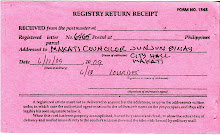
I sent a registered letter addressed to the Postmaster General of the Philippine of the Philippine Postal Corporation. Based on the return card for said letter
said letter was received by said person's agent. A reasonable time has passed but I have not received any reply to said letter from said person or his agent.
Many times I did not get the service I paid said corporation for. I sent letters via registered letters with return cards through said corporation. Despite
the instructions on said cards, many times said cards were returned to me without visible (to unaided eye) indications on the dates when said letters were received
by the addresses or their agents.Most of said letters were sent through what was identified as a branch of said corporation at Robinsons Ermita.
An employee of said Philippine Postal Corporation, identified as "Jeffrey B." who was working at what was identified as Robinsons Ermita branch of said corporation, was watching what was identified as a video, during business hours.
Advisory vs. SM City Manila
On June 29, 2008, a person, identified as Mapril Cheung, who was working at SM Department store at SM City Manila, received my written report of a security
lapse on said date at said mall.Up to April 16, 2009 no one connected with SM has provided me with information as to what action was taken, if any, regarding said security lapse.
Advisory vs. Jollibee PGH Taft
On April 16, 2009, I saw live moving insect fly at dining area of said restaurant.The presence of said fly at said
area is considered as an indication of an unclean restaurant. While I was there, I bought food and was given a receipt bearing the words
"PARMESAN CHEESE FOOD EXCHANGE INC. Jollibee PGH Taft OFFICIAL RECEIPT No. 2198 Date: April 16, 2009, 1540 Anglo Bldg., Taft Ave.
Security lapse at Robinsons Ermita on April 16, 2009. Because of said lapse, I could have brought dangerous/deadly weapons into said mall.
On April 16, 2009, 7-Eleven store at Taft Ave., corner P. Gil, sold a product which was identified as imported and bore the words "Pik Nik shoestring
potatoes" but did not bear (visible to unaided eye) name and address of the importer of said product. I believe the Consumer Act of the Philippines was violated.
About sunscreens:
A local dermatologist gave the following tips on suncreens: buy sunscreen with SPF 50; don't buy clear sunscrens.
http://www.fda.gov/consumer/updates/sun072407.html#sunscreen
On this page:
* Reduce time in the sun
* Dress with care
* Be serious about sunscreen
* Tips for applying sunscreen
* Don't forget the eyes
* Sunlamp products
* Tips for tanning indoors
* So-called "Tanning Pills"
* Dihydroxyacetone (DHA)
* Check For Skin Cancer
Sun safety is never out of season. Summer's arrival means it's time for picnics, trips to the pool and beach … and a spike in sunburns. But winter skiers and fall hikers need to be as wary of the sun's rays as swimmers do. People who work outdoors need to take precautions as well.
The need for sun safety has become clear over the past 20 years, with studies showing that excessive exposure to the sun can cause skin cancer. Harmful rays from the sun—and from sunlamps and tanning beds—may also cause eye problems, weaken your immune system, and give you unsightly skin spots and wrinkles, or "leathery" skin.
Sun damage to the body is caused by invisible ultraviolet (UV) radiation, which reaches us as long wavelengths known as UVA and short wavelengths known as UVB. UVB radiation can cause sunburn. But the longer wavelength UVA is dangerous too, as it can penetrate the skin and damage tissue at deeper levels.
Tanning is a sign of the skin reacting to potentially damaging UV radiation by producing additional pigmentation that provides it with some—but not nearly enough—protection against sunburn.
No matter what our skin color, we're all potential victims of sunburn and the other detrimental effects of excessive exposure to UV radiation. Although we all need to take precautions to protect our skin, people who need to be especially careful in the sun are those who have
* pale skin.
* blonde, red or light brown hair.
* been treated for skin cancer.
* a family member who's had skin cancer.
If you have an illness and take medicines, ask your doctor about extra sun-care precautions, because some medications may increase sensitivity to the sun.
Cosmetics that contain alpha hydroxy acids (AHAs) also may increase sun sensitivity and susceptibility to sunburn. Look for FDA's recommended sunburn alert statement on products that contain AHAs.
Reduce time in the sun
This is especially recommended from 10 a.m. to 4 p.m., when the sun's rays are strongest. Even on an overcast day, up to 80% of the sun's UV rays can get through the clouds. Stay in the shade as much as possible throughout the day.
Dress with care
Wear clothes that protect your body. Cover as much of your body as possible if you plan to be outside on a sunny day. Wear a wide-brimmed hat, long sleeves and long pants. Sun-protective clothing is now available in stores. However, FDA does not regulate such products unless the manufacturer intends to make a medical claim.Consider using an umbrella for shade.
Be serious about sunscreen
Check product labels to make sure you get
* a "sun protection factor" (SPF) of 15 or more—SPF represents the degree to which a sunscreen can protect the skin from sunburn. The higher the number, the better the protection.
* "broad spectrum" protection—sunscreen that protects against UVA and UVB.
* water resistance—sunscreen that stays on your skin longer, even if it gets wet. "Water-resistant" does not mean "waterproof." Water-resistant sunscreens need to be reapplied as instructed on the label.
Tips for applying sunscreen
* Apply the recommended amount evenly to all uncovered skin, especially your lips, nose, ears, neck, hands, and feet.
* Check the label for the correct amount of time to apply it before you go out.
* If the label doesn't give a time, allow about 15 to 30 minutes.
* If you don't have much hair, apply sunscreen to the top of your head, or wear a hat.
* Reapply at least every two hours. Read the label to see how often.
* Give babies and children extra care in the sun. Ask a doctor before applying sunscreen to children under 6 months old.
* Apply sunscreen to children older than 6 months every time they
go out.
Don't forget the eyes
Sunlight reflecting off snow, sand or water further increases exposure to UV radiation, increasing your risk of developing eye problems such as cataracts.
Long hours on the beach or in the snow without adequate eye protection also can result in a short-term condition known as photokeratitis, or reversible sunburn of the cornea. This painful condition--also known as "snow blindness"—can cause temporary loss of vision.
* When buying sunglasses, look for a label that specifically offers 99-100% UV protection. This assures that the glasses block both forms of UV radiation.
* Eyewear should be labeled "sunglasses." Be wary of dark or tinted eyewear sold as fashion accessories that may provide little or no protection from UV or visible light.
* Don't assume that you get more UV protection with pricier sunglasses or glasses with a darker tint.
* Be sure that your sunglasses don't distort colors and affect the recognition of traffic signals.
* Ask an eye care professional to test your sunglasses if you're not sure of their level of UV protection.
* People who wear contact lenses that offer UV protection should still wear sunglasses.
* Consider that light can still enter from the sides of sunglasses. Those that wrap all the way around the temples can help.
* Children should wear real sunglasses—not toy sunglasses—that indicate the UV protection level. Polycarbonate lenses are the most shatter-resistant.
Sunlamp products
Sunlamp products emit UV that is similar to, or more powerful than, that emitted by the sun. Therefore, exposure to sunlamp products can also lead to skin cancer. Some experts argue that artificial tanning is less dangerous because the intensity of light and the time spent tanning are controlled. There is limited evidence to support these claims. On the other hand, sunlamps may be more dangerous than the sun because they can be used at the same intensity every day of the year—something that is unlikely for the sun because of winter weather and cloud cover. They can also be more dangerous because people can expose their entire bodies at each session, which would be difficult to do outdoors.
FDA requires manufacturers of sunlamps to develop an exposure schedule and establish a maximum recommended exposure time based on the UV emission characteristics of their products.
UV and the intense visible light emitted from sunlamp products can also damage the eyes, so it is important to wear proper protective eyewear while tanning indoors.
Tips for tanning indoors
If you use indoor tanning equipment, follow these steps to reduce the dangers of UV exposure:
* Wear the goggles provided. Make sure they fit snugly and are not cracked.
* Start slowly and use short exposure times to build up a tan over time.
* Don't use the maximum exposure time the first time you tan because you could get burned, and burns are thought to be related to melanoma.
* Because sunburn takes 6 to 48 hours to develop, you may not realize your skin is burned until it's too late.
* Follow manufacturer-recommended exposure times on the label for your skin type.
* Stick to your time limit.
* After a tan is developed, tan no more than once a week. Because sunburn takes 6 to 48 hours to develop, you may not realize your skin is burned until it is too late.
So-called "Tanning Pills"
No tanning pills of any kind have been approved by FDA.
However, there are companies that market products they call "tanning pills." Some of these pills contain a color additive known as canthaxanthin, which, when ingested, can turn the skin a range of colors from orange to brown. Canthaxanthin is only approved for use as a color additive in foods and oral medications, and only in small amounts.
Dihydroxyacetone (DHA)
Some tanning sprays contain DHA, a color additive that interacts with the dead surface cells in the outermost layer of the skin, to darken skin color. It is commonly used in "sunless tanning" lotions, creams, and spray-on products.
DHA is approved by FDA for use in coloring the skin, but it is limited to external application. The industry has not provided safety data to FDA to consider approving it for other uses, such as applying it to your lips or the area of your eyes, or inhaling it. Therefore, the risks, if any, are unknown. FDA recommends that if you visit a spray tanning salon, take precautions to protect your eyes and lips and avoid inhaling the spray.
Some tanning products on the market do not contain sunscreen. FDA requires these products to carry a warning statement.
Check For Skin Cancer
Check your skin regularly for signs of skin cancer. Look for changes in the size, shape, color or feel of birthmarks, moles and spots. If you find any changes or find sores that are not healing, see your doctor.
This article appears on FDA's Consumer Health Information Web page (www.fda.gov/consumer), which features the latest on all FDA-regulated products. Sign up for free e-mail subscriptions at www.fda.gov/consumer/consumerenews.html.
For More Information
Talk to your doctor or health care professional, or visit:
Safer Sunning in Seven Steps
www.fda.gov/opacom/lowlit/sunsafty.html
CDRH Tanning Web site
www.fda.gov/cdrh/tanning/index.html
Tanning Products
www.cfsan.fda.gov/~dms/cos-sun.html
National Institutes of Health, U.S. National Library of Medicine: Sun Exposure
www.nlm.nih.gov/medlineplus/sunexposure.html
Date Posted: July 24, 2007
Updated: September 5, 2008
horizontal rule
FDA Consumer Health Information
Consumer Updates archive
FDA Home Page | Search FDA Site | FDA A-Z Index | Contact FDA | Privacy | Accessibility
FDA Website Management Staff
I sent a registered letter addressed to the Postmaster General of the Philippine of the Philippine Postal Corporation. Based on the return card for said letter
said letter was received by said person's agent. A reasonable time has passed but I have not received any reply to said letter from said person or his agent.
Many times I did not get the service I paid said corporation for. I sent letters via registered letters with return cards through said corporation. Despite
the instructions on said cards, many times said cards were returned to me without visible (to unaided eye) indications on the dates when said letters were received
by the addresses or their agents.Most of said letters were sent through what was identified as a branch of said corporation at Robinsons Ermita.
An employee of said Philippine Postal Corporation, identified as "Jeffrey B." who was working at what was identified as Robinsons Ermita branch of said corporation, was watching what was identified as a video, during business hours.
Advisory vs. SM City Manila
On June 29, 2008, a person, identified as Mapril Cheung, who was working at SM Department store at SM City Manila, received my written report of a security
lapse on said date at said mall.Up to April 16, 2009 no one connected with SM has provided me with information as to what action was taken, if any, regarding said security lapse.
Advisory vs. Jollibee PGH Taft
On April 16, 2009, I saw live moving insect fly at dining area of said restaurant.The presence of said fly at said
area is considered as an indication of an unclean restaurant. While I was there, I bought food and was given a receipt bearing the words
"PARMESAN CHEESE FOOD EXCHANGE INC. Jollibee PGH Taft OFFICIAL RECEIPT No. 2198 Date: April 16, 2009, 1540 Anglo Bldg., Taft Ave.
Security lapse at Robinsons Ermita on April 16, 2009. Because of said lapse, I could have brought dangerous/deadly weapons into said mall.
On April 16, 2009, 7-Eleven store at Taft Ave., corner P. Gil, sold a product which was identified as imported and bore the words "Pik Nik shoestring
potatoes" but did not bear (visible to unaided eye) name and address of the importer of said product. I believe the Consumer Act of the Philippines was violated.
About sunscreens:
A local dermatologist gave the following tips on suncreens: buy sunscreen with SPF 50; don't buy clear sunscrens.
http://www.fda.gov/consumer/updates/sun072407.html#sunscreen
On this page:
* Reduce time in the sun
* Dress with care
* Be serious about sunscreen
* Tips for applying sunscreen
* Don't forget the eyes
* Sunlamp products
* Tips for tanning indoors
* So-called "Tanning Pills"
* Dihydroxyacetone (DHA)
* Check For Skin Cancer
Sun safety is never out of season. Summer's arrival means it's time for picnics, trips to the pool and beach … and a spike in sunburns. But winter skiers and fall hikers need to be as wary of the sun's rays as swimmers do. People who work outdoors need to take precautions as well.
The need for sun safety has become clear over the past 20 years, with studies showing that excessive exposure to the sun can cause skin cancer. Harmful rays from the sun—and from sunlamps and tanning beds—may also cause eye problems, weaken your immune system, and give you unsightly skin spots and wrinkles, or "leathery" skin.
Sun damage to the body is caused by invisible ultraviolet (UV) radiation, which reaches us as long wavelengths known as UVA and short wavelengths known as UVB. UVB radiation can cause sunburn. But the longer wavelength UVA is dangerous too, as it can penetrate the skin and damage tissue at deeper levels.
Tanning is a sign of the skin reacting to potentially damaging UV radiation by producing additional pigmentation that provides it with some—but not nearly enough—protection against sunburn.
No matter what our skin color, we're all potential victims of sunburn and the other detrimental effects of excessive exposure to UV radiation. Although we all need to take precautions to protect our skin, people who need to be especially careful in the sun are those who have
* pale skin.
* blonde, red or light brown hair.
* been treated for skin cancer.
* a family member who's had skin cancer.
If you have an illness and take medicines, ask your doctor about extra sun-care precautions, because some medications may increase sensitivity to the sun.
Cosmetics that contain alpha hydroxy acids (AHAs) also may increase sun sensitivity and susceptibility to sunburn. Look for FDA's recommended sunburn alert statement on products that contain AHAs.
Reduce time in the sun
This is especially recommended from 10 a.m. to 4 p.m., when the sun's rays are strongest. Even on an overcast day, up to 80% of the sun's UV rays can get through the clouds. Stay in the shade as much as possible throughout the day.
Dress with care
Wear clothes that protect your body. Cover as much of your body as possible if you plan to be outside on a sunny day. Wear a wide-brimmed hat, long sleeves and long pants. Sun-protective clothing is now available in stores. However, FDA does not regulate such products unless the manufacturer intends to make a medical claim.Consider using an umbrella for shade.
Be serious about sunscreen
Check product labels to make sure you get
* a "sun protection factor" (SPF) of 15 or more—SPF represents the degree to which a sunscreen can protect the skin from sunburn. The higher the number, the better the protection.
* "broad spectrum" protection—sunscreen that protects against UVA and UVB.
* water resistance—sunscreen that stays on your skin longer, even if it gets wet. "Water-resistant" does not mean "waterproof." Water-resistant sunscreens need to be reapplied as instructed on the label.
Tips for applying sunscreen
* Apply the recommended amount evenly to all uncovered skin, especially your lips, nose, ears, neck, hands, and feet.
* Check the label for the correct amount of time to apply it before you go out.
* If the label doesn't give a time, allow about 15 to 30 minutes.
* If you don't have much hair, apply sunscreen to the top of your head, or wear a hat.
* Reapply at least every two hours. Read the label to see how often.
* Give babies and children extra care in the sun. Ask a doctor before applying sunscreen to children under 6 months old.
* Apply sunscreen to children older than 6 months every time they
go out.
Don't forget the eyes
Sunlight reflecting off snow, sand or water further increases exposure to UV radiation, increasing your risk of developing eye problems such as cataracts.
Long hours on the beach or in the snow without adequate eye protection also can result in a short-term condition known as photokeratitis, or reversible sunburn of the cornea. This painful condition--also known as "snow blindness"—can cause temporary loss of vision.
* When buying sunglasses, look for a label that specifically offers 99-100% UV protection. This assures that the glasses block both forms of UV radiation.
* Eyewear should be labeled "sunglasses." Be wary of dark or tinted eyewear sold as fashion accessories that may provide little or no protection from UV or visible light.
* Don't assume that you get more UV protection with pricier sunglasses or glasses with a darker tint.
* Be sure that your sunglasses don't distort colors and affect the recognition of traffic signals.
* Ask an eye care professional to test your sunglasses if you're not sure of their level of UV protection.
* People who wear contact lenses that offer UV protection should still wear sunglasses.
* Consider that light can still enter from the sides of sunglasses. Those that wrap all the way around the temples can help.
* Children should wear real sunglasses—not toy sunglasses—that indicate the UV protection level. Polycarbonate lenses are the most shatter-resistant.
Sunlamp products
Sunlamp products emit UV that is similar to, or more powerful than, that emitted by the sun. Therefore, exposure to sunlamp products can also lead to skin cancer. Some experts argue that artificial tanning is less dangerous because the intensity of light and the time spent tanning are controlled. There is limited evidence to support these claims. On the other hand, sunlamps may be more dangerous than the sun because they can be used at the same intensity every day of the year—something that is unlikely for the sun because of winter weather and cloud cover. They can also be more dangerous because people can expose their entire bodies at each session, which would be difficult to do outdoors.
FDA requires manufacturers of sunlamps to develop an exposure schedule and establish a maximum recommended exposure time based on the UV emission characteristics of their products.
UV and the intense visible light emitted from sunlamp products can also damage the eyes, so it is important to wear proper protective eyewear while tanning indoors.
Tips for tanning indoors
If you use indoor tanning equipment, follow these steps to reduce the dangers of UV exposure:
* Wear the goggles provided. Make sure they fit snugly and are not cracked.
* Start slowly and use short exposure times to build up a tan over time.
* Don't use the maximum exposure time the first time you tan because you could get burned, and burns are thought to be related to melanoma.
* Because sunburn takes 6 to 48 hours to develop, you may not realize your skin is burned until it's too late.
* Follow manufacturer-recommended exposure times on the label for your skin type.
* Stick to your time limit.
* After a tan is developed, tan no more than once a week. Because sunburn takes 6 to 48 hours to develop, you may not realize your skin is burned until it is too late.
So-called "Tanning Pills"
No tanning pills of any kind have been approved by FDA.
However, there are companies that market products they call "tanning pills." Some of these pills contain a color additive known as canthaxanthin, which, when ingested, can turn the skin a range of colors from orange to brown. Canthaxanthin is only approved for use as a color additive in foods and oral medications, and only in small amounts.
Dihydroxyacetone (DHA)
Some tanning sprays contain DHA, a color additive that interacts with the dead surface cells in the outermost layer of the skin, to darken skin color. It is commonly used in "sunless tanning" lotions, creams, and spray-on products.
DHA is approved by FDA for use in coloring the skin, but it is limited to external application. The industry has not provided safety data to FDA to consider approving it for other uses, such as applying it to your lips or the area of your eyes, or inhaling it. Therefore, the risks, if any, are unknown. FDA recommends that if you visit a spray tanning salon, take precautions to protect your eyes and lips and avoid inhaling the spray.
Some tanning products on the market do not contain sunscreen. FDA requires these products to carry a warning statement.
Check For Skin Cancer
Check your skin regularly for signs of skin cancer. Look for changes in the size, shape, color or feel of birthmarks, moles and spots. If you find any changes or find sores that are not healing, see your doctor.
This article appears on FDA's Consumer Health Information Web page (www.fda.gov/consumer), which features the latest on all FDA-regulated products. Sign up for free e-mail subscriptions at www.fda.gov/consumer/consumerenews.html.
For More Information
Talk to your doctor or health care professional, or visit:
Safer Sunning in Seven Steps
www.fda.gov/opacom/lowlit/sunsafty.html
CDRH Tanning Web site
www.fda.gov/cdrh/tanning/index.html
Tanning Products
www.cfsan.fda.gov/~dms/cos-sun.html
National Institutes of Health, U.S. National Library of Medicine: Sun Exposure
www.nlm.nih.gov/medlineplus/sunexposure.html
Date Posted: July 24, 2007
Updated: September 5, 2008
horizontal rule
FDA Consumer Health Information
Consumer Updates archive
FDA Home Page | Search FDA Site | FDA A-Z Index | Contact FDA | Privacy | Accessibility
FDA Website Management Staff
Saturday, April 11, 2009
Security lapse on April 11, 2009, at entrance to Harrison Plaza mall
Security lapse on April 11, 2009, at entrance to Harrison Plaza mall at Malate, Manila. Because of said security lapse by security guard at said entrance, I could have brought dangerous/deadly weapons into said mall. After I entered said
mall, I entered SM department store and Shopwise store without my luggage being inspected. Evidence available.
Summer Diseases Advisories from DOH
Diseases / Conditions to watch out during summer time:
• Food and Water-borne Diseases
1. Typhoid
2. Cholera
3. Hepatitis A
4. Food Poisoning
5. Other Diarrheas
• Sore Eyes
• Measles (Tigdas)
• Mosquito-borne Diseases
- Dengue
- Malaria
• Other Conditions
- Sunburn
- Prickly Heat
Health Tips
Food and drinks
• Cook food properly
• Preferably, food must be eaten immediately after cooking (while still hot)
• Leftover food should be refrigerated and reheated before being eaten
• Food handlers should wash their hands before and after food preparation
• If sick, avoid preparing food for others
• Avoid drinking water and iced beverages of doubtful quality
• If water quality is doubtful, boil drinking water for at least 2 minutes
• Peel and wash fruits / vegetables before eating
• Wash hands before and after eating
At the beach
• Do not allow children to swim without the company of an adult
• Avoid staying under the sun without scanty clothes for more than 3 hours as this predisposes to sunburn, heat exhaustion and worst, heat stroke
• Drink plenty of ?uids to avoid dehydration, especially during exercise & sports activities
While on the road
• Check vehicle well before going on a trip
• Bring repair kit with you
• When drunk, never attempt to drive
What is U.S.FDA Advising Consumers Regarding Pistachios and Pistachio Products
Updated: April 7, 2009
FDA is advising consumers not to eat pistachios or food products containing them (such as pistachio bakery goods and pistachio ice cream) unless they can determine that the products do not contain pistachios from Setton Pistachio of Terra Bella, Inc., ("Setton"). The FDA consumer alert is available at this link: http://www.fda.gov/bbs/topics/NEWS/2009/NEW01982.html. Until FDA is able to provide more information, consumers should not eat any Setton pistachios or products that contain them.
How Can Consumers Get Information About Which Products Contain Pistachios from Setton?
Consumers can contact the retailer from whom they purchased the product or the manufacturer of the product to ask if the product contains Setton pistachios. Consumers also can obtain the latest FDA advice on pistachios and information about what products have been recalled from the FDA website. The agency has established a special webpage to provide the latest information, including a searchable database of products under recall. The webpage is available by clickable icon on the opening page of the FDA website, and at this direct link: http://www.fda.gov/pistachios/. The page is updated frequently with information about additional products being recalled, but does not reflect all products that contain pistachios from Setton.
Are the number of products being recalled expected to grow?
Yes. On March 30, 2009 Setton announced it was recalling selected lots of pistachios processed on or after September 1, 2008. However, on April 6, 2009, Setton announced that it was expanding its recall to include all roasted in-shell pistachios, roasted shelled pistachios, and raw pistachios from the 2008 crop that are not subsequently roasted prior to retail sale. It is expected that this will result in additional recalls by companies that used Setton's pistachios in their products.
What Should Consumers Do With Pistachios and Pistachio Products They Have on Hand?
Consumers should store pistachios and pistachio products in their homes, away from children, until it can be determined whether or not the products contain Setton pistachios. At this time FDA is advising consumers not eat any Setton pistachios or products that contain them. FDA will update this advice as its investigation progresses.
Should Consumers With Pistachios on Hand Use Them in Other Food Products Like Cookies and Cakes?
FDA recommends that consumers not use pistachios on hand in making home-baked goods or in other food items prepared in their homes, unless they determine that the pistachios are not from Setton.
Are any Consumer Sicknesses Connected with Setton Pistachios?
At this time, neither the U.S. Centers for Disease Control and Prevention nor state health departments have reported any consumer illnesses directly connected with Setton pistachios. FDA, in cooperation with the states and CDC, is increasing public health surveillance for any illnesses that may be directly associated with pistachios from Setton. FDA has received several consumer complaints of illness after eating pistachio products, and the agency is investigating these reports to determine if any of them are associated with pistachios from Setton.
Why is FDA Taking This Action?
Salmonella bacteria have been detected in pistachios processed by Setton. The company has stopped distribution of roasted pistachios in the United States and has recalled approximately one million pounds of its products. However, the recalled pistachios were widely distributed, and FDA expects that Setton pistachios and products containing them remain on the market and in the supply chain. Further, the investigation at the company is ongoing and may lead to additional recalls.
What is FDA Doing to Investigate?
FDA and the California Department of Public Health are working together conducting an investigation to determine the extent of the contamination, how it occurred, and to identify recipients of the pistachios under recall, including companies that may have used pistachios from Setton as ingredients in their own products. The joint team has taken environmental and product samples from the firm's facility to analyze for the possible presence of Salmonella, and is reviewing records provided by the firm.
What are the Symptoms of Salmonella Infection?
Salmonella can cause serious and sometimes fatal infections in young children, frail or elderly people, and others with weakened immune systems. Healthy persons infected with Salmonella often experience fever, diarrhea (which may be bloody), nausea, vomiting and abdominal pain. In rare circumstances, infection with Salmonella can result in the organism getting into the bloodstream and producing more severe illnesses such as arterial infections (i.e., infected aneurysms), endocarditis and arthritis. Individuals who are experiencing these symptoms should contact a doctor immediately or go to an emergency room for evaluation.
FDA Approves Benzyl Alcohol Lotion for the Treatment of Head Lice
http://www.fda.gov/bbs/topics/NEWS/2009/NEW01993.html
FDA News
FOR IMMEDIATE RELEASE
April 9, 2009
Media Inquiries:
Rita Chappelle, 301-796-4672
Consumer Inquiries:
888-INFO-FDA
FDA Approves Benzyl Alcohol Lotion for the Treatment of Head Lice
The U.S. Food and Drug Administration today approved a new prescription medication for the treatment of head lice ( Pediculosis capitis ) infestation. Benzyl Alcohol Lotion, 5%, received full market approval as a prescription medication, for use in patients 6 months of age and older.
Benzyl Alcohol Lotion, 5%, is the first head lice product approved by the FDA with benzyl alcohol as the active pharmaceutical ingredient.
“Head lice are a problem that impacts more than a 1 million children each year and is easily transmitted to others,” said Janet Woodcock, M.D., director, FDA's Center for Drug Evaluation and Research. “This drug is an effective first line treatment to eliminate lice infestation, and minimize disruption in the daily routines of families.”
The safety and effectiveness of Benzyl Alcohol Lotion, 5%, was demonstrated in two studies of 628 people, 6 months of age and older, with active head lice infestation. The subjects received two, 10-minute treatments of either Benzyl Alcohol Lotion or a topical placebo, one week apart. Fourteen days after the final treatment, more than 75 percent of the subjects treated with Benzyl Alcohol Lotion, 5%, were lice free.
Common side effects of the medication include irritations of the skin, scalp, and eyes, and numbness at the site of application. As with all medications, it is important to use benzyl alcohol, 5%, as labeled to maximize benefits and minimize risks. The product should be applied only to the scalp or the hair attached to the scalp. It is not approved for use in children younger than six months. Use in premature infants could lead to serious respiratory, heart- or brain-related adverse events such as seizure, coma, or death.
Benzyl Alcohol Lotion, 5%, is distributed by Sciele Pharma Inc., a subsidiary of Atlanta-based Shionogi Company.
ALA Great Web Sites for Kids
http://www.ala.org/gwstemplate.cfm?section=greatwebsites&template=/cfapps/gws/default.cfm
wholeliving web site
http://www.wholeliving.com/
thelancet com web site
http://www.thelancet.com/
MedlinePlus News in April 2009
http://www.nlm.nih.gov/medlineplus/newsbydate.html
*
April 2009
o Thursday, April 9:
+ Air Pollution Exposure May Slow Fetal Growth (HealthDay)
+ As Work Stress Rises, So May Depression (HealthDay)
+ Birth Control Pills Linked to Lupus Risk (HealthDay)
+ Extra Pounds in Mid-Life Affect Later Mobility (HealthDay)
+ FDA Panel Snubs Seroquel As 1st Choice Depression Treatment (HealthDay)
+ Growth Hormone Slows Age-Related Loss of Strength (Reuters Health)
+ High Blood Lead Levels Linked to Heart Deaths (Reuters Health)
+ High Blood Pressure in Pregnancy a Heart Risk (Reuters Health)
+ New Drug May Help Patients with Psoriatic Arthritis (HealthDay)
+ Psoriasis Drug Raptiva Pulled From U.S. Market (HealthDay)
+ Sprout Recall Due to Potential Contamination with Listeria (Food and Drug Administration)
+ Stem Cell Breakthrough May Lead to Multiple Sclerosis Treatments (HealthDay)
+ Teen Pregnancy Boosts Girls' Risk of Getting Fat (Reuters Health)
+ Three Drinks a Day Doubles Risk of Tremor (HealthDay)
+ Unapproved Liquid Morphine Can Still Be Sold in U.S. (Reuters Health)
+ U.S. Making Little Progress on Food Safety (Reuters Health)
o Wednesday, April 8:
+ Acid Reducers May Not Help All with Asthma (HealthDay)
+ "Brown Fat" May Help Adults Lose Weight (Reuters Health)
+ Caffeine May Lessen Exercisers' Muscle Pain (Reuters Health)
+ Coartem Approved to Treat Malaria (HealthDay)
+ Common Industrial Chemicals May Not Boost Cancer Risk (HealthDay)
+ Doctors Urged to Get Aggressive to Help Smokers (HealthDay)
+ FDA Statement on the Voluntary Withdrawal of Raptiva from the U.S. Market (Food and Drug Administration)
+ Flu Strikes a Milder Blow This Season (HealthDay)
+ HIV Treatment Should Start Earlier (Reuters Health)
+ Large Waist May Boost Heart Failure Risk (Reuters Health)
+ Larger Men at Greater Risk for Atrial Fibrillation (HealthDay)
+ Pot-Smoking Drivers Tied to Range of Road Accidents (HealthDay)
+ Rapid Test to Detect Bird Flu in People Approved (HealthDay)
+ Sports May Ease Activity Decline during Teen Years (Reuters Health)
+ Stress Management Battles Prostate Cancer Anxiety (HealthDay)
o Tuesday, April 7:
+ Certain Diabetes Drugs May Pose Eye Risk (HealthDay)
+ Cognitive Behavior Therapy Eases Anxiety for Older People (HealthDay)
+ Exercise Is Safe, Improves Quality of Life in Patients with Chronic Heart FailureFrom the National Institutes of Health (National Heart, Lung, and Blood Institute)
+ Exercise Might Benefit Some with Heart Failure (HealthDay)
+ Heart Transplant Failures More Likely in Poor, Minority Kids (HealthDay)
+ Home-Based Program Extends Seniors' Lives (HealthDay)
+ Intensive Early Treatment Doesn't Help Bladder Cancer Survival (HealthDay)
+ Kids' Sleep Issues May Affect Mental Ability Later (Reuters Health)
+ Obesity Linked to Heart Failure Risk (HealthDay)
+ Parents Worry That 'Alcopops' Encourage Teen Drinking (HealthDay)
+ Single Cell May Produce Multiple Lung Cancer Tumors (HealthDay)
+ Very Obese Adults Almost Completely Sedentary (Reuters Health)
+ What Is FDA Advising Consumers Regarding Pistachios and Pistachio Products (Food and Drug Administration)
o Monday, April 6:
+ Alzheimer's Gene Changes Brain Early, Study Finds (Reuters Health)
+ April Is STD Awareness Month (Centers for Disease Control and Prevention)
+ Broccoli May Ward Off Serious Stomach Ailments (HealthDay)
+ Colon Screenings Don't Follow Guidelines, Study Suggests (HealthDay)
+ Dietary Changes Shield Latino Teens from Diabetes (HealthDay)
+ Early Psychiatric Issues May Predict Suicide in Boys (HealthDay)
+ Evidence Weak on New Cholesterol Tests (Reuters Health)
+ Experts Find Gene Trigger for Deadly Skin Cancer (Reuters Health)
+ Kids Who Lack Self-Control May Be Prone to Weight Gain (HealthDay)
+ Male Infertility Treatment Boosts Sperm Count (HealthDay)
+ More U.S. Kids Taking Diabetes, Blood Pressure Drugs (HealthDay)
+ One Easy Remedy for Overweight Kids -- Water (Reuters Health)
+ Pot Belly Boosts Risk for Restless Legs Syndrome (HealthDay)
+ Prom Tips for Health and Safety (Centers for Disease Control and Prevention)
+ Psychotherapy Can Ease Post-Surgical Depression (HealthDay)
+ Researchers Profile the 'Light' Smoker (HealthDay)
+ Teen Drivers: Safe to and from Prom…and Beyond (Centers for Disease Control and Prevention)
+ That's the Spot: How Scratching Brings Relief (Reuters Health)
+ Topical Spray Helped Men with Premature Ejaculation (HealthDay)
+ Triple Therapy Boosts Quit Rates in Sick Smokers (Reuters Health)
+ U.S. AIDS Program Saved Million African Lives (Reuters Health)
o Sunday, April 5:
+ Obesity Boosts Gum Disease Risk (HealthDay)
o Friday, April 3:
+ Accumulated Lead May Affect Older Women's Brains (HealthDay)
+ Black Women at Risk of Deadly Breast Cancer Type (Reuters Health)
+ Brain Scans Might Help Spot PTSD (HealthDay)
+ Hispanic Children More Likely to Have Hearing Loss (HealthDay)
+ Mothers' Bereavement Does Not Raise Autism Risk (Reuters Health)
+ Muscle Mass Won't Grow in Women Over 80 (HealthDay)
+ Nicotine Replacement May Help Smokers Quit Gradually (HealthDay)
+ Poor Kids Exposed to More Secondhand Smoke (HealthDay)
+ Post-Op Painkillers Tied to Deaths After Spinal Fusion (HealthDay)
+ Post-Traumatic Stress Common in Migraine Sufferers (Reuters Health)
+ Prescription Painkiller Relieves Shingles Pain (Reuters Health)
+ Scientists Uncover New Weapon Against Huntington's (HealthDay)
+ Sports Drinks May Be Tough on Teeth (HealthDay)
+ TV Time May Not Be Benign (HealthDay)
o Thursday, April 2:
+ Antioxidant-Rich Foods Lose Nutritional Luster Over Time (HealthDay)
+ Asperger Syndrome Tied to Low Cortisol Levels (HealthDay)
+ Daily Naps May Raise Older Women's Death Risk (HealthDay)
+ FDA Alerts the Public to Uncle Chen and Lian How Brand Dry Spice Product Recall (Food and Drug Administration)
+ Fewer Sugary Drinks Key to Weight Loss (HealthDay)
+ Flu Shot Advised for Travelers to Southern Hemisphere (Reuters Health)
+ For Some, More Costly Care Is Not by Choice (HealthDay)
+ Gene May Explain Women's Heightened Lupus Risk (HealthDay)
+ Hospital Services Vary Widely across U.S. (Reuters Health)
+ Human Heart Can Make New Cells (HealthDay)
+ Methanol Poisoning Damage Is Likely Permanent (Reuters Health)
+ New Antibiotic Could Shorten Tuberculosis Treatment (HealthDay)
+ Prognosis Excellent in 'Broken Heart' Syndrome (Reuters Health)
+ Starting HIV Therapy Earlier Saves Lives (HealthDay)
+ Typical Binge Drinker Is Young White Male (HealthDay)
o Wednesday, April 1:
+ Atkins Diet Tougher on Heart After Weight Loss (HealthDay)
+ Early Growth Predicts Diabetes Later in Life (Reuters Health)
+ Enzyme May Reduce Benefit of Cholesterol Drugs (Reuters Health)
+ Erbitux May Help Some with Colorectal Cancer (HealthDay)
+ FDA Approves Generic Topamax to Prevent Seizures (Food and Drug Administration)
+ Gene Mutation Doubles Risk of Aggressive Colon Cancer in Blacks (HealthDay)
+ Heart Rhythm Device Studies Yield Mixed Results (Reuters Health)
+ High Rate of Rehospitalizations Costing Billions (HealthDay)
+ Insomnia Linked to Suicidal Thoughts, Attempts (HealthDay)
+ Kidneys from Donors Older Than 70 Still Viable (HealthDay)
+ Living Near Major Road May Boost Rheumatoid Arthritis Risk (HealthDay)
+ Mom's Smoking May Lead to SIDS (HealthDay)
+ Mothers of Multiples May Face Higher Depression Risk (HealthDay)
+ Protein-Folding Problem May Help Spur Alzheimer's (HealthDay)
+ The Dark Side of Vegetarianism (HealthDay)
mall, I entered SM department store and Shopwise store without my luggage being inspected. Evidence available.
Summer Diseases Advisories from DOH
Diseases / Conditions to watch out during summer time:
• Food and Water-borne Diseases
1. Typhoid
2. Cholera
3. Hepatitis A
4. Food Poisoning
5. Other Diarrheas
• Sore Eyes
• Measles (Tigdas)
• Mosquito-borne Diseases
- Dengue
- Malaria
• Other Conditions
- Sunburn
- Prickly Heat
Health Tips
Food and drinks
• Cook food properly
• Preferably, food must be eaten immediately after cooking (while still hot)
• Leftover food should be refrigerated and reheated before being eaten
• Food handlers should wash their hands before and after food preparation
• If sick, avoid preparing food for others
• Avoid drinking water and iced beverages of doubtful quality
• If water quality is doubtful, boil drinking water for at least 2 minutes
• Peel and wash fruits / vegetables before eating
• Wash hands before and after eating
At the beach
• Do not allow children to swim without the company of an adult
• Avoid staying under the sun without scanty clothes for more than 3 hours as this predisposes to sunburn, heat exhaustion and worst, heat stroke
• Drink plenty of ?uids to avoid dehydration, especially during exercise & sports activities
While on the road
• Check vehicle well before going on a trip
• Bring repair kit with you
• When drunk, never attempt to drive
What is U.S.FDA Advising Consumers Regarding Pistachios and Pistachio Products
Updated: April 7, 2009
FDA is advising consumers not to eat pistachios or food products containing them (such as pistachio bakery goods and pistachio ice cream) unless they can determine that the products do not contain pistachios from Setton Pistachio of Terra Bella, Inc., ("Setton"). The FDA consumer alert is available at this link: http://www.fda.gov/bbs/topics/NEWS/2009/NEW01982.html. Until FDA is able to provide more information, consumers should not eat any Setton pistachios or products that contain them.
How Can Consumers Get Information About Which Products Contain Pistachios from Setton?
Consumers can contact the retailer from whom they purchased the product or the manufacturer of the product to ask if the product contains Setton pistachios. Consumers also can obtain the latest FDA advice on pistachios and information about what products have been recalled from the FDA website. The agency has established a special webpage to provide the latest information, including a searchable database of products under recall. The webpage is available by clickable icon on the opening page of the FDA website, and at this direct link: http://www.fda.gov/pistachios/. The page is updated frequently with information about additional products being recalled, but does not reflect all products that contain pistachios from Setton.
Are the number of products being recalled expected to grow?
Yes. On March 30, 2009 Setton announced it was recalling selected lots of pistachios processed on or after September 1, 2008. However, on April 6, 2009, Setton announced that it was expanding its recall to include all roasted in-shell pistachios, roasted shelled pistachios, and raw pistachios from the 2008 crop that are not subsequently roasted prior to retail sale. It is expected that this will result in additional recalls by companies that used Setton's pistachios in their products.
What Should Consumers Do With Pistachios and Pistachio Products They Have on Hand?
Consumers should store pistachios and pistachio products in their homes, away from children, until it can be determined whether or not the products contain Setton pistachios. At this time FDA is advising consumers not eat any Setton pistachios or products that contain them. FDA will update this advice as its investigation progresses.
Should Consumers With Pistachios on Hand Use Them in Other Food Products Like Cookies and Cakes?
FDA recommends that consumers not use pistachios on hand in making home-baked goods or in other food items prepared in their homes, unless they determine that the pistachios are not from Setton.
Are any Consumer Sicknesses Connected with Setton Pistachios?
At this time, neither the U.S. Centers for Disease Control and Prevention nor state health departments have reported any consumer illnesses directly connected with Setton pistachios. FDA, in cooperation with the states and CDC, is increasing public health surveillance for any illnesses that may be directly associated with pistachios from Setton. FDA has received several consumer complaints of illness after eating pistachio products, and the agency is investigating these reports to determine if any of them are associated with pistachios from Setton.
Why is FDA Taking This Action?
Salmonella bacteria have been detected in pistachios processed by Setton. The company has stopped distribution of roasted pistachios in the United States and has recalled approximately one million pounds of its products. However, the recalled pistachios were widely distributed, and FDA expects that Setton pistachios and products containing them remain on the market and in the supply chain. Further, the investigation at the company is ongoing and may lead to additional recalls.
What is FDA Doing to Investigate?
FDA and the California Department of Public Health are working together conducting an investigation to determine the extent of the contamination, how it occurred, and to identify recipients of the pistachios under recall, including companies that may have used pistachios from Setton as ingredients in their own products. The joint team has taken environmental and product samples from the firm's facility to analyze for the possible presence of Salmonella, and is reviewing records provided by the firm.
What are the Symptoms of Salmonella Infection?
Salmonella can cause serious and sometimes fatal infections in young children, frail or elderly people, and others with weakened immune systems. Healthy persons infected with Salmonella often experience fever, diarrhea (which may be bloody), nausea, vomiting and abdominal pain. In rare circumstances, infection with Salmonella can result in the organism getting into the bloodstream and producing more severe illnesses such as arterial infections (i.e., infected aneurysms), endocarditis and arthritis. Individuals who are experiencing these symptoms should contact a doctor immediately or go to an emergency room for evaluation.
FDA Approves Benzyl Alcohol Lotion for the Treatment of Head Lice
http://www.fda.gov/bbs/topics/NEWS/2009/NEW01993.html
FDA News
FOR IMMEDIATE RELEASE
April 9, 2009
Media Inquiries:
Rita Chappelle, 301-796-4672
Consumer Inquiries:
888-INFO-FDA
FDA Approves Benzyl Alcohol Lotion for the Treatment of Head Lice
The U.S. Food and Drug Administration today approved a new prescription medication for the treatment of head lice ( Pediculosis capitis ) infestation. Benzyl Alcohol Lotion, 5%, received full market approval as a prescription medication, for use in patients 6 months of age and older.
Benzyl Alcohol Lotion, 5%, is the first head lice product approved by the FDA with benzyl alcohol as the active pharmaceutical ingredient.
“Head lice are a problem that impacts more than a 1 million children each year and is easily transmitted to others,” said Janet Woodcock, M.D., director, FDA's Center for Drug Evaluation and Research. “This drug is an effective first line treatment to eliminate lice infestation, and minimize disruption in the daily routines of families.”
The safety and effectiveness of Benzyl Alcohol Lotion, 5%, was demonstrated in two studies of 628 people, 6 months of age and older, with active head lice infestation. The subjects received two, 10-minute treatments of either Benzyl Alcohol Lotion or a topical placebo, one week apart. Fourteen days after the final treatment, more than 75 percent of the subjects treated with Benzyl Alcohol Lotion, 5%, were lice free.
Common side effects of the medication include irritations of the skin, scalp, and eyes, and numbness at the site of application. As with all medications, it is important to use benzyl alcohol, 5%, as labeled to maximize benefits and minimize risks. The product should be applied only to the scalp or the hair attached to the scalp. It is not approved for use in children younger than six months. Use in premature infants could lead to serious respiratory, heart- or brain-related adverse events such as seizure, coma, or death.
Benzyl Alcohol Lotion, 5%, is distributed by Sciele Pharma Inc., a subsidiary of Atlanta-based Shionogi Company.
ALA Great Web Sites for Kids
http://www.ala.org/gwstemplate.cfm?section=greatwebsites&template=/cfapps/gws/default.cfm
wholeliving web site
http://www.wholeliving.com/
thelancet com web site
http://www.thelancet.com/
MedlinePlus News in April 2009
http://www.nlm.nih.gov/medlineplus/newsbydate.html
*
April 2009
o Thursday, April 9:
+ Air Pollution Exposure May Slow Fetal Growth (HealthDay)
+ As Work Stress Rises, So May Depression (HealthDay)
+ Birth Control Pills Linked to Lupus Risk (HealthDay)
+ Extra Pounds in Mid-Life Affect Later Mobility (HealthDay)
+ FDA Panel Snubs Seroquel As 1st Choice Depression Treatment (HealthDay)
+ Growth Hormone Slows Age-Related Loss of Strength (Reuters Health)
+ High Blood Lead Levels Linked to Heart Deaths (Reuters Health)
+ High Blood Pressure in Pregnancy a Heart Risk (Reuters Health)
+ New Drug May Help Patients with Psoriatic Arthritis (HealthDay)
+ Psoriasis Drug Raptiva Pulled From U.S. Market (HealthDay)
+ Sprout Recall Due to Potential Contamination with Listeria (Food and Drug Administration)
+ Stem Cell Breakthrough May Lead to Multiple Sclerosis Treatments (HealthDay)
+ Teen Pregnancy Boosts Girls' Risk of Getting Fat (Reuters Health)
+ Three Drinks a Day Doubles Risk of Tremor (HealthDay)
+ Unapproved Liquid Morphine Can Still Be Sold in U.S. (Reuters Health)
+ U.S. Making Little Progress on Food Safety (Reuters Health)
o Wednesday, April 8:
+ Acid Reducers May Not Help All with Asthma (HealthDay)
+ "Brown Fat" May Help Adults Lose Weight (Reuters Health)
+ Caffeine May Lessen Exercisers' Muscle Pain (Reuters Health)
+ Coartem Approved to Treat Malaria (HealthDay)
+ Common Industrial Chemicals May Not Boost Cancer Risk (HealthDay)
+ Doctors Urged to Get Aggressive to Help Smokers (HealthDay)
+ FDA Statement on the Voluntary Withdrawal of Raptiva from the U.S. Market (Food and Drug Administration)
+ Flu Strikes a Milder Blow This Season (HealthDay)
+ HIV Treatment Should Start Earlier (Reuters Health)
+ Large Waist May Boost Heart Failure Risk (Reuters Health)
+ Larger Men at Greater Risk for Atrial Fibrillation (HealthDay)
+ Pot-Smoking Drivers Tied to Range of Road Accidents (HealthDay)
+ Rapid Test to Detect Bird Flu in People Approved (HealthDay)
+ Sports May Ease Activity Decline during Teen Years (Reuters Health)
+ Stress Management Battles Prostate Cancer Anxiety (HealthDay)
o Tuesday, April 7:
+ Certain Diabetes Drugs May Pose Eye Risk (HealthDay)
+ Cognitive Behavior Therapy Eases Anxiety for Older People (HealthDay)
+ Exercise Is Safe, Improves Quality of Life in Patients with Chronic Heart FailureFrom the National Institutes of Health (National Heart, Lung, and Blood Institute)
+ Exercise Might Benefit Some with Heart Failure (HealthDay)
+ Heart Transplant Failures More Likely in Poor, Minority Kids (HealthDay)
+ Home-Based Program Extends Seniors' Lives (HealthDay)
+ Intensive Early Treatment Doesn't Help Bladder Cancer Survival (HealthDay)
+ Kids' Sleep Issues May Affect Mental Ability Later (Reuters Health)
+ Obesity Linked to Heart Failure Risk (HealthDay)
+ Parents Worry That 'Alcopops' Encourage Teen Drinking (HealthDay)
+ Single Cell May Produce Multiple Lung Cancer Tumors (HealthDay)
+ Very Obese Adults Almost Completely Sedentary (Reuters Health)
+ What Is FDA Advising Consumers Regarding Pistachios and Pistachio Products (Food and Drug Administration)
o Monday, April 6:
+ Alzheimer's Gene Changes Brain Early, Study Finds (Reuters Health)
+ April Is STD Awareness Month (Centers for Disease Control and Prevention)
+ Broccoli May Ward Off Serious Stomach Ailments (HealthDay)
+ Colon Screenings Don't Follow Guidelines, Study Suggests (HealthDay)
+ Dietary Changes Shield Latino Teens from Diabetes (HealthDay)
+ Early Psychiatric Issues May Predict Suicide in Boys (HealthDay)
+ Evidence Weak on New Cholesterol Tests (Reuters Health)
+ Experts Find Gene Trigger for Deadly Skin Cancer (Reuters Health)
+ Kids Who Lack Self-Control May Be Prone to Weight Gain (HealthDay)
+ Male Infertility Treatment Boosts Sperm Count (HealthDay)
+ More U.S. Kids Taking Diabetes, Blood Pressure Drugs (HealthDay)
+ One Easy Remedy for Overweight Kids -- Water (Reuters Health)
+ Pot Belly Boosts Risk for Restless Legs Syndrome (HealthDay)
+ Prom Tips for Health and Safety (Centers for Disease Control and Prevention)
+ Psychotherapy Can Ease Post-Surgical Depression (HealthDay)
+ Researchers Profile the 'Light' Smoker (HealthDay)
+ Teen Drivers: Safe to and from Prom…and Beyond (Centers for Disease Control and Prevention)
+ That's the Spot: How Scratching Brings Relief (Reuters Health)
+ Topical Spray Helped Men with Premature Ejaculation (HealthDay)
+ Triple Therapy Boosts Quit Rates in Sick Smokers (Reuters Health)
+ U.S. AIDS Program Saved Million African Lives (Reuters Health)
o Sunday, April 5:
+ Obesity Boosts Gum Disease Risk (HealthDay)
o Friday, April 3:
+ Accumulated Lead May Affect Older Women's Brains (HealthDay)
+ Black Women at Risk of Deadly Breast Cancer Type (Reuters Health)
+ Brain Scans Might Help Spot PTSD (HealthDay)
+ Hispanic Children More Likely to Have Hearing Loss (HealthDay)
+ Mothers' Bereavement Does Not Raise Autism Risk (Reuters Health)
+ Muscle Mass Won't Grow in Women Over 80 (HealthDay)
+ Nicotine Replacement May Help Smokers Quit Gradually (HealthDay)
+ Poor Kids Exposed to More Secondhand Smoke (HealthDay)
+ Post-Op Painkillers Tied to Deaths After Spinal Fusion (HealthDay)
+ Post-Traumatic Stress Common in Migraine Sufferers (Reuters Health)
+ Prescription Painkiller Relieves Shingles Pain (Reuters Health)
+ Scientists Uncover New Weapon Against Huntington's (HealthDay)
+ Sports Drinks May Be Tough on Teeth (HealthDay)
+ TV Time May Not Be Benign (HealthDay)
o Thursday, April 2:
+ Antioxidant-Rich Foods Lose Nutritional Luster Over Time (HealthDay)
+ Asperger Syndrome Tied to Low Cortisol Levels (HealthDay)
+ Daily Naps May Raise Older Women's Death Risk (HealthDay)
+ FDA Alerts the Public to Uncle Chen and Lian How Brand Dry Spice Product Recall (Food and Drug Administration)
+ Fewer Sugary Drinks Key to Weight Loss (HealthDay)
+ Flu Shot Advised for Travelers to Southern Hemisphere (Reuters Health)
+ For Some, More Costly Care Is Not by Choice (HealthDay)
+ Gene May Explain Women's Heightened Lupus Risk (HealthDay)
+ Hospital Services Vary Widely across U.S. (Reuters Health)
+ Human Heart Can Make New Cells (HealthDay)
+ Methanol Poisoning Damage Is Likely Permanent (Reuters Health)
+ New Antibiotic Could Shorten Tuberculosis Treatment (HealthDay)
+ Prognosis Excellent in 'Broken Heart' Syndrome (Reuters Health)
+ Starting HIV Therapy Earlier Saves Lives (HealthDay)
+ Typical Binge Drinker Is Young White Male (HealthDay)
o Wednesday, April 1:
+ Atkins Diet Tougher on Heart After Weight Loss (HealthDay)
+ Early Growth Predicts Diabetes Later in Life (Reuters Health)
+ Enzyme May Reduce Benefit of Cholesterol Drugs (Reuters Health)
+ Erbitux May Help Some with Colorectal Cancer (HealthDay)
+ FDA Approves Generic Topamax to Prevent Seizures (Food and Drug Administration)
+ Gene Mutation Doubles Risk of Aggressive Colon Cancer in Blacks (HealthDay)
+ Heart Rhythm Device Studies Yield Mixed Results (Reuters Health)
+ High Rate of Rehospitalizations Costing Billions (HealthDay)
+ Insomnia Linked to Suicidal Thoughts, Attempts (HealthDay)
+ Kidneys from Donors Older Than 70 Still Viable (HealthDay)
+ Living Near Major Road May Boost Rheumatoid Arthritis Risk (HealthDay)
+ Mom's Smoking May Lead to SIDS (HealthDay)
+ Mothers of Multiples May Face Higher Depression Risk (HealthDay)
+ Protein-Folding Problem May Help Spur Alzheimer's (HealthDay)
+ The Dark Side of Vegetarianism (HealthDay)
Friday, April 10, 2009
A Message from the U.S. Fire Administrator about Home Smoke Alarms
On April 10, 2009, 7-11 store at P. Faura St., Ermita, Manila, sold to me an ensaymada baked food product which did not bear visible (to unaided eye) name and address of the entity which baked said product.
web site with useful information:
U.S. Fire Administration for Citizens
http://www.usfa.dhs.gov/citizens/index.shtm
About the U.S. Fire Administration (USFA)
As an entity of the Department of Homeland Security's Federal Emergency Management Agency, the mission of the USFA is to foster a solid foundation in prevention, preparedness, and response by providing national leadership to local fire and emergency services.
A Message from the U.S. Fire Administrator about Home Smoke Alarms
http://www.usfa.dhs.gov/about/chiefs-corner/082708.shtm
Posted on August 27, 2008 by Gregory B. Cade, U.S. Fire Administrator
USFA is aware that there is a growing controversy about which type of smoke alarm is most appropriate to protect Americans in their homes. In accordance
with our mission to reduce life and economic losses due to fire, we offer the following guidance regarding home smoke alarms.
USFA recommends that every residence and place where people sleep be equipped with either both ionization and photoelectric smoke alarms or dual sensor
smoke alarms.
The body of scientific knowledge about fire, smoke, and smoke detection has developed over many years and is extensive. The USFA has either fully or
partially funded a number of research efforts, including a recent study by the National Institute of Standards and Technology’s (NIST) Center for Fire
Research. Other contributors to this knowledge include the Consumer Product Safety Commission (CPSC), the National Fire Protection Association,
Underwriters Laboratories, the Home Fire Safety Council, the Residential Fire Safety Institute, the Home Fire Sprinkler Coalition, and distinguished
academics with expertise in smoke alarm and sensor technology. The body of research reflects the following:
* There are two types of smoke alarms in general use for residential smoke alarms: photoelectric and ionization. These types of smoke alarms sense the
presence of smoke differently.
* The type of smoke produced by a fire depends strongly on the type of fire. Flaming fires produce a different type of smoke than smoldering fires.
* Both types of smoke alarms will detect the smoke from either a smoldering fire or a flaming fire. It has been factually established and well known
for many years that:
o Ionization type smoke alarms tend to respond faster to the smoke produced by flaming fires than photoelectric type smoke alarms, and
o Photoelectric type smoke alarms tend to respond faster to the smoke produced by smoldering fires than ionization type smoke alarms.
* In some full-scale fire tests, the difference in the time to alarm between ionization and photoelectric type smoke alarms has been found to be trivial. In other full-scale fire tests, the difference in response time has been found to be considerable.
Based upon the above, the USFA provides the following guidance to the public and to state and local legislative bodies that may be grappling with the issue
of the proper type of smoke alarm to select for use in a residence:
* It cannot be stated categorically that one type of smoke alarm is better than any other type of smoke alarm in every fire situation that could
possibly arise in a residence.
* Because both ionization and photoelectric smoke alarms are better at detecting distinctly different yet potentially fatal fires, and because no one
can predict what type of fire might start in a home, the USFA recommends that every residence and place where people sleep be equipped with either
(a) both ionization and photoelectric smoke alarms, or (b) dual sensor smoke alarms (which contain both ionization and photoelectric smoke sensors).
* The location of a smoke alarm within a home may be more important than the type of smoke alarm present, depending on the location of a fire. The USFA
recommends that users follow the manufacturer’s guidance on the recommended location of smoke alarms in a home.
Additional information on smoke alarms can be found on the USFA, CPSC, and NIST Web sites.
Pacifiers Recalled by Healthtex Due to Choking Hazard
http://www.cpsc.gov/cpscpub/prerel/prhtml09/09186.html
NEWS from CPSC
U.S. Consumer Product Safety Commission
Office of Information and Public Affairs Washington, DC 20207
FOR IMMEDIATE RELEASE
April 7, 2009
Release #09-186
Firm's Recall Hotline: (866) 348-5080
CPSC Recall Hotline: (800) 638-2772
CPSC Media Contact: (301) 504-7908
Pacifiers Recalled by Healthtex Due to Choking Hazard
WASHINGTON, D.C. - The U.S. Consumer Product Safety Commission, in cooperation with the firm named below, today announced a voluntary recall of the following consumer product. Consumers should stop using recalled products immediately unless otherwise instructed.
Name of Product: Zoo Pacifiers
Units: About 40,000
Importer: Healthtex, of Miami, Fla.
Hazard: The pacifiers failed to meet federal safety standards. The nipples can separate from the base easily, posing a choking hazard to young children.
Incidents/Injuries: None reported.
Description: This recall involves Zoo pacifiers with animal cartoon figures as handles. The pacifier has a round-shaped mouth guard with three ventilation holes. “Made in Spain” is printed on the handle side of the mouth guard and “Mi Tosoro” is printed on the cardboard packaging.
Sold at: Supermarkets and pharmacy stores nationwide from December 2002 through March 2009 for about $1.40.
Manufactured in: Spain
Remedy: Consumers should immediately take the recalled pacifiers away from children and contact Healthtex for a refund or exchange.
Consumer Contact: For additional information, contact Healthtex toll-free at (866) 348-5080 between 9 a.m. and 5 p.m. ET Monday through Friday.
GE Recalls Ranges Due to Fire and Burn Hazards
http://www.cpsc.gov/cpscpub/prerel/prhtml09/09189.html
NEWS from CPSC
U.S. Consumer Product Safety Commission
FDA Acts to Halt Marketing of Certain Unapproved Prescription Narcotic Drugs
http://www.fda.gov/bbs/topics/NEWS/2009/NEW01983.html
FDA News
FOR IMMEDIATE RELEASE
March 31, 2009
Media Inquiries:
Rita Chappelle, 301-796-4672,
Christopher Kelly, 301-796-4676
Consumer Inquiries:
888-INFO-FDA
FDA Acts to Halt Marketing of Certain Unapproved Prescription Narcotic Drugs
Patients Still Have Access to Approved Narcotics for Pain Relief
The U.S. Food and Drug Administration today warned nine companies to stop manufacturing 14 unapproved narcotic drugs that are marketed in several dosage forms and are widely used to treat pain.
The FDA's warning letters notified the companies they may be subject to enforcement action if they do not stop manufacturing and distributing prescription unapproved products that include high concentrate morphine sulfate oral solutions and immediate release tablets containing morphine sulfate, hydromorphone or oxycodone. This action does not include oxycodone capsules.
Those companies receiving warning letters are Boehringer Ingelheim Roxane, Inc., Columbus, Ohio; Cody Laboratories, Inc., Cody, Wyoming; Glenmark Pharmaceuticals Inc., Mahwah, N.J.; Lannett Company, Inc., Philadelphia; Lehigh Valley Technologies, Inc., Allentown, Pa.; Mallinckrodt Inc. Pharmaceuticals Group, St. Louis; Physicians Total Care Inc., Tulsa, Okla.; Roxane Laboratories Inc., Columbus, Ohio; and Xanodyne Pharmaceuticals Inc., Newport, Ky.
The warning letters are part of the FDA's initiative on marketed unapproved drugs announced in June 2006. At that time, the agency published a compliance policy guide describing its risk-based enforcement approach against illegally marketed unapproved drugs.
"Consumers have a right to expect that their drugs meet the FDA's safety and effectiveness standards," said Janet Woodcock, M.D., director of the FDA's Center for Drug Evaluation and Research (CDER). "Doctors and patients are often unaware that not all drugs on the market are backed by FDA approval. It is a high priority for the FDA to remove these products from the market because they may be unsafe, ineffective, inappropriately labeled, or of poor quality."
Consumers who rely on narcotics for pain relief continue to have access to narcotic products that the agency has evaluated and determined to be safe and effective. The FDA has determined that removal of the unapproved narcotic products will not create a shortage for consumers.
Consumers who may be concerned that they are taking any of these products should refer to the FDA's Unapproved Drugs Web page, which includes a list of manufacturers of these products. These consumers should consult a health care professional for detailed guidance on treatment options.
"We will continue to take aggressive action against those firms that do not have the required FDA approval for their drugs," said Deborah M. Autor, J.D., director of CDER's Office of Compliance. "Today's warning letters are another demonstration of our commitment to remove illegal, unapproved drugs from the market."
Manufacturers have 60 days to stop manufacturing these products. Distributors have 90 days to stop shipping existing products. Previously manufactured products may still be found on pharmacy shelves for a short time.
To view copies of the Warning Letters, the names of the companies and their affected products, see the FDA's Unapproved Drugs Web page at:
http://www.fda.gov/cder/drug/unapproved_drugs/enforcement.htm#narcotics
Information on FDA-approved drugs: http://www.accessdata.fda.gov/scripts/cder/drugsatfda/
Drugs Marketed in the United States That Do Not Have Required FDA Approval:
http://www.fda.gov/cder/drug/unapproved_drugs
If you would like to hear a replay of the FDA's telebriefing on this issue, callers in the United States and Canada may dial 1-888-566-0502. International callers may dial 1-203-369-3058. The replay will be available until April 6, 2009 at 11:59 p.m. EDT.
#
FDA Newsroom
FDA Home Page | Search FDA Site | FDA A-Z Index | Contact FDA | Privacy | Accessibility
FDA Website Management Staff
Office of Information and Public Affairs Washington, DC 20207
FOR IMMEDIATE RELEASE
April 8, 2009
Release #09-189
Firm's Recall Hotline: (888) 352-9764
CPSC Recall Hotline: (800) 638-2772
CPSC Media Contact: (301) 504-7908
GE Media Contact: (888) 240-2749
GE Recalls Ranges Due to Fire and Burn Hazards
WASHINGTON, D.C. - The U.S. Consumer Product Safety Commission, in cooperation with the firm named below, today announced a voluntary recall of the following consumer product. Consumers should stop using recalled products immediately unless otherwise instructed.
Name of Product: GE Profile™ Freestanding Dual Fuel Ranges
Units: About 28,000
Manufacturer: GE Consumer & Industrial, of Louisville, Ky.
Hazard: The wiring in the rear of the range can overheat, posing a fire and burn hazard to consumers.
Incidents/Injuries: GE is aware of 47 reports of overheated wiring, including 33 reports of wiring that caught fire. Of these, one fire caused structural damage to the home and there have been 14 reports of minor property damage. No injuries have been reported.
Description: This recall involves GE Profile 30” Freestanding Duel Fuel ranges. The ranges were sold in white, black, bisque and stainless steel. The following model and serial numbers can be found on the left inside corner of the bottom drawer.
Brand Model Number Begins With: Serial Number Begins With:
GE Profile J2B900 LD, MD, RD, SD, TD, VD, ZD, AF, DF, FF, GF, HF, LF, MF
GE Profile J2B915 MF, RF, SF, TF, VF, ZF, AG, DG, FG, GG, HG, LG, MG, RG, SG, TG, VG, ZG
Sold at: Department and appliance stores nationwide from June 2002 through December 2005 for between $1,300 and $2,000.
Manufactured in: Mexico
Remedy: Consumers should immediately stop using the oven and contact GE for a free repair. Consumers can continue to use the cooktop burners.
http://google2.fda.gov/search?q=cache:RpVAB90TLiUJ:www.fda.gov/cder/warn/2006/Seroquel_letter.pdf+Seroquel&access=p&output=xml_no_dtd&ie=UTF-8&lr=&client=FDA&site=cder&proxystylesheet=FDA&oe=UTF-8
FDA re Seroquel
This is the cached copy of http://www.fda.gov/cder/warn/2006/Seroquel_letter.pdf.
Page 1
DEPARTMENT OF HEALTH & HUMAN SERVICES
TRANSMITTED BY FACSIMILE
This is the cached copy of http://www.fda.gov/cder/warn/2006/Seroquel_letter.pdf.
Page 1
DEPARTMENT OF HEALTH & HUMAN SERVICES
Public Health Service
Food and Drug Administration
Rockville, MD 20857
TRANSMITTED BY FACSIMILE
James L. Gaskill, PharmD
Director
Promotional Regulatory Affairs
AstraZeneca
AstraZeneca Pharmaceuticals LP
1800 Concord Pike
Mailstop D1C-715
Wilmington, DE 19803-8355
Fax (302) 886-2822
RE: NDA # 20-639
Seroquel
®
(quetiapine fumarate) Tablets
MACMIS ID # 14670
Dear Dr. Gaskill:
The Division of Drug Marketing, Advertising, and Communications (DDMAC) of the U.S. Food
and Drug Administration (FDA) has reviewed a professional sales aid (238110) for Seroquel
®
(quetiapine fumarate) tablets (Seroquel) submitted by AstraZeneca under cover of Form FDA
2253. This piece is false or misleading because it minimizes the risk of hyperglycemia and
diabetes mellitus and fails to communicate important information regarding neuroleptic
malignant syndrome, tardive dyskinesia, and the bolded cataracts precaution. Thus, the
promotional material misbrands the drug in violation of the Federal Food, Drug, and Cosmetic
Act (Act), 21 U.S.C. §§ 352(a) & 321(n). Cf. 21 CFR 202.1(e)(6)(i). The promotional material
raises significant public health and safety concerns through its minimization of the risks
associated with Seroquel.
Background
According to its FDA-approved product labeling (PI), Seroquel is indicated for the treatment of
acute manic episodes associated with bipolar I disorder, as either monotherapy or adjunct
therapy to lithium or divalproex and for the treatment of schizophrenia.
The PI includes important warnings and precautions. It states (in pertinent part):
WARNINGS
Neuroleptic Malignant Syndrome (NMS)
A potentially fatal symptom complex sometimes referred to as Neuroleptic Malignant
Syndrome (NMS) has been reported in association with administration of antipsychotic drugs,
including SEROQUEL. Rare cases of NMS have been reported with SEROQUEL. Clinical
Page 2
James L. Gaskill
AstraZeneca
Page 2
NDA 20-639
manifestations of NMS are hyperpyrexia, muscle rigidity, altered mental status, and evidence
of autonomic instability (irregular pulse or blood pressure, tachycardia, diaphoresis, and
cardiac dysrhythmia). Additional signs may include elevated creatine phosphokinase,
myoglobinuria (rhabdomyolysis), and acute renal failure.
The diagnostic evaluation of patients with this syndrome is complicated. In arriving at a
diagnosis, it is important to exclude cases where the clinical presentation includes both
serious medical illness (e.g., pneumonia, systemic infection, etc.) and untreated or
inadequately treated extrapyramidal signs and symptoms (EPS). Other important
considerations in the differential diagnosis include central anticholinergic toxicity, heat stroke,
drug fever, and primary central nervous system (CNS) pathology.
The management of NMS should include: 1) immediate discontinuation of antipsychotic drugs
and other drugs not essential to concurrent therapy; 2) intensive symptomatic treatment and
medical monitoring; and 3) treatment of any concomitant serious medical problems for which
specific treatments are available. There is no general agreement about specific
pharmacological treatment regimens for NMS.
If a patient requires antipsychotic drug treatment after recovery from NMS, the potential
reintroduction of drug therapy should be carefully considered. The patient should be carefully
monitored since recurrences of NMS have been reported.
Tardive Dyskinesia
A syndrome of potentially irreversible, involuntary, dyskinetic movements may develop in
patients treated with antipsychotic drugs. Although the prevalence of the syndrome appears
to be highest among the elderly, especially elderly women, it is impossible to rely upon
prevalence estimates to predict, at the inception of antipsychotic treatment, which patients
are likely to develop the syndrome. Whether antipsychotic drug products differ in their
potential to cause tardive dyskinesia is unknown.
The risk of developing tardive dyskinesia and the likelihood that it will become irreversible are
believed to increase as the duration of treatment and the total cumulative dose of
antipsychotic drugs administered to the patient increase. However, the syndrome can
develop, although much less commonly, after relatively brief treatment periods at low doses.
There is no known treatment for established cases of tardive dyskinesia, although the
syndrome may remit, partially or completely, if antipsychotic treatment is withdrawn.
Antipsychotic treatment, itself, however, may suppress (or partially suppress) the signs and
symptoms of the syndrome and thereby may possibly mask the underlying process. The
effect that symptomatic suppression has upon the long-term course of the syndrome is
unknown.
Given these considerations, SEROQUEL should be prescribed in a manner that is most likely
to minimize the occurrence of tardive dyskinesia. Chronic antipsychotic treatment should
generally be reserved for patients who appear to suffer from a chronic illness that (1) is
known to respond to antipsychotic drugs, and (2) for whom alternative, equally effective, but
potentially less harmful treatments are not available or appropriate. In patients who do
require chronic treatment, the smallest dose and the shortest duration of treatment producing
Page 3
James L. Gaskill
AstraZeneca
Page 3
NDA 20-639
a satisfactory clinical response should be sought. The need for continued treatment should
be reassessed periodically.
If signs and symptoms of tardive dyskinesia appear in a patient on SEROQUEL, drug
discontinuation should be considered. However, some patients may require treatment with
SEROQUEL despite the presence of the syndrome.
Hyperglycemia and Diabetes Mellitus
Hyperglycemia, in some cases extreme and associated with ketoacidosis or hyperosmolar
coma or death, has been reported in patients treated with atypical antipsychotics, including
Seroquel. Assessment of the relationship between atypical antipsychotic use and glucose
abnormalities is complicated by the possibility of an increased background risk of diabetes
mellitus in patients with schizophrenia and the increasing incidence of diabetes mellitus in the
general population. Given these confounders, the relationship between atypical antipsychotic
use and hyperglycemia-related adverse events is not completely understood. However,
epidemiological studies suggest an increased risk of treatment-emergent hyperglycemia-
related adverse events in patients treated with the atypical antipsychotics. Precise risk
estimates for hyperglycemia-related adverse events in patients treated with atypical
antipsychotics are not available.
Patients with an established diagnosis of diabetes mellitus who are started on atypical
antipsychotics should be monitored regularly for worsening of glucose control. Patients with
risk factors for diabetes mellitus (eg, obesity, family history of diabetes) who are starting
treatment with atypical antipsychotics should undergo fasting blood glucose testing at the
beginning of treatment and periodically during treatment. Any patient treated with atypical
antipsychotics should be monitored for symptoms of hyperglycemia including polydipsia,
polyuria, polyphagia, and weakness. Patients who develop symptoms of hyperglycemia
during treatment with atypical antipsychotics should undergo fasting blood glucose testing. In
some cases, hyperglycemia has resolved when the atypical antipsychotic was discontinued;
however, some patients required continuation of anti-diabetic treatment despite
discontinuation of the suspect drug.
PRECAUTIONS
Orthostatic Hypotension
SEROQUEL may induce orthostatic hypotension associated with dizziness, tachycardia and,
in some patients, syncope, especially during the initial dose-titration period. SEROQUEL
should be used with particular caution in patients with known cardiovascular disease,
cerebrovascular disease or conditions which would predispose patients to hypotension.
Cataracts
Examination of the lens by methods adequate to detect cataract formation, such as slit
lamp exam or other appropriately sensitive methods, is recommended at initiation of
treatment or shortly thereafter, and at 6 month intervals during chronic treatment.
Seizures
As with other antipsychotics SEROQUEL should be used cautiously in patients with a history
of seizures or with conditions that potentially lower the seizure threshold.
Page 4
James L. Gaskill
AstraZeneca
Page 4
NDA 20-639
*
*
*
After reviewing the available data pertaining to the use of atypical antipsychotic medications
and diabetes mellitus adverse events, FDA asked all manufacturers of atypical antipsychotics
to include a warning in their PI regarding this risk on September 11, 2003. FDA believes that
the safe use of Seroquel can be enhanced by informing prescribers and patients about these
events and increased attention to the signs and symptoms of diabetes mellitus may lead to
earlier detection and appropriate treatment and thus reduce the risk for the most serious
outcomes. The PI including the hyperglycemia and diabetes mellitus warning for Seroquel
was approved on January 12, 2004.
Misleading Presentation
Page two of the professional sales aid starts with a prominent header, which states “Diabetes
Information,” and then presents the following five bullets:
• Hyperglycemia, in some cases extreme and associated with ketoacidosis,
hyperosmolar coma, or death, has been reported in patients treated with atypical
antipsychotics, including SEROQUEL
• The relationship of atypical use and glucose abnormalities is complicated by the
possibility of increased risk of diabetes in the schizophrenic population and the
increasing incidence of diabetes in the general population
• The results of retrospective studies of SEROQUEL and diabetes have been discrepant
• Postmarketing reports of diabetes or diabetes-related events are very rare (<0.01%)
with SEROQUEL. These reports were confounded by preexisting or coexisting risk
factors and/or had limited information
• SEROQUEL is an atypical that has had over 16 million patient exposures worldwide
since its approval in 1997. AstraZeneca believes that the available scientific and
medical data do not establish that SEROQUEL causes diabetes
The first two bullets contain information from the Warning in Seroquel's PI regarding
Hyperglycemia and Diabetes Mellitus concerning the observed hyperglycemic events and the
areas of uncertainty about the glucose abnormality findings. While the agency acknowledges
that it has not been established whether Seroquel causes diabetes, you fail to include
information regarding the increased risk of treatment-emergent hyperglycemia-related
adverse events in patients treated with atypical antipsychotics. The increased risk may be
due to confounding factors and is not completely understood, but a warning about it was
recently added to Seroquel's PI to enhance the safe use of Seroquel and protect public
health. Because your bullets about the relationship between the use of Seroquel and
hyperglycemia leave out this information, the bullets are misleading and undermine the
warning.
Furthermore, the fourth bullet claims that the percentage of diabetes or diabetes-related
events in post-marketing reports is "very rare (<0.01%) with Seroquel." In light of the
voluntary nature of post-marketing adverse event reporting by healthcare professionals and
patients, it is infeasible to obtain an accurate percentage of all diabetes or diabetes-related
Page 5
James L. Gaskill
AstraZeneca
Page 5
NDA 20-639
adverse events associated with Seroquel based upon these reports. Therefore, quantifying
post-marketing adverse events in this manner is misleading.
Omission of Material Facts
Promotional materials are misleading if they fail to reveal facts that are material in light of the
representations made or with respect to consequences that may result from the use of the
drug as recommended or suggested in the materials. Specifically, the professional sales aid
fails to include relevant risk information about the Warnings and Precautions that it presents.
While the professional sales aid states that “Prescribing should be consistent with the need to
minimize the risk of tardive dyskinesia,” it fails to reveal that the risk of developing the
condition and the likelihood that it will become irreversible are believed to increase as the
duration of treatment and the total cumulative dose of antipsychotic drugs administered
increase. The sales aid also fails to mention that the syndrome may partially or completely
remit if antipsychotic treatment is withdrawn. Additionally, the professional sales aid states
that “A rare condition referred to as neuroleptic malignant syndrome has been reported with
this class of medications, including SEROQUEL.” This statement is misleading in that it fails
to reveal that NMS is a potentially fatal symptom complex associated with the administration
of Seroquel. Furthermore, the professional sales aid fails to convey the important information
from the PI regarding the clinical manifestations of NMS and that management of NMS
should include immediate discontinuation of antipsychotic drugs.
The professional sales aid states that “Precautions include the risk of seizures, orthostatic
hypotension, and cataract development.” This statement is misleading because it omits
material facts from the PI about these risks. In particular, it fails to mention important
information from the bolded cataracts precaution recommending that physicians examine all
patients at initiation of Seroquel treatment or shortly thereafter, and at six month intervals
during chronic treatment, to detect cataract formation.
Conclusion and Requested Action
For the reasons discussed above, the professional sales aid misbrands Seroquel in violation
of the Federal Food, Drug, and Cosmetic Act (Act), 21 U.S.C. §§ 352(a) & 321(n). Cf. 21
CFR 202.1(e)(6)(i).
DDMAC requests that AstraZeneca immediately cease the dissemination of violative
promotional materials for Seroquel such as those described above. Please submit a written
response to this letter on or before November 30, 2006, stating whether you intend to comply
with this request, listing all violative promotional materials for Seroquel the same as or similar
to those described above, and explaining your plan for discontinuing use of such materials.
Please direct your response to me at the Food and Drug Administration, Center for Drug
Evaluation and Research, Division of Drug Marketing, Advertising, and Communications,
5901-B Ammendale Road, Beltsville, MD 20705-1266, or facsimile at 301-796-9878. In all
future correspondence regarding this matter, please refer to MACMIS # 14670 in addition to
the NDA number. We remind you that only written communications are considered official. If
you choose to revise your promotional materials, DDMAC is willing to assist you with your
revised materials by commenting on your revisions before you use them in promotion.
Page 6
James L. Gaskill
AstraZeneca
Page 6
NDA 20-639
The violations discussed in this letter do not necessarily constitute an exhaustive list. It is
your responsibility to ensure that your promotional materials for Seroquelcomply with each
applicable requirement of the Act and FDA implementing regulations.
Failure to correct the violations discussed above may result in FDA regulatory action,
including seizure or injunction, without further notice.
Sincerely,
{See appended electronic signature page}
Robert Dean, MBA
Regulatory Review Officer
Division of Drug Marketing,
Advertising, and Communications
Page 7
---------------------------------------------------------------------------------------------------------------------
This is a representation of an electronic record that was signed electronically and
this page is the manifestation of the electronic signature.
---------------------------------------------------------------------------------------------------------------------
/s/
---------------------
Robert Dean
11/16/2006 08:56:28 AM
FDA Statement on the Voluntary Withdrawal of Raptiva From the U.S. Market
http://www.fda.gov/bbs/topics/NEWS/2009/NEW01992.html
FDA Statement
FOR IMMEDIATE RELEASE
Statement
April 8, 2009
Media Inquiries:
Rita Chappelle, 301-796-4672
Consumer Inquiries:
888-INFO-FDA
FDA Statement on the Voluntary Withdrawal of Raptiva From the U.S. Market
Today, Genentech, the manufacturer of the psoriasis drug Raptiva (efalizumab), announced that it has begun a voluntary, phased withdrawal of the product from the U.S. market. The company is taking this action because of a potential risk to patients of developing progressive multifocal leukoencephalopathy (PML), a rare, serious, progressive neurologic disease caused by a virus that affects the central nervous system. By June 8, 2009, Raptiva will no longer be available in the United States.
Prescribers are being asked not to initiate Raptiva treatment for any new patients. Prescribers should immediately begin discussing with patients currently using Raptiva on how to transition to alternative therapies. The FDA strongly recommends that patients work with their health care professional to transition to other alternative therapies for psoriasis.
The risk that an individual patient taking Raptiva will develop PML is rare and is generally associated with long-term use. Generally, PML occurs in people whose immune systems have been severely weakened and often leads to an irreversible decline in neurologic function and death. There is no known effective treatment for PML. On Oct. 16, 2008, FDA updated the FDA-approved labeling for Raptiva to warn of the risk of life-threatening infections, including PML. On Feb. 19, 2009, the FDA issued a Public Health Advisory informing patients and prescribers of the risk of PML in patients taking Raptiva, after receiving reports of four patients with PML, three of whom died. On March 13, 2009, the FDA approved a Medication Guide for Raptiva and included additional information in Raptiva's labeling regarding PML.
Raptiva was approved by the FDA in 2003. It is a once-weekly injection for adults with moderate to severe plaque psoriasis.
Prescribers should continue to monitor patients on Raptiva for neurologic symptoms that might represent PML. Prescribers and patients may report adverse events to the FDA's MedWatch program at 800-FDA-1088, by mail at MedWatch, HF-2, FDA, 5600 Fishers Lane, Rockville, MD 20852-9787, or online at www.fda.gov/medwatch/report.htm.
More information about the withdrawal of Raptiva is available on the Genentech Web site: www.gene.com/gene/products. Prescribers with questions about Raptiva may contact Genentech Medical Communications at (800) 821-8590.
#
Additional Information
Efalizumab (marketed as Raptiva) Information
http://www.fda.gov/cder/drug/infopage/efalizumab/default.htm
Efalizumab (marketed as Raptiva) Information
FDA has been informed by Genentech, Inc., the sponsor of Raptiva (efalizumab), of their decision to initiate a voluntary withdrawal of Raptiva. The voluntary withdrawal will occur in phases over the next several months. Genentech’s decision to withdraw is based on the finding of an association with the use of Raptiva and an increased risk of progressive multifocal leukoencephalopathy (PML), a rare and usually fatal disease of the central nervous system. Over the next several months, healthcare providers will be transitioning patients with psoriasis currently using Raptiva to alternate treatments. Healthcare providers are being asked to not initiate Raptiva treatment for any new patients.
web site with useful information:
U.S. Fire Administration for Citizens
http://www.usfa.dhs.gov/citizens/index.shtm
About the U.S. Fire Administration (USFA)
As an entity of the Department of Homeland Security's Federal Emergency Management Agency, the mission of the USFA is to foster a solid foundation in prevention, preparedness, and response by providing national leadership to local fire and emergency services.
A Message from the U.S. Fire Administrator about Home Smoke Alarms
http://www.usfa.dhs.gov/about/chiefs-corner/082708.shtm
Posted on August 27, 2008 by Gregory B. Cade, U.S. Fire Administrator
USFA is aware that there is a growing controversy about which type of smoke alarm is most appropriate to protect Americans in their homes. In accordance
with our mission to reduce life and economic losses due to fire, we offer the following guidance regarding home smoke alarms.
USFA recommends that every residence and place where people sleep be equipped with either both ionization and photoelectric smoke alarms or dual sensor
smoke alarms.
The body of scientific knowledge about fire, smoke, and smoke detection has developed over many years and is extensive. The USFA has either fully or
partially funded a number of research efforts, including a recent study by the National Institute of Standards and Technology’s (NIST) Center for Fire
Research. Other contributors to this knowledge include the Consumer Product Safety Commission (CPSC), the National Fire Protection Association,
Underwriters Laboratories, the Home Fire Safety Council, the Residential Fire Safety Institute, the Home Fire Sprinkler Coalition, and distinguished
academics with expertise in smoke alarm and sensor technology. The body of research reflects the following:
* There are two types of smoke alarms in general use for residential smoke alarms: photoelectric and ionization. These types of smoke alarms sense the
presence of smoke differently.
* The type of smoke produced by a fire depends strongly on the type of fire. Flaming fires produce a different type of smoke than smoldering fires.
* Both types of smoke alarms will detect the smoke from either a smoldering fire or a flaming fire. It has been factually established and well known
for many years that:
o Ionization type smoke alarms tend to respond faster to the smoke produced by flaming fires than photoelectric type smoke alarms, and
o Photoelectric type smoke alarms tend to respond faster to the smoke produced by smoldering fires than ionization type smoke alarms.
* In some full-scale fire tests, the difference in the time to alarm between ionization and photoelectric type smoke alarms has been found to be trivial. In other full-scale fire tests, the difference in response time has been found to be considerable.
Based upon the above, the USFA provides the following guidance to the public and to state and local legislative bodies that may be grappling with the issue
of the proper type of smoke alarm to select for use in a residence:
* It cannot be stated categorically that one type of smoke alarm is better than any other type of smoke alarm in every fire situation that could
possibly arise in a residence.
* Because both ionization and photoelectric smoke alarms are better at detecting distinctly different yet potentially fatal fires, and because no one
can predict what type of fire might start in a home, the USFA recommends that every residence and place where people sleep be equipped with either
(a) both ionization and photoelectric smoke alarms, or (b) dual sensor smoke alarms (which contain both ionization and photoelectric smoke sensors).
* The location of a smoke alarm within a home may be more important than the type of smoke alarm present, depending on the location of a fire. The USFA
recommends that users follow the manufacturer’s guidance on the recommended location of smoke alarms in a home.
Additional information on smoke alarms can be found on the USFA, CPSC, and NIST Web sites.
Pacifiers Recalled by Healthtex Due to Choking Hazard
http://www.cpsc.gov/cpscpub/prerel/prhtml09/09186.html
NEWS from CPSC
U.S. Consumer Product Safety Commission
Office of Information and Public Affairs Washington, DC 20207
FOR IMMEDIATE RELEASE
April 7, 2009
Release #09-186
Firm's Recall Hotline: (866) 348-5080
CPSC Recall Hotline: (800) 638-2772
CPSC Media Contact: (301) 504-7908
Pacifiers Recalled by Healthtex Due to Choking Hazard
WASHINGTON, D.C. - The U.S. Consumer Product Safety Commission, in cooperation with the firm named below, today announced a voluntary recall of the following consumer product. Consumers should stop using recalled products immediately unless otherwise instructed.
Name of Product: Zoo Pacifiers
Units: About 40,000
Importer: Healthtex, of Miami, Fla.
Hazard: The pacifiers failed to meet federal safety standards. The nipples can separate from the base easily, posing a choking hazard to young children.
Incidents/Injuries: None reported.
Description: This recall involves Zoo pacifiers with animal cartoon figures as handles. The pacifier has a round-shaped mouth guard with three ventilation holes. “Made in Spain” is printed on the handle side of the mouth guard and “Mi Tosoro” is printed on the cardboard packaging.
Sold at: Supermarkets and pharmacy stores nationwide from December 2002 through March 2009 for about $1.40.
Manufactured in: Spain
Remedy: Consumers should immediately take the recalled pacifiers away from children and contact Healthtex for a refund or exchange.
Consumer Contact: For additional information, contact Healthtex toll-free at (866) 348-5080 between 9 a.m. and 5 p.m. ET Monday through Friday.
GE Recalls Ranges Due to Fire and Burn Hazards
http://www.cpsc.gov/cpscpub/prerel/prhtml09/09189.html
NEWS from CPSC
U.S. Consumer Product Safety Commission
FDA Acts to Halt Marketing of Certain Unapproved Prescription Narcotic Drugs
http://www.fda.gov/bbs/topics/NEWS/2009/NEW01983.html
FDA News
FOR IMMEDIATE RELEASE
March 31, 2009
Media Inquiries:
Rita Chappelle, 301-796-4672,
Christopher Kelly, 301-796-4676
Consumer Inquiries:
888-INFO-FDA
FDA Acts to Halt Marketing of Certain Unapproved Prescription Narcotic Drugs
Patients Still Have Access to Approved Narcotics for Pain Relief
The U.S. Food and Drug Administration today warned nine companies to stop manufacturing 14 unapproved narcotic drugs that are marketed in several dosage forms and are widely used to treat pain.
The FDA's warning letters notified the companies they may be subject to enforcement action if they do not stop manufacturing and distributing prescription unapproved products that include high concentrate morphine sulfate oral solutions and immediate release tablets containing morphine sulfate, hydromorphone or oxycodone. This action does not include oxycodone capsules.
Those companies receiving warning letters are Boehringer Ingelheim Roxane, Inc., Columbus, Ohio; Cody Laboratories, Inc., Cody, Wyoming; Glenmark Pharmaceuticals Inc., Mahwah, N.J.; Lannett Company, Inc., Philadelphia; Lehigh Valley Technologies, Inc., Allentown, Pa.; Mallinckrodt Inc. Pharmaceuticals Group, St. Louis; Physicians Total Care Inc., Tulsa, Okla.; Roxane Laboratories Inc., Columbus, Ohio; and Xanodyne Pharmaceuticals Inc., Newport, Ky.
The warning letters are part of the FDA's initiative on marketed unapproved drugs announced in June 2006. At that time, the agency published a compliance policy guide describing its risk-based enforcement approach against illegally marketed unapproved drugs.
"Consumers have a right to expect that their drugs meet the FDA's safety and effectiveness standards," said Janet Woodcock, M.D., director of the FDA's Center for Drug Evaluation and Research (CDER). "Doctors and patients are often unaware that not all drugs on the market are backed by FDA approval. It is a high priority for the FDA to remove these products from the market because they may be unsafe, ineffective, inappropriately labeled, or of poor quality."
Consumers who rely on narcotics for pain relief continue to have access to narcotic products that the agency has evaluated and determined to be safe and effective. The FDA has determined that removal of the unapproved narcotic products will not create a shortage for consumers.
Consumers who may be concerned that they are taking any of these products should refer to the FDA's Unapproved Drugs Web page, which includes a list of manufacturers of these products. These consumers should consult a health care professional for detailed guidance on treatment options.
"We will continue to take aggressive action against those firms that do not have the required FDA approval for their drugs," said Deborah M. Autor, J.D., director of CDER's Office of Compliance. "Today's warning letters are another demonstration of our commitment to remove illegal, unapproved drugs from the market."
Manufacturers have 60 days to stop manufacturing these products. Distributors have 90 days to stop shipping existing products. Previously manufactured products may still be found on pharmacy shelves for a short time.
To view copies of the Warning Letters, the names of the companies and their affected products, see the FDA's Unapproved Drugs Web page at:
http://www.fda.gov/cder/drug/unapproved_drugs/enforcement.htm#narcotics
Information on FDA-approved drugs: http://www.accessdata.fda.gov/scripts/cder/drugsatfda/
Drugs Marketed in the United States That Do Not Have Required FDA Approval:
http://www.fda.gov/cder/drug/unapproved_drugs
If you would like to hear a replay of the FDA's telebriefing on this issue, callers in the United States and Canada may dial 1-888-566-0502. International callers may dial 1-203-369-3058. The replay will be available until April 6, 2009 at 11:59 p.m. EDT.
#
FDA Newsroom
FDA Home Page | Search FDA Site | FDA A-Z Index | Contact FDA | Privacy | Accessibility
FDA Website Management Staff
Office of Information and Public Affairs Washington, DC 20207
FOR IMMEDIATE RELEASE
April 8, 2009
Release #09-189
Firm's Recall Hotline: (888) 352-9764
CPSC Recall Hotline: (800) 638-2772
CPSC Media Contact: (301) 504-7908
GE Media Contact: (888) 240-2749
GE Recalls Ranges Due to Fire and Burn Hazards
WASHINGTON, D.C. - The U.S. Consumer Product Safety Commission, in cooperation with the firm named below, today announced a voluntary recall of the following consumer product. Consumers should stop using recalled products immediately unless otherwise instructed.
Name of Product: GE Profile™ Freestanding Dual Fuel Ranges
Units: About 28,000
Manufacturer: GE Consumer & Industrial, of Louisville, Ky.
Hazard: The wiring in the rear of the range can overheat, posing a fire and burn hazard to consumers.
Incidents/Injuries: GE is aware of 47 reports of overheated wiring, including 33 reports of wiring that caught fire. Of these, one fire caused structural damage to the home and there have been 14 reports of minor property damage. No injuries have been reported.
Description: This recall involves GE Profile 30” Freestanding Duel Fuel ranges. The ranges were sold in white, black, bisque and stainless steel. The following model and serial numbers can be found on the left inside corner of the bottom drawer.
Brand Model Number Begins With: Serial Number Begins With:
GE Profile J2B900 LD, MD, RD, SD, TD, VD, ZD, AF, DF, FF, GF, HF, LF, MF
GE Profile J2B915 MF, RF, SF, TF, VF, ZF, AG, DG, FG, GG, HG, LG, MG, RG, SG, TG, VG, ZG
Sold at: Department and appliance stores nationwide from June 2002 through December 2005 for between $1,300 and $2,000.
Manufactured in: Mexico
Remedy: Consumers should immediately stop using the oven and contact GE for a free repair. Consumers can continue to use the cooktop burners.
http://google2.fda.gov/search?q=cache:RpVAB90TLiUJ:www.fda.gov/cder/warn/2006/Seroquel_letter.pdf+Seroquel&access=p&output=xml_no_dtd&ie=UTF-8&lr=&client=FDA&site=cder&proxystylesheet=FDA&oe=UTF-8
FDA re Seroquel
This is the cached copy of http://www.fda.gov/cder/warn/2006/Seroquel_letter.pdf.
Page 1
DEPARTMENT OF HEALTH & HUMAN SERVICES
TRANSMITTED BY FACSIMILE
This is the cached copy of http://www.fda.gov/cder/warn/2006/Seroquel_letter.pdf.
Page 1
DEPARTMENT OF HEALTH & HUMAN SERVICES
Public Health Service
Food and Drug Administration
Rockville, MD 20857
TRANSMITTED BY FACSIMILE
James L. Gaskill, PharmD
Director
Promotional Regulatory Affairs
AstraZeneca
AstraZeneca Pharmaceuticals LP
1800 Concord Pike
Mailstop D1C-715
Wilmington, DE 19803-8355
Fax (302) 886-2822
RE: NDA # 20-639
Seroquel
®
(quetiapine fumarate) Tablets
MACMIS ID # 14670
Dear Dr. Gaskill:
The Division of Drug Marketing, Advertising, and Communications (DDMAC) of the U.S. Food
and Drug Administration (FDA) has reviewed a professional sales aid (238110) for Seroquel
®
(quetiapine fumarate) tablets (Seroquel) submitted by AstraZeneca under cover of Form FDA
2253. This piece is false or misleading because it minimizes the risk of hyperglycemia and
diabetes mellitus and fails to communicate important information regarding neuroleptic
malignant syndrome, tardive dyskinesia, and the bolded cataracts precaution. Thus, the
promotional material misbrands the drug in violation of the Federal Food, Drug, and Cosmetic
Act (Act), 21 U.S.C. §§ 352(a) & 321(n). Cf. 21 CFR 202.1(e)(6)(i). The promotional material
raises significant public health and safety concerns through its minimization of the risks
associated with Seroquel.
Background
According to its FDA-approved product labeling (PI), Seroquel is indicated for the treatment of
acute manic episodes associated with bipolar I disorder, as either monotherapy or adjunct
therapy to lithium or divalproex and for the treatment of schizophrenia.
The PI includes important warnings and precautions. It states (in pertinent part):
WARNINGS
Neuroleptic Malignant Syndrome (NMS)
A potentially fatal symptom complex sometimes referred to as Neuroleptic Malignant
Syndrome (NMS) has been reported in association with administration of antipsychotic drugs,
including SEROQUEL. Rare cases of NMS have been reported with SEROQUEL. Clinical
Page 2
James L. Gaskill
AstraZeneca
Page 2
NDA 20-639
manifestations of NMS are hyperpyrexia, muscle rigidity, altered mental status, and evidence
of autonomic instability (irregular pulse or blood pressure, tachycardia, diaphoresis, and
cardiac dysrhythmia). Additional signs may include elevated creatine phosphokinase,
myoglobinuria (rhabdomyolysis), and acute renal failure.
The diagnostic evaluation of patients with this syndrome is complicated. In arriving at a
diagnosis, it is important to exclude cases where the clinical presentation includes both
serious medical illness (e.g., pneumonia, systemic infection, etc.) and untreated or
inadequately treated extrapyramidal signs and symptoms (EPS). Other important
considerations in the differential diagnosis include central anticholinergic toxicity, heat stroke,
drug fever, and primary central nervous system (CNS) pathology.
The management of NMS should include: 1) immediate discontinuation of antipsychotic drugs
and other drugs not essential to concurrent therapy; 2) intensive symptomatic treatment and
medical monitoring; and 3) treatment of any concomitant serious medical problems for which
specific treatments are available. There is no general agreement about specific
pharmacological treatment regimens for NMS.
If a patient requires antipsychotic drug treatment after recovery from NMS, the potential
reintroduction of drug therapy should be carefully considered. The patient should be carefully
monitored since recurrences of NMS have been reported.
Tardive Dyskinesia
A syndrome of potentially irreversible, involuntary, dyskinetic movements may develop in
patients treated with antipsychotic drugs. Although the prevalence of the syndrome appears
to be highest among the elderly, especially elderly women, it is impossible to rely upon
prevalence estimates to predict, at the inception of antipsychotic treatment, which patients
are likely to develop the syndrome. Whether antipsychotic drug products differ in their
potential to cause tardive dyskinesia is unknown.
The risk of developing tardive dyskinesia and the likelihood that it will become irreversible are
believed to increase as the duration of treatment and the total cumulative dose of
antipsychotic drugs administered to the patient increase. However, the syndrome can
develop, although much less commonly, after relatively brief treatment periods at low doses.
There is no known treatment for established cases of tardive dyskinesia, although the
syndrome may remit, partially or completely, if antipsychotic treatment is withdrawn.
Antipsychotic treatment, itself, however, may suppress (or partially suppress) the signs and
symptoms of the syndrome and thereby may possibly mask the underlying process. The
effect that symptomatic suppression has upon the long-term course of the syndrome is
unknown.
Given these considerations, SEROQUEL should be prescribed in a manner that is most likely
to minimize the occurrence of tardive dyskinesia. Chronic antipsychotic treatment should
generally be reserved for patients who appear to suffer from a chronic illness that (1) is
known to respond to antipsychotic drugs, and (2) for whom alternative, equally effective, but
potentially less harmful treatments are not available or appropriate. In patients who do
require chronic treatment, the smallest dose and the shortest duration of treatment producing
Page 3
James L. Gaskill
AstraZeneca
Page 3
NDA 20-639
a satisfactory clinical response should be sought. The need for continued treatment should
be reassessed periodically.
If signs and symptoms of tardive dyskinesia appear in a patient on SEROQUEL, drug
discontinuation should be considered. However, some patients may require treatment with
SEROQUEL despite the presence of the syndrome.
Hyperglycemia and Diabetes Mellitus
Hyperglycemia, in some cases extreme and associated with ketoacidosis or hyperosmolar
coma or death, has been reported in patients treated with atypical antipsychotics, including
Seroquel. Assessment of the relationship between atypical antipsychotic use and glucose
abnormalities is complicated by the possibility of an increased background risk of diabetes
mellitus in patients with schizophrenia and the increasing incidence of diabetes mellitus in the
general population. Given these confounders, the relationship between atypical antipsychotic
use and hyperglycemia-related adverse events is not completely understood. However,
epidemiological studies suggest an increased risk of treatment-emergent hyperglycemia-
related adverse events in patients treated with the atypical antipsychotics. Precise risk
estimates for hyperglycemia-related adverse events in patients treated with atypical
antipsychotics are not available.
Patients with an established diagnosis of diabetes mellitus who are started on atypical
antipsychotics should be monitored regularly for worsening of glucose control. Patients with
risk factors for diabetes mellitus (eg, obesity, family history of diabetes) who are starting
treatment with atypical antipsychotics should undergo fasting blood glucose testing at the
beginning of treatment and periodically during treatment. Any patient treated with atypical
antipsychotics should be monitored for symptoms of hyperglycemia including polydipsia,
polyuria, polyphagia, and weakness. Patients who develop symptoms of hyperglycemia
during treatment with atypical antipsychotics should undergo fasting blood glucose testing. In
some cases, hyperglycemia has resolved when the atypical antipsychotic was discontinued;
however, some patients required continuation of anti-diabetic treatment despite
discontinuation of the suspect drug.
PRECAUTIONS
Orthostatic Hypotension
SEROQUEL may induce orthostatic hypotension associated with dizziness, tachycardia and,
in some patients, syncope, especially during the initial dose-titration period. SEROQUEL
should be used with particular caution in patients with known cardiovascular disease,
cerebrovascular disease or conditions which would predispose patients to hypotension.
Cataracts
Examination of the lens by methods adequate to detect cataract formation, such as slit
lamp exam or other appropriately sensitive methods, is recommended at initiation of
treatment or shortly thereafter, and at 6 month intervals during chronic treatment.
Seizures
As with other antipsychotics SEROQUEL should be used cautiously in patients with a history
of seizures or with conditions that potentially lower the seizure threshold.
Page 4
James L. Gaskill
AstraZeneca
Page 4
NDA 20-639
*
*
*
After reviewing the available data pertaining to the use of atypical antipsychotic medications
and diabetes mellitus adverse events, FDA asked all manufacturers of atypical antipsychotics
to include a warning in their PI regarding this risk on September 11, 2003. FDA believes that
the safe use of Seroquel can be enhanced by informing prescribers and patients about these
events and increased attention to the signs and symptoms of diabetes mellitus may lead to
earlier detection and appropriate treatment and thus reduce the risk for the most serious
outcomes. The PI including the hyperglycemia and diabetes mellitus warning for Seroquel
was approved on January 12, 2004.
Misleading Presentation
Page two of the professional sales aid starts with a prominent header, which states “Diabetes
Information,” and then presents the following five bullets:
• Hyperglycemia, in some cases extreme and associated with ketoacidosis,
hyperosmolar coma, or death, has been reported in patients treated with atypical
antipsychotics, including SEROQUEL
• The relationship of atypical use and glucose abnormalities is complicated by the
possibility of increased risk of diabetes in the schizophrenic population and the
increasing incidence of diabetes in the general population
• The results of retrospective studies of SEROQUEL and diabetes have been discrepant
• Postmarketing reports of diabetes or diabetes-related events are very rare (<0.01%)
with SEROQUEL. These reports were confounded by preexisting or coexisting risk
factors and/or had limited information
• SEROQUEL is an atypical that has had over 16 million patient exposures worldwide
since its approval in 1997. AstraZeneca believes that the available scientific and
medical data do not establish that SEROQUEL causes diabetes
The first two bullets contain information from the Warning in Seroquel's PI regarding
Hyperglycemia and Diabetes Mellitus concerning the observed hyperglycemic events and the
areas of uncertainty about the glucose abnormality findings. While the agency acknowledges
that it has not been established whether Seroquel causes diabetes, you fail to include
information regarding the increased risk of treatment-emergent hyperglycemia-related
adverse events in patients treated with atypical antipsychotics. The increased risk may be
due to confounding factors and is not completely understood, but a warning about it was
recently added to Seroquel's PI to enhance the safe use of Seroquel and protect public
health. Because your bullets about the relationship between the use of Seroquel and
hyperglycemia leave out this information, the bullets are misleading and undermine the
warning.
Furthermore, the fourth bullet claims that the percentage of diabetes or diabetes-related
events in post-marketing reports is "very rare (<0.01%) with Seroquel." In light of the
voluntary nature of post-marketing adverse event reporting by healthcare professionals and
patients, it is infeasible to obtain an accurate percentage of all diabetes or diabetes-related
Page 5
James L. Gaskill
AstraZeneca
Page 5
NDA 20-639
adverse events associated with Seroquel based upon these reports. Therefore, quantifying
post-marketing adverse events in this manner is misleading.
Omission of Material Facts
Promotional materials are misleading if they fail to reveal facts that are material in light of the
representations made or with respect to consequences that may result from the use of the
drug as recommended or suggested in the materials. Specifically, the professional sales aid
fails to include relevant risk information about the Warnings and Precautions that it presents.
While the professional sales aid states that “Prescribing should be consistent with the need to
minimize the risk of tardive dyskinesia,” it fails to reveal that the risk of developing the
condition and the likelihood that it will become irreversible are believed to increase as the
duration of treatment and the total cumulative dose of antipsychotic drugs administered
increase. The sales aid also fails to mention that the syndrome may partially or completely
remit if antipsychotic treatment is withdrawn. Additionally, the professional sales aid states
that “A rare condition referred to as neuroleptic malignant syndrome has been reported with
this class of medications, including SEROQUEL.” This statement is misleading in that it fails
to reveal that NMS is a potentially fatal symptom complex associated with the administration
of Seroquel. Furthermore, the professional sales aid fails to convey the important information
from the PI regarding the clinical manifestations of NMS and that management of NMS
should include immediate discontinuation of antipsychotic drugs.
The professional sales aid states that “Precautions include the risk of seizures, orthostatic
hypotension, and cataract development.” This statement is misleading because it omits
material facts from the PI about these risks. In particular, it fails to mention important
information from the bolded cataracts precaution recommending that physicians examine all
patients at initiation of Seroquel treatment or shortly thereafter, and at six month intervals
during chronic treatment, to detect cataract formation.
Conclusion and Requested Action
For the reasons discussed above, the professional sales aid misbrands Seroquel in violation
of the Federal Food, Drug, and Cosmetic Act (Act), 21 U.S.C. §§ 352(a) & 321(n). Cf. 21
CFR 202.1(e)(6)(i).
DDMAC requests that AstraZeneca immediately cease the dissemination of violative
promotional materials for Seroquel such as those described above. Please submit a written
response to this letter on or before November 30, 2006, stating whether you intend to comply
with this request, listing all violative promotional materials for Seroquel the same as or similar
to those described above, and explaining your plan for discontinuing use of such materials.
Please direct your response to me at the Food and Drug Administration, Center for Drug
Evaluation and Research, Division of Drug Marketing, Advertising, and Communications,
5901-B Ammendale Road, Beltsville, MD 20705-1266, or facsimile at 301-796-9878. In all
future correspondence regarding this matter, please refer to MACMIS # 14670 in addition to
the NDA number. We remind you that only written communications are considered official. If
you choose to revise your promotional materials, DDMAC is willing to assist you with your
revised materials by commenting on your revisions before you use them in promotion.
Page 6
James L. Gaskill
AstraZeneca
Page 6
NDA 20-639
The violations discussed in this letter do not necessarily constitute an exhaustive list. It is
your responsibility to ensure that your promotional materials for Seroquelcomply with each
applicable requirement of the Act and FDA implementing regulations.
Failure to correct the violations discussed above may result in FDA regulatory action,
including seizure or injunction, without further notice.
Sincerely,
{See appended electronic signature page}
Robert Dean, MBA
Regulatory Review Officer
Division of Drug Marketing,
Advertising, and Communications
Page 7
---------------------------------------------------------------------------------------------------------------------
This is a representation of an electronic record that was signed electronically and
this page is the manifestation of the electronic signature.
---------------------------------------------------------------------------------------------------------------------
/s/
---------------------
Robert Dean
11/16/2006 08:56:28 AM
FDA Statement on the Voluntary Withdrawal of Raptiva From the U.S. Market
http://www.fda.gov/bbs/topics/NEWS/2009/NEW01992.html
FDA Statement
FOR IMMEDIATE RELEASE
Statement
April 8, 2009
Media Inquiries:
Rita Chappelle, 301-796-4672
Consumer Inquiries:
888-INFO-FDA
FDA Statement on the Voluntary Withdrawal of Raptiva From the U.S. Market
Today, Genentech, the manufacturer of the psoriasis drug Raptiva (efalizumab), announced that it has begun a voluntary, phased withdrawal of the product from the U.S. market. The company is taking this action because of a potential risk to patients of developing progressive multifocal leukoencephalopathy (PML), a rare, serious, progressive neurologic disease caused by a virus that affects the central nervous system. By June 8, 2009, Raptiva will no longer be available in the United States.
Prescribers are being asked not to initiate Raptiva treatment for any new patients. Prescribers should immediately begin discussing with patients currently using Raptiva on how to transition to alternative therapies. The FDA strongly recommends that patients work with their health care professional to transition to other alternative therapies for psoriasis.
The risk that an individual patient taking Raptiva will develop PML is rare and is generally associated with long-term use. Generally, PML occurs in people whose immune systems have been severely weakened and often leads to an irreversible decline in neurologic function and death. There is no known effective treatment for PML. On Oct. 16, 2008, FDA updated the FDA-approved labeling for Raptiva to warn of the risk of life-threatening infections, including PML. On Feb. 19, 2009, the FDA issued a Public Health Advisory informing patients and prescribers of the risk of PML in patients taking Raptiva, after receiving reports of four patients with PML, three of whom died. On March 13, 2009, the FDA approved a Medication Guide for Raptiva and included additional information in Raptiva's labeling regarding PML.
Raptiva was approved by the FDA in 2003. It is a once-weekly injection for adults with moderate to severe plaque psoriasis.
Prescribers should continue to monitor patients on Raptiva for neurologic symptoms that might represent PML. Prescribers and patients may report adverse events to the FDA's MedWatch program at 800-FDA-1088, by mail at MedWatch, HF-2, FDA, 5600 Fishers Lane, Rockville, MD 20852-9787, or online at www.fda.gov/medwatch/report.htm.
More information about the withdrawal of Raptiva is available on the Genentech Web site: www.gene.com/gene/products. Prescribers with questions about Raptiva may contact Genentech Medical Communications at (800) 821-8590.
#
Additional Information
Efalizumab (marketed as Raptiva) Information
http://www.fda.gov/cder/drug/infopage/efalizumab/default.htm
Efalizumab (marketed as Raptiva) Information
FDA has been informed by Genentech, Inc., the sponsor of Raptiva (efalizumab), of their decision to initiate a voluntary withdrawal of Raptiva. The voluntary withdrawal will occur in phases over the next several months. Genentech’s decision to withdraw is based on the finding of an association with the use of Raptiva and an increased risk of progressive multifocal leukoencephalopathy (PML), a rare and usually fatal disease of the central nervous system. Over the next several months, healthcare providers will be transitioning patients with psoriasis currently using Raptiva to alternate treatments. Healthcare providers are being asked to not initiate Raptiva treatment for any new patients.
Wednesday, April 8, 2009
security lapse at Aristocrat restaurant; etc.
security lapse at Aristocrat restaurant
On April 9, 2009, lax security at entrance to said restaurant at Roxas Boulevard, Manila. The operator of said restaurant was identified as Roxas Food Ventures, Inc. and the president of said corporation was identified as Victor Reyes. Because of said lax security by guard, identified as "Voltaire Manalo", I could have brought dangerous weapons/deadly weapons into said eatery. While there, I submitted a written complaint to a person identified as "Edmund Briones". While there, I also paid for an order of bangus belly. The receipt issued at said restaurant for said food bore the words: "152 CONSTANTINO, E. TBL 8/1 CHK 1047 . . . APR09' 10:07 AM "
Information from local sources:
Immediate Recall of Setton Farms Premium California Roasted Salted Pistachios and Setton Farms Roasted Salted Pistachios from the US
http://www.bfad.gov.ph/default.cfm?CFID=3333&CFTOKEN=44446411
Manila Bay still unsafe for swimming - Atienza
PNP issues tips for hassle-free tips
Director Andres Caro II, chief of the PNP-Directorate for Operations, said the tips will be useful to motorists going to the provinces.
"Always remember BLOWBAG, which stands for Brakes, Lights, Oil, Water, Battery, Air and Gas," said Caro.
He reminded motorists to ensure that their vehicles are in good condition by checking if their engines tuned up; their radiators watered and running
properly; gas tanks filled up; head lamps, tail lamps, tail lights, electrical wirings and battery are in good condition; and their tires, including the
spare, are properly inflated.
Open letter to Manila Mayor Lim
For the benefit of the public, please soonest provide to the public the following information regarding swimming pools operated by the city government:
1. Proofs, if any, said pools were tested and were determined to be safe.
2. What was the last date that said pools were allegedly tested?
3. The complete name(s) of the persons(s), if any, who tested said pools and found them to be
safe.
4. The qualifications, if any, of the person(s) who, if any, performed said alleged tests.
5. How often, if any, are said pools checked for safety?
6. What is the desirable level of available chlorine in the pools?
7. Proof, if any, that each pool has a fully functional water circulation and a filtration system.
6. Proof, if any, that there is a regular swimming pool maintenance program for each pool.
7. Is there any restriction on who may use said pools? If so, please provide details regarding
the matter.
Information from foreign sources
U.S. Center for Disease Control
www.healthyswimming.org
Fact Sheet for swimmers and Parents
Pool User Information: Protect Yourself from Recreational
Water Illnesses by Remembering to Swim Your LAAPs!
Look . . . at the pool and surroundings. What should you notice?
* Clean and clear pool water; you should be able to clearly see any painted stripes and the bottom of
the pool.
* Smooth pool sides; tiles should not be sticky or slippert.
* No odor; a well-chlorinated pool has little odor. A strong chemical smell indicates a maintenance
problem.
* Pool equipment working; pool pumps and filtration systems make noise and you should hear them
running.
Ask . . . questions of the pool staff.
* What specialized training did the staff take to prepare for working at or operating the pool?
* Are chlorine and pH levels checked at least twice per day?
* Are these levels checked during times when the pool is most heavily used?
* Are trained operation staff available during the weekends when the pool is most heavily used?
* What was the health inspector's grade for the pool after it's last inspection?
Act . . . by being proactive and educating others.
* Learn about recreational water illnesses and educate others and your pool operator.
* Urge your pool management to spread the word about RWIs to pool staff and pool users.
* Let your pool operator know that that the health and well-being of all swimmers is a priority for you.
* Check the pool water for yourself for adequate chlorine (1-2 parts per million) and pH (7.2 - 7.8) levels.
Pool and spa chlorine test strips are available at home improvement stores and pool supply stores. If you
want to practice using them at home, visit:
http://www.cdc.gov/healthyswimming/pdf/test_strip_instructions.pdf
Healthy Swimming
www.healthyswimming,org
U.S. Center for Disease Control
Protect Yourself and Your Family Against Recreational Water Illnesses
Think about it!
_______________
You share the water with everyone in the pool. If someone with diarrhea contaminates the water, swallowing the water
can make you sick.
So, you think chlorine kills germs. Yes it does. But it doesn't work right away. It takes time.
In fact, without your help, even the best-maintained pools can spread illness.
Think healthy.
Be Healthy.
Swim Healthy.
Remember the Other Classic "PLEAs" of Water Safety
PLEASE remember to keep an eye on your child at all times. Remember, kids can drown in seconds and in silence.
PLEASE protect your child against sunburn by using a sunscreen with at least SPF 15 and both UVA and UVB protection, and be
sure to re-apply it after swimming. Even a few serious sunburns can increase the risk of skin cancer.
PLEASE don't use air=filled swimming aids (such as"water wings") with children in place of life jackets or life preservers.
Swimming . . .
Same Tradition,
New Information
__________________________________________________
__________________________________________________
What is the first thing that pops into
your head when you think about water safety?
Drowning? Lightning? Slipping? All are
important safety issues. But, do you know
many people have become sick from
germs found in contaminated
recreational water?
What are Recreational Water
Illnesses (RWIs)?
RWIs are the various illnesses caused
by germs that can contaminate water in
pools, lakes and the ocean. The most
common RWI is a diarrhea, caused by
germs like "Crypto', Giardia, Shigella,
and E. Coli 0157.H7.
How is Diarrhea Spread?
Pool water is shared by every swimmer. A
person with diarrhea can easily
contaminate the
pool with fecal
matter. Diarrhea is
then spread when
swimmers swallow
this contaminated
pool water.
Does Chlorine Protect
Against RWIs?
Yes, germs causing RWIs are killed by
chlorine, but it doesn't work right away.
Some germs, like "Crypto", can live in
pools for days. Without your help, even
the best-maintained pools can spread
illness.
Practice the 6 "PLEAs".
to Protect Yourself and
Others Against RWIs
______________________________________________________________________
______________________________________________________________________
Three "PLEAs" for
All Swimmers
Practice these three
"PLEAs" to stop germs from
causing illness at the pool;
Please do not swim
when you have diarrhea.
This is especially important
for kids in diapers. You
can spread germs in the
water and make other people sick.
PLease do not swallow the pool water.
In fact, avoid getting water in your
mouth.
Please practice good
hygiene. Take a shower
before swimming and
wash your hands after
using the toilet or
changing diapers. Germs
on your body ends up
in the water.
Three "PLEAs" for
Parents of Young Kids
Practice these "PLEAs" to keep
germs out of the pool and your
community:
Please take your kids on bathroom
breaks or check diapers often. Waiting to
hear "I have to go" may mean that it's
too late.
Please change diapers in a
bathroom and not at poolside. Germs
can spread to surfaces and objects in
and around the pool and spread
illness,
Please wash your child
thoroughly (especially the
rear end) with soap and
water before swimming.
Everyone has invisible
amounts of fecal matter on
their bottoms that ends up
in the pool.
______________________________________________________________________
Without your help, even the best-maintained pools can spread illness.
______________________________________________________________________
http://www.cpsc.gov/cpscpub/prerel/prerelapr09.html
April 2009 Recalls and Product Safety News
Environmental Tips
http://www.epa.gov/earthday/tips.htm
Tips to save energy
Save Energy
Reduce your carbon footprint! Leaving your car at home twice a week can cut greenhouse gas emissions by 1,600 pounds per year. Save up errands and
shopping trips so you need to drive fewer times. If you commute to work, ask if you can work from home at least some days, and you'll reduce air pollution and
traffic congestion - and save money. Reduce greenhouse gases on the road.
On the Road
What You Can Do on the Road (PDF, 1 page, 202 kb, About PDF)
EPA
* Greenhouse Gas Emissions
* Personal Greenhouse Gas Emissions Calculator
* Green Vehicle Site
* Transportation and Air Quality Site
* Smartway Transport Partnership
EPA and DOE's Fuel Economy Site
The burning of fuels releases carbon dioxide (CO2) into the atmosphere and contributes to climate change, but these emissions can be reduced by improving
your car’s fuel efficiency. You can take the following actions to reduce your greenhouse gas emissions, reduce the nation's dependence on oil and save money. For more information, there are also a number of transportation tools available to estimate emissions from transportation and the amount of greenhouse gas emissions that can be reduced through specific activities.
1. Buy smart
Before buying a new or used vehicle (or even before renting a vehicle), check out EPA's Green Vehicle Guide and the jointly-run EPA/DOE Fuel Economy
Guide. These resources provide information about the emissions and fuel economy performance of different vehicles. The Green Vehicle Guide provides
detailed information on emissions (including Air Pollution and Greenhouse Gas scores for each model) and the Fuel Economy Guide focuses on fuel
efficiency (including side-by-side fuel economy comparisons and a customized fuel cost calculator). These Web sites are designed to help you choose
the cleanest, most fuel-efficient vehicle that meets your needs. There are a wide range of cleaner, more fuel-efficient vehicles available on the
market today that produce fewer greenhouse gas emissions.
2. Drive smart
Many factors affect the fuel economy of your car. To improve fuel economy and reduce greenhouse gas emissions, go easy on the brakes and gas pedal,
avoid hard accelerations, reduce time spent idling and unload unnecessary items in your trunk to reduce weight. If you have a removable roof rack and
you are not using it, take it off to improve your fuel economy by as much as 5 percent. Use overdrive and cruise control on your car if you have
those features. For more tips to improve your gas mileage, visit the Fuel Economy Guide.
3. Tune your ride
A well-maintained car is more fuel-efficient, produces fewer greenhouse gas emissions, is more reliable, and is safer! Keep your car well tuned,
follow the manufacturer’s maintenance schedule, and use the recommended grade of motor oil. Also check and replace your vehicle’s air filter regularly. For more details, including potential savings from these actions, visit the Fuel Economy Guide Web site.
4. Check your tires
Check your tire pressure regularly. Under-inflation increases tire wear, reduces your fuel economy by up to 3 percent and leads to higher greenhouse
gas emissions and releases of air pollutants. If you don’t know the correct tire pressure for your vehicle, you can find it listed on the door to the
glove compartment or on the driver's-side door pillar. More details on the Fuel Economy Guide Web site.
5. Give your car a break
Use public transportation, carpool or walk or bike whenever possible to avoid using your car. Leaving your car at home just two days a week will
reduce greenhouse gas emissions by an average of 1,600 pounds per year. Whenever possible, combine activities and errands into one trip. For daily
commuting, consider options like telecommuting (working from home via phone or over the Internet) that can reduce the stress of commuting, reduce
greenhouse gas emissions, and save you money.
6. Use Renewable Fuels
Both E85 and biodiesel are renewable fuels that can reduce greenhouse gas emissions from your vehicle. E85 is a fuel blend containing 85% ethanol
that can be used in certain vehicles called Flex Fuel Vehicles (FFVs). FFVs can be fueled with E85 or with traditional gasoline. There are
approximately 6 million FFVs on the road today. To find out if you own one of them, check the inside of your car's fuel filler door for an
identification sticker or consult your owner’s manual. If you own a diesel vehicle, consider filling up with a biodiesel blend such as B5, a fuel
blend containing 5% biodiesel. Biodiesel is a renewable fuel made from agricultural resources such as vegetable oils.
Last updated on Wednesday, April 1st, 2009.
http://www.epa.gov/climatechange/wycd/road.html
Change lightbulbs to compact fluorescent bulbs to reduce energy bills and emissions from power plants.
Don't idle! Remind your school system to turn off bus engines when buses are parked. Exhaust from idling school buses can pollute air in and around the bus, and can enter school buildings through air intakes, doors, and open windows. Constant idling also wastes fuel and money, and school bus engines really need only a few minutes to warm up. More about reducing engine idling.
It's electric! You can check how much of your electricity comes from renewable "green" power sources, such as wind or solar. Green power produces less carbon emissions, reduces air pollution, and helps protect against future costs or scarcity of fossil fuels. If green power is a consumer option, check price differences from suppliers before you buy. The green power locator.
Tread lightly! Use public transportation, carpool, walk, or bike whenever possible to reduce air pollution and save on fuel costs. Leaving your car at home just two days a week will reduce greenhouse gas emissions by an average of 1,600 pounds per year. If you can work from home, you'll reduce air pollution and traffic congestion - and save money. Reduce your carbon footprint.
Make your home an Energy Star! When you do home maintenance, also do a home energy audit to find out how you can save money by making your home more energy efficiency. And if every American home replaced just one conventional light bulb with a compact fluorescent light bulb, we would save enough energy to light more than 3 million homes a year. Find more energy savings.
eCycle it! Take your old computer, DVD player, or other electronics to an electronics recycling center. Reusing and recycling materials like copper, gold, and others saves natural resources and reduces mining and processing. eCycling also helps avoid land, air, and water pollution by capturing and reusing hazardous substances such as lead or chromium. Find eCycling centers near you.
Everyone can make a difference! High school students can study links between everyday actions at their high school, greenhouse gas emissions, and climate
change. Become a "climate ambassador" leader in your school or neighborhood and motivate friends, schools, and community leaders. Talk to your
friends - help spread the word! Learn more at school.
On April 9, 2009, lax security at entrance to said restaurant at Roxas Boulevard, Manila. The operator of said restaurant was identified as Roxas Food Ventures, Inc. and the president of said corporation was identified as Victor Reyes. Because of said lax security by guard, identified as "Voltaire Manalo", I could have brought dangerous weapons/deadly weapons into said eatery. While there, I submitted a written complaint to a person identified as "Edmund Briones". While there, I also paid for an order of bangus belly. The receipt issued at said restaurant for said food bore the words: "152 CONSTANTINO, E. TBL 8/1 CHK 1047 . . . APR09' 10:07 AM "
Information from local sources:
Immediate Recall of Setton Farms Premium California Roasted Salted Pistachios and Setton Farms Roasted Salted Pistachios from the US
http://www.bfad.gov.ph/default.cfm?CFID=3333&CFTOKEN=44446411
Manila Bay still unsafe for swimming - Atienza
PNP issues tips for hassle-free tips
Director Andres Caro II, chief of the PNP-Directorate for Operations, said the tips will be useful to motorists going to the provinces.
"Always remember BLOWBAG, which stands for Brakes, Lights, Oil, Water, Battery, Air and Gas," said Caro.
He reminded motorists to ensure that their vehicles are in good condition by checking if their engines tuned up; their radiators watered and running
properly; gas tanks filled up; head lamps, tail lamps, tail lights, electrical wirings and battery are in good condition; and their tires, including the
spare, are properly inflated.
Open letter to Manila Mayor Lim
For the benefit of the public, please soonest provide to the public the following information regarding swimming pools operated by the city government:
1. Proofs, if any, said pools were tested and were determined to be safe.
2. What was the last date that said pools were allegedly tested?
3. The complete name(s) of the persons(s), if any, who tested said pools and found them to be
safe.
4. The qualifications, if any, of the person(s) who, if any, performed said alleged tests.
5. How often, if any, are said pools checked for safety?
6. What is the desirable level of available chlorine in the pools?
7. Proof, if any, that each pool has a fully functional water circulation and a filtration system.
6. Proof, if any, that there is a regular swimming pool maintenance program for each pool.
7. Is there any restriction on who may use said pools? If so, please provide details regarding
the matter.
Information from foreign sources
U.S. Center for Disease Control
www.healthyswimming.org
Fact Sheet for swimmers and Parents
Pool User Information: Protect Yourself from Recreational
Water Illnesses by Remembering to Swim Your LAAPs!
Look . . . at the pool and surroundings. What should you notice?
* Clean and clear pool water; you should be able to clearly see any painted stripes and the bottom of
the pool.
* Smooth pool sides; tiles should not be sticky or slippert.
* No odor; a well-chlorinated pool has little odor. A strong chemical smell indicates a maintenance
problem.
* Pool equipment working; pool pumps and filtration systems make noise and you should hear them
running.
Ask . . . questions of the pool staff.
* What specialized training did the staff take to prepare for working at or operating the pool?
* Are chlorine and pH levels checked at least twice per day?
* Are these levels checked during times when the pool is most heavily used?
* Are trained operation staff available during the weekends when the pool is most heavily used?
* What was the health inspector's grade for the pool after it's last inspection?
Act . . . by being proactive and educating others.
* Learn about recreational water illnesses and educate others and your pool operator.
* Urge your pool management to spread the word about RWIs to pool staff and pool users.
* Let your pool operator know that that the health and well-being of all swimmers is a priority for you.
* Check the pool water for yourself for adequate chlorine (1-2 parts per million) and pH (7.2 - 7.8) levels.
Pool and spa chlorine test strips are available at home improvement stores and pool supply stores. If you
want to practice using them at home, visit:
http://www.cdc.gov/healthyswimming/pdf/test_strip_instructions.pdf
Healthy Swimming
www.healthyswimming,org
U.S. Center for Disease Control
Protect Yourself and Your Family Against Recreational Water Illnesses
Think about it!
_______________
You share the water with everyone in the pool. If someone with diarrhea contaminates the water, swallowing the water
can make you sick.
So, you think chlorine kills germs. Yes it does. But it doesn't work right away. It takes time.
In fact, without your help, even the best-maintained pools can spread illness.
Think healthy.
Be Healthy.
Swim Healthy.
Remember the Other Classic "PLEAs" of Water Safety
PLEASE remember to keep an eye on your child at all times. Remember, kids can drown in seconds and in silence.
PLEASE protect your child against sunburn by using a sunscreen with at least SPF 15 and both UVA and UVB protection, and be
sure to re-apply it after swimming. Even a few serious sunburns can increase the risk of skin cancer.
PLEASE don't use air=filled swimming aids (such as"water wings") with children in place of life jackets or life preservers.
Swimming . . .
Same Tradition,
New Information
__________________________________________________
__________________________________________________
What is the first thing that pops into
your head when you think about water safety?
Drowning? Lightning? Slipping? All are
important safety issues. But, do you know
many people have become sick from
germs found in contaminated
recreational water?
What are Recreational Water
Illnesses (RWIs)?
RWIs are the various illnesses caused
by germs that can contaminate water in
pools, lakes and the ocean. The most
common RWI is a diarrhea, caused by
germs like "Crypto', Giardia, Shigella,
and E. Coli 0157.H7.
How is Diarrhea Spread?
Pool water is shared by every swimmer. A
person with diarrhea can easily
contaminate the
pool with fecal
matter. Diarrhea is
then spread when
swimmers swallow
this contaminated
pool water.
Does Chlorine Protect
Against RWIs?
Yes, germs causing RWIs are killed by
chlorine, but it doesn't work right away.
Some germs, like "Crypto", can live in
pools for days. Without your help, even
the best-maintained pools can spread
illness.
Practice the 6 "PLEAs".
to Protect Yourself and
Others Against RWIs
______________________________________________________________________
______________________________________________________________________
Three "PLEAs" for
All Swimmers
Practice these three
"PLEAs" to stop germs from
causing illness at the pool;
Please do not swim
when you have diarrhea.
This is especially important
for kids in diapers. You
can spread germs in the
water and make other people sick.
PLease do not swallow the pool water.
In fact, avoid getting water in your
mouth.
Please practice good
hygiene. Take a shower
before swimming and
wash your hands after
using the toilet or
changing diapers. Germs
on your body ends up
in the water.
Three "PLEAs" for
Parents of Young Kids
Practice these "PLEAs" to keep
germs out of the pool and your
community:
Please take your kids on bathroom
breaks or check diapers often. Waiting to
hear "I have to go" may mean that it's
too late.
Please change diapers in a
bathroom and not at poolside. Germs
can spread to surfaces and objects in
and around the pool and spread
illness,
Please wash your child
thoroughly (especially the
rear end) with soap and
water before swimming.
Everyone has invisible
amounts of fecal matter on
their bottoms that ends up
in the pool.
______________________________________________________________________
Without your help, even the best-maintained pools can spread illness.
______________________________________________________________________
http://www.cpsc.gov/cpscpub/prerel/prerelapr09.html
April 2009 Recalls and Product Safety News
Environmental Tips
http://www.epa.gov/earthday/tips.htm
Tips to save energy
Save Energy
Reduce your carbon footprint! Leaving your car at home twice a week can cut greenhouse gas emissions by 1,600 pounds per year. Save up errands and
shopping trips so you need to drive fewer times. If you commute to work, ask if you can work from home at least some days, and you'll reduce air pollution and
traffic congestion - and save money. Reduce greenhouse gases on the road.
On the Road
What You Can Do on the Road (PDF, 1 page, 202 kb, About PDF)
EPA
* Greenhouse Gas Emissions
* Personal Greenhouse Gas Emissions Calculator
* Green Vehicle Site
* Transportation and Air Quality Site
* Smartway Transport Partnership
EPA and DOE's Fuel Economy Site
The burning of fuels releases carbon dioxide (CO2) into the atmosphere and contributes to climate change, but these emissions can be reduced by improving
your car’s fuel efficiency. You can take the following actions to reduce your greenhouse gas emissions, reduce the nation's dependence on oil and save money. For more information, there are also a number of transportation tools available to estimate emissions from transportation and the amount of greenhouse gas emissions that can be reduced through specific activities.
1. Buy smart
Before buying a new or used vehicle (or even before renting a vehicle), check out EPA's Green Vehicle Guide and the jointly-run EPA/DOE Fuel Economy
Guide. These resources provide information about the emissions and fuel economy performance of different vehicles. The Green Vehicle Guide provides
detailed information on emissions (including Air Pollution and Greenhouse Gas scores for each model) and the Fuel Economy Guide focuses on fuel
efficiency (including side-by-side fuel economy comparisons and a customized fuel cost calculator). These Web sites are designed to help you choose
the cleanest, most fuel-efficient vehicle that meets your needs. There are a wide range of cleaner, more fuel-efficient vehicles available on the
market today that produce fewer greenhouse gas emissions.
2. Drive smart
Many factors affect the fuel economy of your car. To improve fuel economy and reduce greenhouse gas emissions, go easy on the brakes and gas pedal,
avoid hard accelerations, reduce time spent idling and unload unnecessary items in your trunk to reduce weight. If you have a removable roof rack and
you are not using it, take it off to improve your fuel economy by as much as 5 percent. Use overdrive and cruise control on your car if you have
those features. For more tips to improve your gas mileage, visit the Fuel Economy Guide.
3. Tune your ride
A well-maintained car is more fuel-efficient, produces fewer greenhouse gas emissions, is more reliable, and is safer! Keep your car well tuned,
follow the manufacturer’s maintenance schedule, and use the recommended grade of motor oil. Also check and replace your vehicle’s air filter regularly. For more details, including potential savings from these actions, visit the Fuel Economy Guide Web site.
4. Check your tires
Check your tire pressure regularly. Under-inflation increases tire wear, reduces your fuel economy by up to 3 percent and leads to higher greenhouse
gas emissions and releases of air pollutants. If you don’t know the correct tire pressure for your vehicle, you can find it listed on the door to the
glove compartment or on the driver's-side door pillar. More details on the Fuel Economy Guide Web site.
5. Give your car a break
Use public transportation, carpool or walk or bike whenever possible to avoid using your car. Leaving your car at home just two days a week will
reduce greenhouse gas emissions by an average of 1,600 pounds per year. Whenever possible, combine activities and errands into one trip. For daily
commuting, consider options like telecommuting (working from home via phone or over the Internet) that can reduce the stress of commuting, reduce
greenhouse gas emissions, and save you money.
6. Use Renewable Fuels
Both E85 and biodiesel are renewable fuels that can reduce greenhouse gas emissions from your vehicle. E85 is a fuel blend containing 85% ethanol
that can be used in certain vehicles called Flex Fuel Vehicles (FFVs). FFVs can be fueled with E85 or with traditional gasoline. There are
approximately 6 million FFVs on the road today. To find out if you own one of them, check the inside of your car's fuel filler door for an
identification sticker or consult your owner’s manual. If you own a diesel vehicle, consider filling up with a biodiesel blend such as B5, a fuel
blend containing 5% biodiesel. Biodiesel is a renewable fuel made from agricultural resources such as vegetable oils.
Last updated on Wednesday, April 1st, 2009.
http://www.epa.gov/climatechange/wycd/road.html
Change lightbulbs to compact fluorescent bulbs to reduce energy bills and emissions from power plants.
Don't idle! Remind your school system to turn off bus engines when buses are parked. Exhaust from idling school buses can pollute air in and around the bus, and can enter school buildings through air intakes, doors, and open windows. Constant idling also wastes fuel and money, and school bus engines really need only a few minutes to warm up. More about reducing engine idling.
It's electric! You can check how much of your electricity comes from renewable "green" power sources, such as wind or solar. Green power produces less carbon emissions, reduces air pollution, and helps protect against future costs or scarcity of fossil fuels. If green power is a consumer option, check price differences from suppliers before you buy. The green power locator.
Tread lightly! Use public transportation, carpool, walk, or bike whenever possible to reduce air pollution and save on fuel costs. Leaving your car at home just two days a week will reduce greenhouse gas emissions by an average of 1,600 pounds per year. If you can work from home, you'll reduce air pollution and traffic congestion - and save money. Reduce your carbon footprint.
Make your home an Energy Star! When you do home maintenance, also do a home energy audit to find out how you can save money by making your home more energy efficiency. And if every American home replaced just one conventional light bulb with a compact fluorescent light bulb, we would save enough energy to light more than 3 million homes a year. Find more energy savings.
eCycle it! Take your old computer, DVD player, or other electronics to an electronics recycling center. Reusing and recycling materials like copper, gold, and others saves natural resources and reduces mining and processing. eCycling also helps avoid land, air, and water pollution by capturing and reusing hazardous substances such as lead or chromium. Find eCycling centers near you.
Everyone can make a difference! High school students can study links between everyday actions at their high school, greenhouse gas emissions, and climate
change. Become a "climate ambassador" leader in your school or neighborhood and motivate friends, schools, and community leaders. Talk to your
friends - help spread the word! Learn more at school.
Subscribe to:
Posts (Atom)
image of registry return receipt of letter addressed to Makati councilor J. J. Binay