Security lapses on September 18, 2008 at entrances to the the following buildings at Ayala Center :Landmark, Glorietta. Park Square 1, SM Makati. Because of laxity by guards at said entrances, deadly weapons could have been brought into said areas.
Warning vs. fast food store selling KFC chicken at the food court of The Landmark building at Ayala Center, Makati. On September 18, 2008, said store sold chicken strips. However, exposed chicken was placed on the same plate as wrapped rice and sauce container. So the germs from the sauce container and the wrapped rice could have contaminated the chicken. Evidence of purchase available.
Warning vs. store at the food court of SM Makati selling Salazar products. On September 18, 2008, said store sold Salazar food product without visible (to unaided eye) full name and address of the manufacturer of said product and list of ingredients of said product. I believe said store violated the Consumer Act of the Philippines.
Cosmetic Procedures People Should Avoid:
http://abcnews.go.com/Health/PainManagement/story?id=4585277&page=1
Ways to Save Money on Dental Care:
http://www.momscape.com/articles/discount-dental.htm
Treatment Guideline for Osteoporosis:
http://www.medpagetoday.com/Endocrinology/Osteoporosis/tb/10949
about Anti-Aging Skin Care Products
http://longevity.about.com/od/lifelongbeauty/a/aging_skin_care.htm
Friday, September 19, 2008

Wednesday, September 17, 2008
security lapse at Robinsons Place, Manila: etc.
Security lapse at Robinsons Place Manila on September 17, 2008. Because of lax security at P. Gil entrance to said mall, deadly weapons could have been brought into said mall. A guard at said entrance didn't inspect well the waist bag a person was using and the boots said person was wearing. Said objects were large enough to contain said objects.
Tips for people suffering from cold and flu:
http://abcnews.go.com/Health/ColdandFluNews/story?id=5808952&page=1
Boosting post-baby weight loss:
http://news.yahoo.com/s/nm/20080916/hl_nm/breastfeeding_weight_dc;_ylt=Ajp9wPbijwhjEiRVdR1hLpTVJRIF
about Metabolic and Cardiovascular Disorders:
http://www.medpagetoday.com/PublicHealthPolicy/EnvironmentalHealth/tb/10924
health news from National Library of Medicine National Institute of Health
* Gastric Bypass Beats Band for Faster Weight Loss (09/16/08)
* Most Women with Osteoporosis Unaware of Raised Fracture Risk (09/16/08)
* Are You At Risk for Deep Vein Thrombosis? (09/16/08)
about leg pain:
http://news.yahoo.com/s/ap/20080915/ap_on_he_me/blood_clots;_ylt=Avwh8ozfTzSTvK3xdTxvTdbVJRIF
about early daycare
http://news.yahoo.com/s/nm/20080916/hl_nm/daycare_asthma_dc;_ylt=AlHgucbhxJn37SmjWvbCJcXVJRIF
Ontario Ministry of Health and Long-Term Care
http://www.health.gov.on.ca/
Emergency Planning
Make an Emergency Plan
Be Prepared:
Make a Plan
Question
Place a check mark next to each item that applies:
Community
1. I know the unique risks of my community.
2. I am aware of my community’s emergency response plan.
3. I know the evacuation route for my home.
4. I am familiar with the schools’ emergency plans.
5. I am aware of the emergency plan for my workplace.
Home
1. The keys to the deadbolts are in a safe and easy-to-remember location.
2. I have smoke and CO detectors on each floor and I have tested them in the last six months.
3. I am aware of an alternate exit for each room on each floor.
4. I know how to turn off the gas/water/electricity.
5. The list of emergency telephone numbers is in a safe and easy-to-remember location.
6. My family and I have identified a meeting place outside the home.
Car
1. I understand the importance of having the gas tank at least half full.
2. I have an emergency survival kit in the car.
My Family and Me
1. I am aware of any special needs my family may have during an emergency.
2. We have emergency plans in place to care for our pets.
3. We have a home evacuation plan.
4. Everyone in the family has a copy of the emergency contact numbers list.
5. We have an emergency kit that is accessible and easily carried.
6. We have an emergency response plan and have discussed it in detail.
7. Someone in our family is trained and knows how to provide first aid.
FDA Issues Warning Letters to Ranbaxy Laboratories Ltd., and an Import Alert for Drugs from Two Ranbaxy Plants in India
http://www.fda.gov/bbs/topics/NEWS/2008/NEW01886.html
FDA News
FOR IMMEDIATE RELEASE
September 16, 2008
Media Inquiries:
Rita Chappelle, 240-753-8603
Christopher Kelly, 240-753-8610
Consumer Inquiries:
888-INFO-FDA
FDA Issues Warning Letters to Ranbaxy Laboratories Ltd., and an Import Alert for Drugs from Two Ranbaxy Plants in India
Actions affect over 30 different generic drugs; cites serious manufacturing deficiencies
The Food and Drug Administration (FDA) today issued two Warning Letters to Ranbaxy Laboratories Ltd., of the Republic of India, and an Import Alert for generic drugs produced by Ranbaxy's Dewas and Paonta Sahib plants in India.
The Warning Letters identify the agency's concerns about deviations from U.S. current Good Manufacturing Practice (cGMP) requirements at Ranbaxy's manufacturing facilities in Dewas and Paonta Sahib (including the Batamandi unit), in India.
Because of the extent and nature of the violations, FDA today issued an Import Alert, under which U.S. officials may detain at the U.S. border, any active pharmaceutical ingredients (API) (the primary therapeutic component of a finished drug product) and both sterile and non-sterile finished drug products manufactured at these Ranbaxy facilities and offered for import into the United States.
The problems at these two Ranbaxy plants relate to deficiencies in the company's drug manufacturing process. These actions are proactive measures that the FDA is taking in order to assure that all drugs that reach the American public are manufactured according to cGMP requirements. While this action does not involve removing products from the market, FDA has no evidence to date that Ranbaxy has shipped defective products. We will continue to monitor the situation.
Today's announcement does not impact products from Ranbaxy's other plants which are not affected by today's actions. FDA has inspected those facilities and, to date, they have met U.S. cGMP requirements for drug manufacturing.
The FDA recommends that consumers continue taking their medications manufactured by Ranbaxy and not disrupt their drug therapy, which could jeopardize their health. Patients who are concerned about their medications should discuss their concerns with their health care professional.
Earlier today, the FDA informed Ranbaxy that until it resolves the deficiencies at each of these two facilities and the plants come into compliance with U.S. cGMP requirements, FDA's drug compliance office will recommend denial of approval of
any New Drug Applications (NDAs) and Abbreviated New Drug Applications (ANDAs) that list the Paonta Sahib or Dewas plants respectively as the manufacturer of APIs or finished drug products
Ranbaxy is one of the largest foreign suppliers of generic drugs to the United States. The company makes a number of drug products.
The FDA Import Alert covers more than 30 different generic drug products (Drug List) produced in multiple dosage forms and dosage amounts ( i.e., 25 mg, 50 mg, and 100 mg) at these two locations.FDA has evaluated whether these actions would create
any potential drug shortages in the United States, and has determined that other suppliers can meet market demand, with one exception. Because Ranbaxy is the sole supplier to the U.S. of one drug product, Ganciclovir oral capsules (an antiviral
drug), to avoid creating a shortage of the drug, FDA generally will not detain shipments of this product, and plans to arrange for additional oversight and controls until the company resolves these manufacturing issues.
"With this action we are sending a clear signal that drug products intended for use by American consumers must meet our standards of safety and quality," said Janet Woodcock, M.D., director, FDA's Center for Drug Evaluation and Research (CDER).
"The FDA has notified other agencies and health care professionals to make them aware of today's actions so that they can take appropriate action and advise patients as needed." The Warning Letters issued today document the results of FDA investigations at these two sites.
One Warning Letter addressed problems at Ranbaxy's Dewas facility found during an inspection conducted by FDA in early 2008.
During that inspection, FDA investigators documented significant cGMP deviations in the manufacture of sterile and non-sterile finished products and violations with respect to the manufacture and control of APIs. Specific areas of concern included the following aspects of the firm's quality control program:
* The facility's beta-lactam containment program (measures taken to control cross-contamination), which appeared inadequate to prevent the potential for cross-contamination of pharmaceuticals;
* Inadequate batch production and control records;
* Inadequate failure investigations; (A failure investigation is done to address any manufacturing control or product rejection to determine the root cause and prevent recurrence); and,
* Inadequate aseptic (sterile) processing operations.
The second Warning Letter addressed the Paonta Sahib facility following an inspection at its Batamandi unit, also in early 2008.This inspection documented various cGMP deficiencies, including the following:
* The lack of assurance responsible individuals were present to determine the firm was taking necessary steps under cGMP;
* Inaccurate written records of the cleaning and use of major equipment;
* Incomplete batch production and control records; and,
* Inadequate procedures for the review and approval of production and control records for drug products.
Following the two inspections, FDA provided Ranbaxy with a separate list of inspectional findings for each of the facilities.
In mid-April and May, Ranbaxy responded in writing to these findings in lengthy submissions to FDA. The agency then evaluated its findings, Ranbaxy's responses, and the firm's overall inspectional history, an evaluation that required substantial time
due to the complex scientific and technical nature of both the identified deficiencies, particularly at the Dewas site, and the firm's responses. Ultimately, FDA concluded that the firm's responses were not adequate and that the Warning Letters were the appropriate regulatory response.
"Today's actions are clearly warranted by the serious violations established by FDA's investigations at these two sites," said Deborah M. Autor, director, CDER's Office of Compliance, FDA. "Until the company addresses these deficiencies, APIs and finished drug products from these plants will remain on the Import Alert, and we will not approve any Abbreviated New Drug Applications or New Drug Applications that list either of the two facilities as the manufacturer of APIs or finished drug products."
This represents the second time in less than three years FDA has issued a Warning Letter to Ranbaxy. In 2006, FDA cited Ranbaxy for violations of U.S. cGMP at its Paonta Sahib facility.
The FDA will continue to work with Ranbaxy's Dewas and Paonta Sahib plants to resolve these issues.
Links to the Warning Letters:
http://www.fda.gov/foi/warning_letters/s6922c.htm
http://www.fda.gov/foi/warning_letters/s6923c.htm
Link to Consumer Questions and Answers:
http://www.fda.gov/cder/drug/infopage/ranbaxy/qa.htm
Tips for a germ-free office
http://www.nfib.com/object/IO_32918.htm
Tuesday, September 16, 2008
hair care tips; weight loss; improving your mood; health fears; etc.
Faded Philippine national flag at Philippine Columbian building, Plaza Dilao, Paco, Manila.
about cot deaths:
http://news.bbc.co.uk/2/hi/science/nature/7606900.stm
about language:
http://encyclopedia.thefreedictionary.com/language
hair care tips:
www.free-beauty-tips.com/haircare.html
Day of the Week Calculator
http://www.searchforancestors.com/utility/dayofweek.html
weight loss:
http://shine.yahoo.com/channel/health/20-superfoods-for-weight-loss-212436
American Journal of Respiratory and Critical Care Medicine
http://ajrccm.atsjournals.org/
about resistance to antibiotics:
http://news.bbc.co.uk/2/hi/health/7608167.stm
Associated Press web site
http://ap.org/
about backpacks:
http://orthoinfo.aaos.org/topic.cfm?topic=A00043
how to improve your mood:
http://living.health.com/2008/09/11/boost-your-mood-naturally/
about protecting lungs:
http://news.bbc.co.uk/2/hi/health/7612813.stm
changes in seniors sleep patterns:
http://news.yahoo.com/s/hsn/20080914/hl_hsn/changesinseniorssleeppatternsneedattention;_ylt=AtSrqoowBBiwG.3rPbiLZ7rVJRIF
health fears:
http://news.bbc.co.uk/2/hi/health/7607755.stm
kids sport injuries:
http://news.yahoo.com/s/hsn/20080914/hl_hsn/safetygearamusttopreventkidssportsinjuries;_ylt=AhxxVFhu_Yikz1_3MzFBW9S3j7AB
self web site
http://www.self.com/
timeanddate web site
http://www.timeanddate.com/date/duration.html
heart resuscitation:
http://news.bbc.co.uk/2/hi/health/4633905.stm
Sunday, September 14, 2008
Tips on use of cell phones; Checklists for health of men and women over 50
Healthcare tips on the use of cell phones
From Nelly Favis Villafuerte
Saturday Sept. 13, 2008
Long-term exposure to cell phones is harmful to human health. More cell-phone users as well as users of other mobile phones are now reporting headaches, burning sensations of the facial skin, dizziness, impotence and even symptoms of Alzheimer's disease. In a study where 17,000 Norwegian and Swedish users of mobile phones were surveyed, nearly one of every four experienced at least one symptom that is harmful to health - like warm sensations and headaches which often begins within half an hour after the call and usually last for up to two (2) hours. Said symptoms were more likely to happen with calls lasting more than five (5) minutes.
Children are far more vulnerable to cell phone radiation than adults because of their thinner skull bones, smaller heads, and still-developing brains and nervous systems.
One study showed that radio waves from mobile phones definitely damage DNA and other cells in the body, and the damage extended to the next generation of cells.
One study reported that heavy cell phone users experienced an increased rate of brain cancer deaths, development of tumors and genetic damage.
Cell phone low radiation is very damaging to our health.
Cell phone use is banned at all times on commercial aircraft before takeoff or after landing and even while on the tarmac. This what one doctor says: "Microwave exposure from cell phones and even Wi-Fi inside the plane would be magnified by refections from the metal skin of the aircraft, making what is now one of the quietest microwave environments (in-flight) into one of the most intense - something like a very low power microwave oven. Airliners are worse than cars because there is much less glass area relative to reflective metal. When you use a cordless phone or cell phone while standing near a metal door or refrigerator you also increase your exposure because of this reflective effect."
If cell phones were allowed to be used on planes those sitting around the person on a cell phone or laptop connected to the internet would also be exposed to the microwaves.
Adults are advised not to use cell-phones (or Wi-Fi) around children, especially in a car, bus, train, or even worse, in a windowless van - especially in light of the fact that brain cancer has now overtaken lukemia as number one cancer killer of children.
The pulsating low intensity microwaves from mobile phones can exert subtle. non-thermal influences on your body because microwaves are waves. As such, they have properties other than just intensity.
The the effect of the cell phone low radiation is different from one person to another. Different cell phones emit radiation at different frequencies.
Pregnant women who use mobile phones may be more likely to give birth to children with behavioral problems.
It is better to use cell phones (if you cannot abstain from using cell phones) where the reception is strong. One study says that "the weaker the reception, the more power the cell phone must use to transmit, and the more power it uses, the more radiation it emits, and the deeper dangerous radio waves penetrate our bodies.
As long as our cell phone is on, it emits radiation intermittently, even when we are not making a call. Since it is hard for us to totally stop using cell phones we should turn off our cell phone more often and use only our cell phones for emergencies or for important matters.
===========================================================================================================================
Men: Stay Healthy at 50+
http://www.ahrq.gov/ppip/men50.htm
Checklists for Your Health
Use the checklists in this flyer to help you stay healthy at 50+. The checklists help answer your questions about what daily steps you can take for good health, whether you need medicines to prevent disease, and which screening tests you need and when to get them.
Daily Steps to Good Health
* Be tobacco free. For tips on how to quit, go to: http://www.ahrq.gov/path/tobacco.htm or visit http://www.smokefree.gov. To talk to someone about how to be tobacco free, call the National Quitline: 1-800-QUITNOW.
* Be physically active. If you are not already physically active, start small and work up to 30 minutes or more of moderate physical activity most days of the week. Walking briskly, mowing the lawn, dancing, swimming, and bicycling are just a few examples of moderate physical activity.
* Eat a healthy diet. Focus on fruits, vegetables, whole grains, and fat-free or low-fat milk and milk products. Include lean meats, poultry, fish, beans, eggs, and nuts. Eat foods low in saturated fats, trans fats, cholesterol, salt, and added sugars.
* Stay at a healthy weight. Balance the calories you take in from food and drink with the calories you burn off by your activities. Check with your doctor if you start to gain or lose weight.
* If you drink alcohol, drink only in moderation. Have no more than two drinks a day if you are 65 or younger. If you are older than 65, have no more than one drink a day. A standard drink is one 12-ounce bottle of beer or wine cooler, one 5-ounce glass of wine, or 1.5 ounces of 80-proof distilled spirits.
Should You Take Preventive Medicines?
* Aspirin. Ask your doctor about taking aspirin to prevent heart disease.
* Immunizations. You need a flu shot every year. You can prevent other serious diseases, such as pneumonia, whooping cough, and shingles, by being vaccinated. Talk with your doctor or nurse about the vaccines you need and when to get them. You can also find out which immunizations you need by going to http://www2.cdc.gov/nip/adultImmSched/.
Screening Tests: What You Need and When
Health experts from the U.S. Preventive Services Task Force have made these recommendations, based on scientific evidence, about which screening tests you need and when to get them.
* Abdominal Aortic Aneurysm. If you are between the ages of 65 and 75 and have ever been a smoker, talk with your doctor about being screened.
* Colorectal Cancer. Have a test for colorectal cancer. Your doctor can help you decide which test is right for you.
* Depression. Your emotional health is as important as your physical health. If you have felt "down," sad, or hopeless over the last 2 weeks or have felt little interest or pleasure in doing things, you may be depressed. Talk to your doctor about being screened for depression.
* Diabetes. Have a blood test for diabetes if you have high blood pressure.
* High Blood Pressure. Have your blood pressure checked at least every 2 years.High blood pressure is 140/90 or higher.
* High Cholesterol. Have your cholesterol checked regularly.
* HIV. Talk with your doctor about HIV screening if any of these apply:
o You have had sex with men since 1975.
o You have had unprotected sex with multiple partners.
o You have used or now use injection drugs.
o You exchange sex for money or drugs or have sex partners who do.
o You have past or present sex partners who are HIV-infected, are bisexual, or use injection drugs.
o You are being treated for sexually transmitted diseases.
o You had a blood transfusion between 1978 and 1985
* Obesity. Have your body mass index (BMI) calculated to screen for obesity. (BMI is a measure of body fat based on height and weight.) You can find your own BMI with the BMI calculator from the National Heart, Lung, and Blood Institute at: http://www.nhlbisupport.com/bmi/.
* Sexually Transmitted Infections. Talk to your doctor about being tested for sexually transmitted infections.
A Note on Other Conditions. Every body is different. Always feel free to ask your doctor about being checked for any condition, not just the ones above. If you are worried about diseases such as glaucoma, prostate cancer, or skin cancer, for example, ask your doctor. And always tell your doctor about any changes in your health, including your vision and hearing.
Screening Test Record
Take this form to your doctor's office. You can use it to keep track of the date and results of your last screening tests, when you should have the test next, and questions you have for your next doctor visit.
Test For Last Test (mo/yr) Results Next Test Due (mo/yr) Questions for the Doctor
Abdominal Aortic Aneurysm(One-Time Test)
Colorectal Cancer
Diabetes
High Blood Pressure
High Cholesterol Total:
HDL (Good)
LDL (Bad)
HIV Infection
Obesity (BMI)
Sexually Transmitted Infections
Sources..The information in this fact sheet is based on research findings from the U.S. Department of Health and Human Services and the U.S. Preventive Services Task Force (USPSTF). The USPSTF, supported by AHRQ, is the leading independent panel of experts in prevention and primary care. This fact sheet was developed in partnership with AARP.
Put Prevention Into Practice, part of the AHRQ Dissemination and Implementation Program, is designed to increase the appropriate use of clinical preventive services, such as screening tests, preventive medications, and counseling. Based on the recommendations of the USPSTF and Government agencies such as the Centers for Disease Control and Prevention, Put Prevention Into Practice tools and resources help clinicians determine which preventive services their patients should receive and make it easier for patients to participate in, understand, and keep track of their preventive care.
For more information about USPSTF recommendations and Put Prevention Into Practice, go to the Agency for Healthcare Research and Quality Web site at: www.preventiveservices.ahrq.gov.
U.S. Department of Health and Human Services
Agency for Healthcare Research and Quality
AHRQ Publication No. 08-IP002
AARP Pub. No. 019005
Current as of May 2008
============================================================================================================================
Women_ Stay Healthy at 50 Plus
http://www.ahrq.gov/ppip/women50.htm
Women: Stay Healthy at 50+
Checklists for Your Health
Use the checklists in this flyer to help you stay healthy at 50+. The checklists help answer your questions about what daily steps you can take for good health, whether you need medicines to prevent disease, and which screening tests you need and when to get them.
Daily Steps to Health
* Be tobacco free. For tips on how to quit, go to: www.ahrq.gov/path/tobacco.htm or visit www.smokefree.gov. To talk to someone about how to be tobacco free, call the National Quitline: 1-800-QUITNOW.
* Be physically active. If you are not already physically active, start small and work up to 30 minutes or more of moderate physical activity most days of the week. Walking briskly, mowing the lawn, dancing, swimming, and bicycling are just a few examples of moderate physical activity.
* Eat a healthy diet. Focus on fruits, vegetables, whole grains, and fat-free or low-fat milk and milk products. Include lean meats, poultry, fish, beans, eggs, and nuts. Eat foods low in saturated fats, trans fats, cholesterol, salt, and added sugars.
* Stay at a healthy weight. Balance the calories you take in from food and drink with the calories you burn off by your activities. Check with your doctor if you start to gain or lose weight.
* If you drink alcohol, drink only in moderation. Have no more than one drink a day. A standard drink is one 12-ounce bottle of beer or wine cooler, one 5-ounce glass of wine, or 1.5 ounces of 80-proof distilled spirits.
Should You Take Preventive Medicines?
* Aspirin. Ask your doctor about taking aspirin to prevent stroke.
* Breast Cancer Drugs. If your mother, sister, or daughter has had breast cancer, talk to your doctor about whether you should take medicines to prevent breast cancer.
* Estrogen Use for Menopause (Hormone Replacement Therapy). Do not use estrogen for the prevention of cardiovascular disease or other diseases. If you need relief from the symptoms of menopause, talk with your doctor.
* Immunizations. You need a flu shot every year. You can prevent other serious diseases, such as pneumonia, whooping cough, and shingles, by being vaccinated. Talk to your doctor or nurse about the vaccines you need and when to get them. You can also find out which immunizations you need by going to http://www2.cdc.gov/nip/adultImmSched/.
Screening Tests: What You Need and When
Health experts from the U.S. Preventive Services Task Force have made these recommendations, based on scientific evidence, about which screening tests you need and when to get them.
* Breast Cancer. Have a mammogram every 1 to 2 years.
* Cervical Cancer. Have a Pap smear every 1 to 3 years if you have ever been sexually active. If you are older than 65 and recent Pap smears before you turned 65 were normal, you do not need a Pap smear.
* Colorectal Cancer. Have a test for colorectal cancer. Your doctor can help you decide which test is right for you.
* Depression. Your emotional health is as important as your physical health. If you have felt "down," sad, or hopeless over the last 2 weeks or have felt little interest or pleasure in doing things, you may be depressed. Talk to your doctor about being screened for depression.
* Diabetes. Have a blood test for diabetes if you have high blood pressure.
* High Blood Pressure. Have your blood pressure checked at least every 2 years. High blood pressure is 140/90 or higher.
* High Cholesterol. Have your cholesterol checked regularly.
* HIV. Talk with your doctor about HIV screening if any of these apply:
o You have had unprotected sex with multiple partners.
o You have used or now use injection drugs.
o You exchange sex for money or drugs or have sex partners who do.
o You have past or present sex partners who are HIV-infected, are bisexual, or use injection drugs.
o You are being treated for sexually transmitted diseases.
o You had a blood transfusion between 1978 and 1985
* Obesity. Have your body mass index (BMI) calculated to screen for obesity. (BMI is a measure of body fat based on height and weight.) You can find your own BMI with the BMI calculator from the National Heart, Lung, and Blood Institute at: http://www.nhlbisupport.com/bmi/.
* Osteoporosis (Bone Thinning). Have a bone density test at age 65 to screen for osteoporosis. If you are younger than 65, talk to your doctor about whether you should be tested. You may need to have this test again after 2 or more years.
* Sexually Transmitted Infections. Talk to your doctor about being tested for sexually transmitted infections.
A Note on Other Conditions. Every body is different. Always feel free to ask your doctor or nurse about being checked for any condition, not just the ones above. If you are worried about diseases such as glaucoma or skin cancer, for example, ask your doctor about them. And always tell your doctor about any changes in your health, including your vision and hearing.
Screening Test Record
Take this form to your doctor's office. You can use it to keep track of the date and results of your last screening tests, when you should have the test next, and questions you have for your next doctor visit.
Test For Last Test(mo/yr) Results Next Test Due(mo/yr) Questions for the Doctor
Breast Cancer (Mammogram)
Cervical Cancer (Pap Smear)
Colorectal Cancer
Diabetes
High Blood Pressure
High Cholesterol Total
HDL (Good)
LDL (Bad)
HIV Infection
Obesity (BMI)
Osteoporosis(Bone Density Test)
Sexually Transmitted Infections
Sources. The information in this fact sheet is based on research findings from the U.S. Department of Health and Human Services and the U.S. Preventive Services Task Force (USPSTF). The USPSTF, supported by AHRQ, is the leading independent panel of experts in prevention and primary care. This fact sheet was developed in partnership with AARP.
Put Prevention Into Practice, part of the AHRQ Dissemination and Implementation Program, is designed to increase the appropriate use of clinical preventive services, such as screening tests, preventive medications, and counseling. Based on the recommendations of the USPSTF and Government agencies such as the Centers for Disease Control and Prevention, Put Prevention Into Practice tools and resources help clinicians determine which preventive services their patients should receive and make it easier for patients to participate in, understand, and keep track of their preventive care.
For more information about USPSTF recommendations and Put Prevention Into Practice, go to the Agency for Healthcare Research and Quality Web site at: www.preventiveservices.ahrq.gov.
U.S. Department of Health and Human Services
Agency for Healthcare Research and Quality
AHRQ Publication No. 08-IP001
AARP Pub. No. D19005
Current as of May 2008
Saturday, September 13, 2008
security lapse at SM department store; web sites with free useful information
Security lapse at entrance (opposite SMX building) to SM Department store at Mall of Asia. Guard, identified as Gonzales, didn't inspect well my waist bag, which was large enough to contain a deadly weapon.
How to avoid influenza:
http://abcnews.go.com/Health/ColdandFluNews/story?id=5781649&page=1
first aid tips:
http://www.independent.co.uk/life-style/health-and-wellbeing
American Pregnancy Association
http://www.americanpregnancy.org/
tip about reducing migraines:
http://www.reuters.com/article/domesticNews/idUSN1123337920080911
about an operation offered to ease the symptoms of osteoarthritis:
http://news.bbc.co.uk/2/hi/health/7607891.stm
about early detection of cancer:
http://news.yahoo.com/s/hsn/20080912/hl_hsn/broadscreeningofbloodclotsmayfindcancersearlier;_
ylt=AuFyQOrV0vf_LufBosV3aIXVJRIF
about preventing heart damage:
http://news.bbc.co.uk/2/hi/health/7610376.stm
tip for calming dental patients'
http://news.bbc.co.uk/2/hi/health/7611862.stm
minimizing weight loss
http://news.yahoo.com/s/nm/20080912/hl_nm/residential_care_dc;_ylt=AvuRCkZ2CQmFw3kWzWrzz27VJR
IF
reducing risk of developing disease:
http://news.yahoo.com/s/hsn/20080912/hl_hsn/
National Heart Lung and Blood Institute
http://www.nhlbi.nih.gov/
about pollution:
http://www.independent.co.uk/
about pregnancy:
http://news.yahoo.com/s/hsn/20080912/hl_hsn/
wannalearn web site
http://www.wannalearn.com/
Friday, September 12, 2008
Advisory vs. Robinsons Supermarket; etc.
Advisory vs. Robinsons supermarket at Robinsons Place Manila.
On September 12, 2008, I saw eggs at said store which were not refrigerated. According to information from the U.S. Food and Drug Administration, only buy eggs that are refrigerated in the store. Also, on said date, I didn't see any checkout lane designated for senior citizens. Said store used to have a checkout lane designated for senior citizens. Said store sold imported potato chips which did not bear visible, to unaided eye, name and address of the importer of said product. I believe said store violated the Consumer Act of the Philippines.
best ways to avoid virus in the office:
http://www.forbes.com/lifestyle/2008/09/08/office-illness-avoidance-forbeslife-cx_avd_0908hea
lth.html?partner=yahoobuzz
foods rich in calcium:
http://health.webmd.com/cgi-bin21/DM/y/e1ya0Mx7FN0CBe0BTDQ0EV
Depression in Seniors
http://news.yahoo.com/s/hsn/20080911/hl_hsn/healthtipdepressioninseniors;_ylt=AjMYl_R4LmEb.BL
p1kJ1zIzVJRIF
about the Right Calcium Supplements
http://health.webmd.com/cgi-bin21/DM/y/e1ya0Mx7FN0CBe0BTDP0EU
forbes web site
http://www.forbes.com/
How to avoid heart disease
http://news.yahoo.com/s/afp/20080910/hl_afp/healthdiseasehearthygieneteeth;_ylt=AjZmiLNzX_00d
MiexfHr3XrVJRIF
How to Get Sufficient Calcium:
http://www.webmd.com/osteoporosis/features/calcium-gotta-have-it-for-healthy-bones?ecd=wnl_da
y_091108
lessening of patient pain and anxiety after major surgery:
http://www.time.com/time/health/article/0,8599,1695812,00.html?xid=feed-yahoo-full-world-rela
ted
Study Casts Doubt on Knee Surgery Benefits:
http://news.yahoo.com/s/time/20080911/hl_time/studydoubtskneesurgerybenefits
Thursday, September 11, 2008
Warning vs. PowerNut store; etc.
customer advisory vs. PowerNut store and Domini M. Torrevillas. Said store's address was identified as: 2nd/F, GSquare Arcade, Barangka Street, Mandaluyong. For their own protection, prospective customers of said store will benefit, if, before buying products from said store, make certain that the product they plan to buy has the following information on said product: the complete name and address of the source of said product, the list of ingredients of said product, the consume before/best before date/expiration date of said product. Before paying for the product they decide to purchase, it is beneficial for them to make certain that the proof of sale does not already bear a signature below the words: "Received the above in good order and condition." There is evidence that the Office of the Mandaluyong Mayor received a complaint vs. said store. Domini M. Torrevillas was identified as the source of the following comments regarding the PowerNut store: "A test, conducted by the Department of Science and Technology indicated that the total solubility solids of the store's products had neutral PH-level and does not cause tooth decay." What proof, if any, does said Torrevillas have regarding said alleged test? Said article also has the following claims: "Malunggay is also said to be four times more potent than the Vitamin C in oranges and the calcium in milk, two times the Vitamin A in carrots, and three times the potassium in bananas." Who, if any, said that? "It is considered to be anti-bacterial and anti-cancer due to the phyto-chemicals present in malunggay leaves . . ." Who, if any, considered malunggay to be anti-bacterial and anti-cancer due to the phyto-chemicals present in malunggay leaves?
http://www.cpsc.gov/cpscpub/prerel/prhtml08/08394.html
NEWS from CPSC
U.S. Consumer Product Safety Commission
Office of Information and Public Affairs Washington, DC 20207
FOR IMMEDIATE RELEASE
September 10, 2008
Release #08-394
CPSC Recall Hotline: (800) 638-2772
CPSC Media Contact: (301) 504-7908
CPSC Focuses On Safety in the Nursery and Around the House for Baby Safety Month
Pillows Pose One of the Greatest Dangers Where Babies Sleep
WASHINGTON, D.C. – As parents prepare for a new baby with love and care, CPSC urges keeping safety in the mix. One area of great concern for the CPSC is pillow use in cribs. The CPSC is urging all parents to forego putting any kind of pillows in the crib due to the high risk of suffocation and entrapment. The CPSC is aware of at least 47 infant deaths between January 2006 and May 2008 associated with pillow use in the sleeping environment. In the 16 years between January 1992 and May 2008, pillows and cushions have been associated with 531 infant deaths.
“Parents should be especially vigilant when preparing for a new baby,” said Acting Chairman Nancy Nord. “Babies represent our most precious and vulnerable population.”
Nursery Safety
* To reduce the risk of SIDS and suffocation, place baby to sleep on his or her back in a crib that meets current safety standards.
* To prevent suffocation never use a pillow as a mattress for baby to sleep on or to prop baby’s head or neck.
* Infants can strangle to death if their bodies pass through gaps between loose
components, broken slats and other parts of the crib and their head and neck become entrapped in the space.
o Do not use old, broken or modified cribs.
o Regularly tighten hardware to keep sides firm.
* Infants can suffocate in spaces between the sides of the crib and an ill fitting mattress; never allow a gap larger than two finger widths at any point between the sides of the crib and the mattress.
* Never place a crib near a window with blind or curtain cords; infants can strangle on the cords.
Safety Around the House
* Properly set up play yards according to manufacturers’ directions. Only use the
mattress provided with the play yard. Do not add extra mattresses, pillows or cushions to the play yard, which can cause a suffocation hazard for infants.
* Look for a toy chest that has a support that will hold the hinged lid open in any position in which it is placed or buy one with a detached lid or doors.
* Small Parts – For children younger than age three, avoid toys with small parts, which can cause choking.
* Magnets – For children younger than age eight, avoid building sets with small magnets. If magnets or pieces with magnets are swallowed, serious injuries and/or death can occur.
* Select toys to suit the age, abilities, skills and interest level of the intended child. Look for sturdy construction, such as tightly-secured eyes, noses and other potential small parts.
* For all children younger than age eight, avoid toys that have sharp edges and points.
* Verify that furniture is stable on its own. For added security, anchor to the floor or attach to a wall.
* Use outlet covers and outlet plates to help prevent electrocution.
CPSC encourages parents to routinely check toys and nursery products against CPSC recall lists and remove recalled products from your home.
Tips on shoes:
http://news.yahoo.com/s/hsn/20080910/hl_hsn/healthtipiftheshoefits;_ylt=AnQFFmkDBIhZ.jynxYPpA
C63j7AB
Tips for parents:
http://news.yahoo.com/s/hsn/20080910/hl_hsn/healthtiphelpyourchilddevelophealthyhabits
Tips on choosing a cellphone:
http://www.lockergnome.com/cellphones/2008/09/08/how-to-choose-a-cell-phone/
Subscribe to:
Posts (Atom)
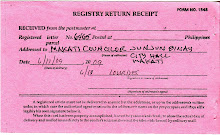
image of registry return receipt of letter addressed to Makati councilor J. J. Binay